




















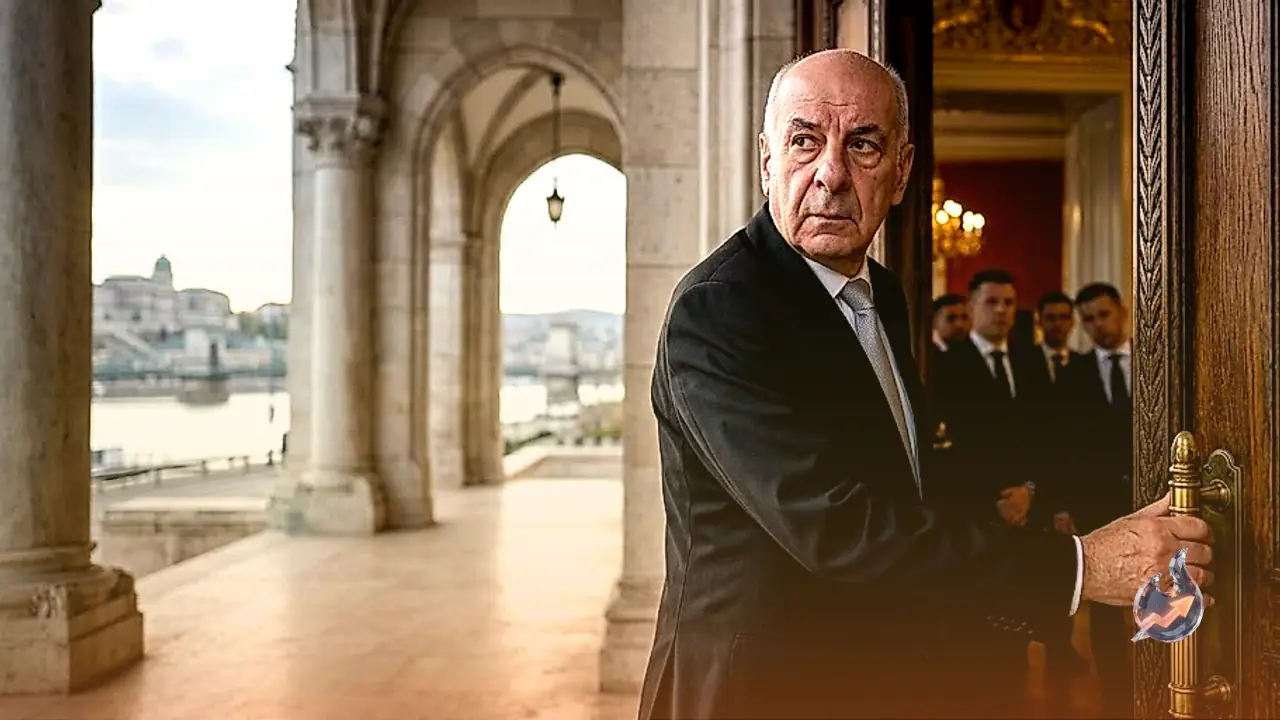

The parliament of Hungary has voted to dismiss President Tamás Sulyok from his position. Tamás Sulyok was widely regarded as a loyalist to former prime minister Viktor Orbán, whose political party lost its grip on power in April after maintaining control for 16 years. This landmark vote signifies a dramatic shift in the nation's political landscape.
A Major Shift in Governance
Prime Minister Péter Magyar and his Tisza party leveraged their two-thirds parliamentary majority to swiftly push through the 17th amendment to the constitution. This legislation effectively terminates the term of Tamás Sulyok and also removes Péter Polt, the head of the Constitutional Court. The development follows a period of intense activity since the new government assumed office in early May, coming on the heels of its surprise landslide electoral victory against Viktor Orbán's Fidesz party on 12 April.
Legal Procedures and Consequences
Tamás Sulyok has been given a five-day window to act. He must either sign the amendment, which is widely described as his political death warrant, or refer the matter to the Constitutional Court. Should Tamás Sulyok choose to involve the court, Péter Magyar has declared his intention to initiate impeachment proceedings, an action that would trigger an automatic suspension from office. The new government has been publicly urging Tamás Sulyok to resign, arguing that doing so would prevent a wider constitutional crisis for the country.
Opposition Walkout
Prior to the vote on Monday, deputies from the now-opposition Fidesz party staged a walkout. They accused the Tisza party of establishing a tyrannical regime. Fidesz contends that the new amendment grants the executive branch arbitrary powers to dismiss any public official with immediate effect, bypassing traditional oversight.
The Irony of Power
Péter Rona, a former opposition candidate for the presidency, highlighted the irony of the situation, noting that Fidesz has fallen victim to the very concepts of power it once institutionalized. The 2011 constitution, crafted under Viktor Orbán's administration, was built on the principle that the winner takes all. During its tenure from 2010 to 2026, Fidesz reshaped the Hungarian state to suit its vision, utilizing its own two-thirds majority to place party loyalists in supposedly independent positions.
Constitutional Reform Package
When the results of the vote were announced, the 141 Tisza deputies gave a standing ovation. The 17th amendment is part of a broader package of laws intended to govern the country until a new constitution can be finalized in two or three years. The legislation includes provisions to remove Constitutional Court judges over the age of 70 and bans any deputies who have served three terms from seeking re-election, a rule that affects over half of the existing Fidesz parliamentary members.
Debate Over Democratic Rights
András Baka, a former head of the Supreme Court, expressed support for the removal of the president. He argued that Hungary was governed by the rule of law from 1989 until 2010, after which Fidesz captured state institutions and established an authoritarian state. András Baka stated that it is currently very challenging to dismantle a sophisticated authoritarian regime that was intentionally designed to endure even after electoral defeat. However, András Baka voiced disagreement with the specific section of the package that prevents long-serving deputies from running again, arguing that such a measure limits the right of the public to vote for their preferred candidates.
Internal Turmoil within Fidesz
Since the election in April, Viktor Orbán's Fidesz party has been in a state of decline and internal confusion. Viktor Orbán himself has rarely appeared in public and has refused to take his seat in parliament. On Monday, he departed from Hungary to attend the football World Cup finals in the US. There is mounting frustration within the ranks of the remaining Fidesz members regarding his absence. The party's second-in-command, Gergely Gulyás, resigned as the head of the party's parliamentary group on Monday, further compounding the party's ongoing difficulties.