























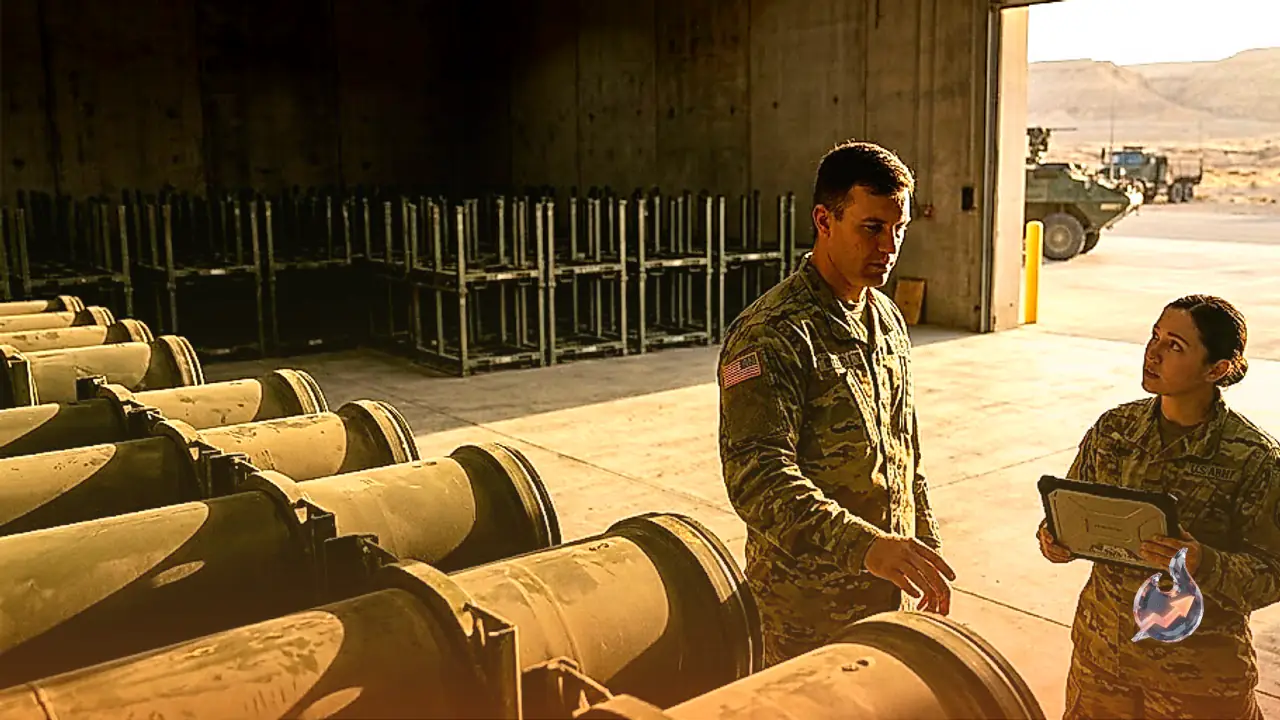

The ongoing military friction in Western Asia between the United States and Iran has ignited serious concerns regarding the readiness and sustainability of American defense infrastructure. According to the latest assessments, the sustained pace of conflict has eroded US weapons stockpiles to alarmingly low levels. Critical components of the US missile defense network, specifically THAAD and Patriot interceptors, have seen their available inventories reduced by half. Following the declaration by President Donald Trump that the ceasefire era has concluded, there is a growing consensus that a prolonged engagement could leave the United States in a precarious geopolitical position, mirroring the weakened status that nations like Germany and Japan faced in the aftermath of World War II in 1945.
The Strategic Risk of Depleted Arsenals
The conflict has been defined by a heavy reliance on high-precision, long-range munitions and advanced missile defense systems since its inception. This high rate of expenditure has significantly compromised the operational readiness of the US military. Mark Cancian, a defense analyst at the Center for Strategic and International Studies (CSIS) and a retired Marine Colonel, warns that if the intensity of military operations remains unchanged, the United States faces heightened strategic risks, particularly within the Indo-Pacific theater. The rapid depletion of munitions creates a scenario where the US may lack the necessary hardware to confront potential high-stakes conflicts against rivals such as China or North Korea in the near future.
The Multi-Year Road to Replenishment
Rebuilding these critical inventories remains a monumental challenge. According to data analyzed by CSIS, by the time a specific phase of the conflict with Iran concluded in April, the US had already expended approximately 50 percent of its THAAD ballistic missile interceptor inventory. Similarly, nearly half of the Patriot air defense interceptors and roughly 30 percent of the Tomahawk cruise missile stock had been utilized. The current manufacturing capacity is significantly outpaced by these requirements. The Department of Defense reportedly receives only about 15 new Tomahawk and 20 Patriot missiles per month, while there are no scheduled deliveries for new THAAD interceptors in the year 2026. Experts estimate that it could take anywhere from three to five years to restore these stockpiles to pre-war levels.
Legislative and Production Hurdles
Former Pentagon official Ellen McCasker has noted that the supply chain for these sophisticated weapons is complex and slow, requiring years to fully restore. Furthermore, defense expert John Ferrari has argued that the US Congress has yet to approve the necessary supplementary funding to significantly accelerate production. Consequently, production remains stalled at a baseline, standard rate that is incapable of keeping pace with the demands of the current conflict.
The Pentagon’s Stance and Mitigation Efforts
In response to the mounting crisis, the Pentagon maintains that it is working to expedite defense production capabilities. The administration of President Donald Trump has invoked the Defense Production Act to reduce administrative bottlenecks and enhance manufacturing throughput. Additionally, initiatives are underway to authorize nations like Germany and Ukraine to domestically manufacture Patriot missiles. Nevertheless, defense analysts caution that these measures will take several years to manifest into tangible military strength. While the Pentagon has provided assurances that the US military maintains sufficient capability to protect its interests and its allies, experts maintain that if high-intensity missile usage persists, the United States could face unprecedented strategic challenges in the event of larger confrontations involving major global powers.