
















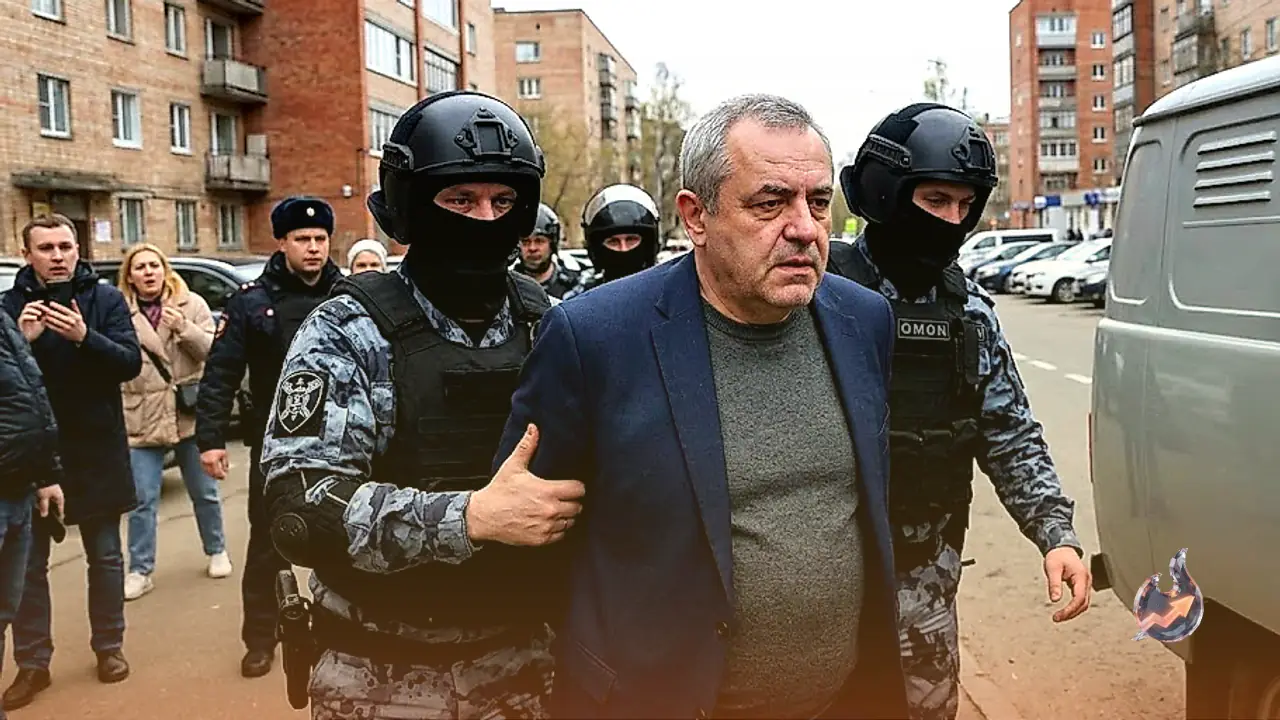

Boris Nadezhdin, the politician who sought to challenge Vladimir Putin during the 2024 Russian presidential election with an anti-war platform, has been taken into police custody. Details of his arrest were disclosed through his personal social media accounts.
Details of the arrest and charges
The arrest took place on Monday morning, when Boris Nadezhdin was brought to a police station in a town located west of Moscow. This development occurred merely weeks after he declared his intention to contest the upcoming Duma (parliamentary) elections in September. He has been formally charged with the offense of displaying extremist symbols. Authorities linked this charge to an image of the late opposition figure Alexei Navalny that appeared for a duration of 10 seconds in a video reposted by Boris Nadezhdin's social media profiles back in November 2023.
Legal restrictions and political hurdles
Just last week, the justice ministry officially designated Boris Nadezhdin as a foreign agent. He was simultaneously accused of circulating false information regarding the Russian government and allegedly inciting citizens to participate in unauthorized protests. This designation had already effectively barred him from participating in the September parliamentary elections. Furthermore, the specific offense for which he was charged on Monday carries an additional penalty that prevents the individual from running for public office for a period of one year.
Previous presidential campaign
Earlier in 2024, Boris Nadezhdin mounted an attempt to run for the presidency with a manifesto focused on an anti-war agenda, specifically calling for a cessation of hostilities in Ukraine. During that period, he claimed to represent the views of tens of millions of citizens who expressed a desire for Russia to move away from its current path of authoritarianism and militarization. He also outlined his primary objectives, stating that if elected president, his immediate priority would be to end the conflict with Ukraine and subsequently restore normal diplomatic relations between Russia and the Western community.
While his critiques of Vladimir Putin remained relatively measured, some observers speculated that the Kremlin might permit his candidacy to provide the election with the veneer of fairness. However, the Russian electoral commission disqualified him just weeks before the ballot, citing that over 15% of the signatures provided in his application were invalid. Despite his attempts to challenge this decision, he was ultimately unable to run, a fate shared by every other credible member of the opposition.
The current state of Russian politics
The next presidential election is scheduled to take place in 2030, at which time Vladimir Putin will be 78 years old. A constitutional amendment, ratified in 2020, reset his term limits, granting him the legal authority to maintain power until 2036. The Kremlin currently maintains near-total control over the domestic political landscape, making it highly improbable that any individual will be permitted to pose a genuine challenge to Vladimir Putin's authority. The prominent figures who might have provided the Russian electorate with a viable alternative are either imprisoned, living in exile, or deceased.