
























A fresh announcement from US President Donald Trump has rattled global energy markets. Trump has declared a 20 percent tax on cargo ships passing through the Strait of Hormuz and announced that Iranian ports will once again face a naval blockade. The move comes amid rising tension between the United States, Iran and Israel, and it threatens to hit hardest the countries that import oil and gas from the Gulf region, with India sitting right at the top of that list.
What Trump announced at the White House
Speaking from the White House, Trump said the United States is now taking on responsibility for securing the Strait of Hormuz, and that every ship passing through the route will be charged a 20 percent tax. He argued the money would help cover the cost of the added security arrangements. Alongside the tax, he announced that the naval blockade on Iranian ports would be reinstated, a move that could make maritime trade linked to Iran even harder.
Iran's sharp pushback
Iran has responded firmly to Trump's announcement. Foreign Minister Abbas Araghchi said Iran, not the United States, is the true guardian of the Strait of Hormuz. In a sarcastic jab, he added that if a fee is going to be charged for security, then 20 percent is far too steep. Iran's military leadership went further, warning that any American interference in the operations of the Strait of Hormuz would be treated as a direct attack on Iran's sovereignty, and that it would be met with a matching response.
The United Nations questions the legality
It isn't just Iran raising objections. The International Maritime Organization, the United Nations' maritime agency, has said there is no clear legal basis for imposing a unilateral, mandatory fee on ships passing through an international strait. That puts Trump's move on shaky legal ground even before it takes effect.
Why this matters so much for India
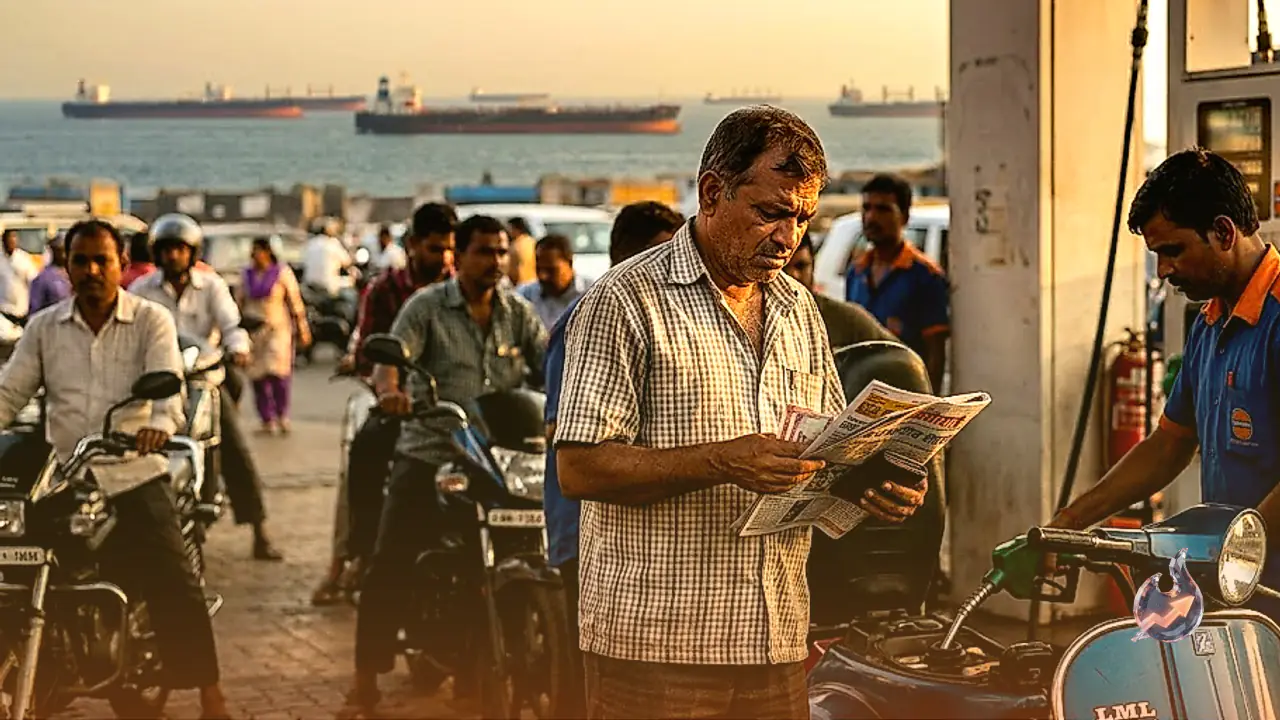
India imports a large share of its energy needs from the Gulf. Most of the crude oil and LNG that arrives from Saudi Arabia, Iraq, the UAE, Kuwait and Qatar reaches India only after passing through the Strait of Hormuz. If Trump's 20 percent tax actually comes into force, buying crude oil and gas will become costlier for Indian companies. That cost is likely to feed directly into petrol and diesel prices, freight charges, and everyday inflation for households across the country.
Tanker attack leaves an Indian sailor dead
Just hours before Trump's statement, the United Arab Emirates claimed that two of its oil tankers were struck by Iranian cruise missiles in the southern part of the Strait of Hormuz. The attack killed one Indian sailor, while a total of eight people, including six Indians, were injured. Four of the injured are said to be in serious condition. The incident underlined just how much risk Indian sailors working in the Gulf are now carrying as the conflict escalates.
The worry goes beyond costlier oil
The Indian government has not issued an official response yet, but it is keeping a close watch on the situation. Experts believe that if tensions in the Gulf rise further, or if ship movement through the Strait of Hormuz is disrupted more severely, India could face more than just expensive oil. Higher shipping charges, increased insurance premiums and disruptions to supply chains could all follow. In short, the rising tension around the Strait of Hormuz is no longer confined to West Asia, it is a story that can be felt in India's energy security, in ordinary people's wallets, and across the wider economy.