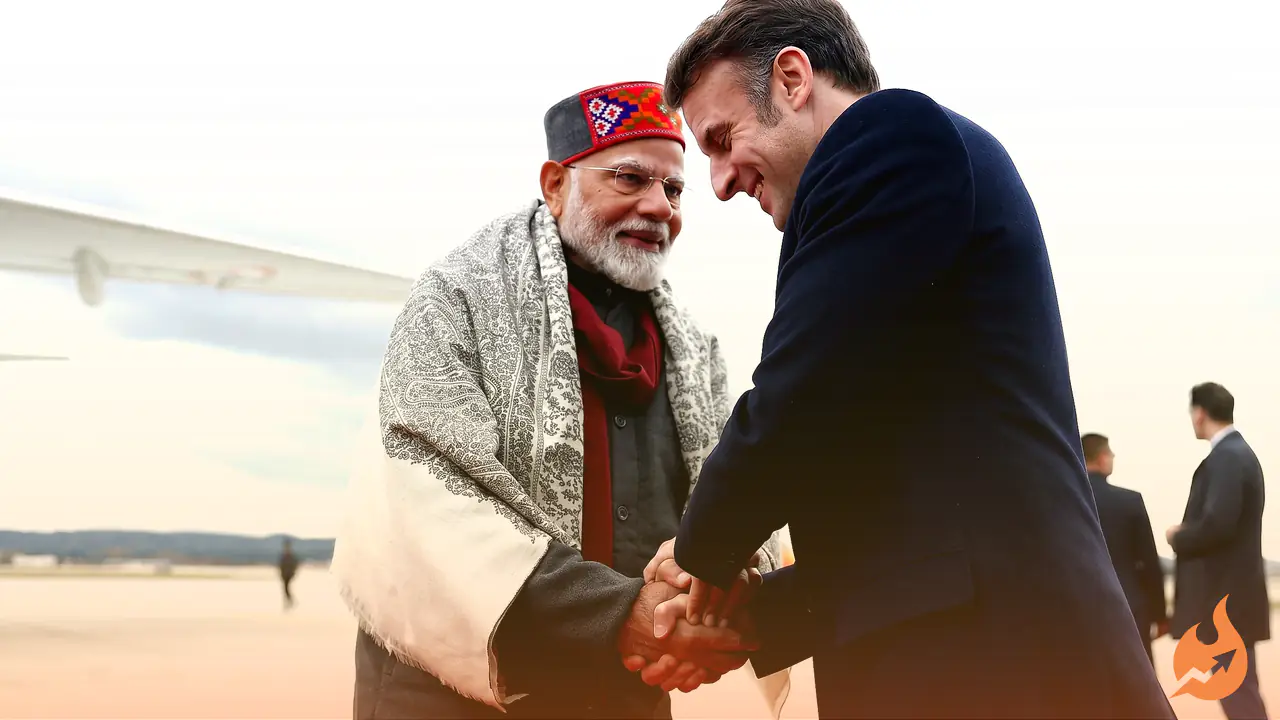

The deep strategic bond visible between India and France today did not grow out of a single arms deal or summit handshake. Its real roots lie in a difficult moment when much of the world was backing away from New Delhi. To grasp that story, it helps to first look at just how warm the relationship has become.
A Flurry of Visits That Reveal the Depth
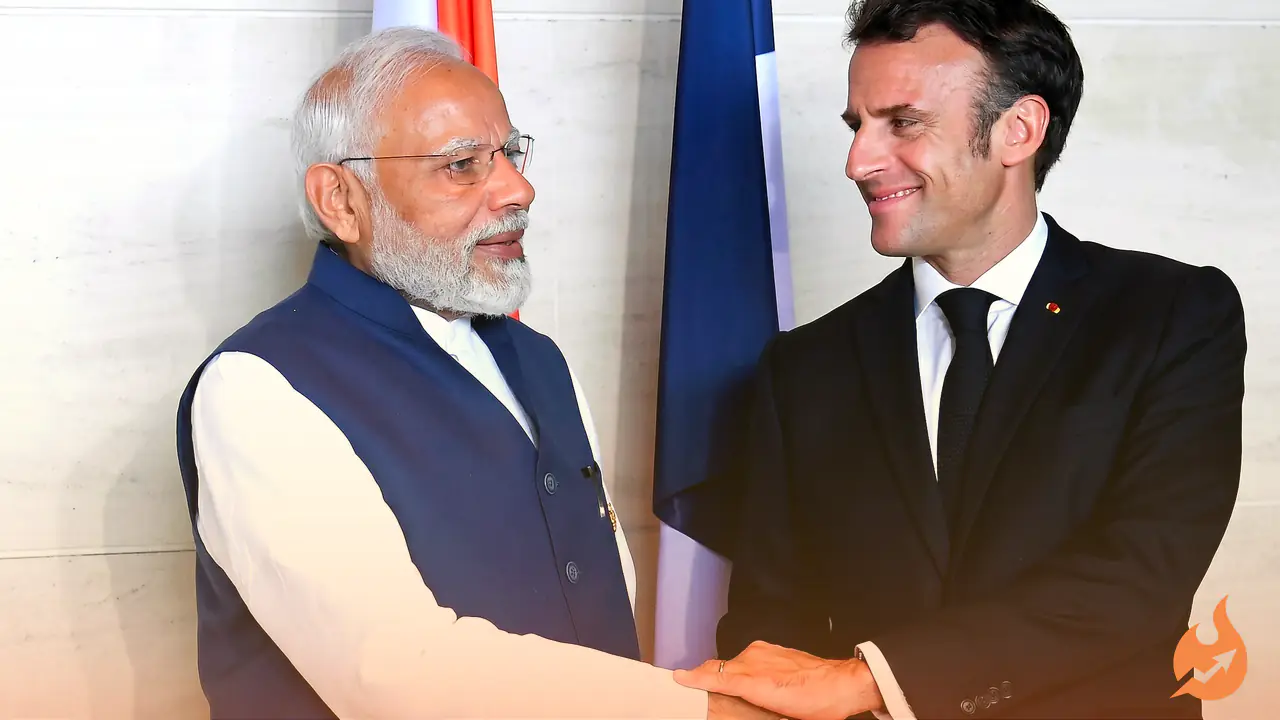
Prime Minister Narendra Modi is in France for the 7th time during his 12 years in office. Before him, Prime Minister Manmohan Singh travelled to Paris four times across his 10-year tenure, and earlier still, Atal Bihari Vajpayee visited France twice as prime minister during a roughly six-year term. Looking at the other side of the ledger, French presidents have made nine official visits to India since the year 2000 — and the current president, Emmanuel Macron, alone has come to India four times since 2018.
These numbers did not appear out of thin air. Behind such high-level exchanges lie decades of patient trust-building that slowly matured into the partnership of today. And the single most decisive turning point in that journey came in 1998, when the United States, Canada, Japan and several major European nations imposed sanctions on India — yet France, like a true friend, stood squarely beside New Delhi.
The Pokhran Blast That Shook the World
It was May 1998, in the scorching desert of Pokhran in Rajasthan. Something happened beneath the earth that jolted global geopolitics. India carried out five nuclear tests and openly declared itself a nuclear power. Atal Bihari Vajpayee was at the helm of the country at the time. For New Delhi this was a moment of national security and strategic self-respect, but Washington, Tokyo and several Western capitals read it as a direct challenge.
The fallout came within days. The United States unleashed a string of sanctions — from halting economic assistance to curbing technical cooperation. Japan, Canada and some other countries also began distancing themselves from India. It seemed as though the world's largest democracy would once again be left isolated on the international stage.
A Different Voice Rose From Europe
It was precisely in this tense hour that a distinct voice emerged from Europe, reminding India that not every Western nation thought alike. That voice belonged to France. After Pokhran-2, most Western countries argued that India should pay the price for its decision. India was being accused of challenging the global non-proliferation regime, and efforts were under way to build sentiment against it at international forums.
It was then that France stepped up alongside India. The French president of the time, Jacques Chirac, signalled clearly that isolating India was no solution. Paris held that speaking only the language of sanctions, without understanding India's security concerns, would not be practical. France also recognised that the tangled security realities of South Asia could not be read through a European lens. This was the era when one of India's neighbours, Pakistan, was chasing nuclear capability, while on the other side stood China, already an established nuclear power.
The Birmingham G-8 Meeting and the Crisis-Solvers
After the nuclear tests, a G-8 summit was held in Birmingham in Britain, where a tough collective stance against India was discussed. The United States and some of its allies wanted to ratchet up the pressure on New Delhi. It is worth noting that today's G-7 was then known as the G-8, because Russia was part of the group at that time; once Russia left, the grouping was renamed the G-7.
In the diplomatic corridors, the message was unmistakable — turn India into the outright villain. But at this very juncture, Russia and France emerged as the crisis-solvers. France's view was that the doors of dialogue must stay open. This was the moment when New Delhi felt, for the first time, that Paris could be not merely a partner but a friend willing to stand by it in hard times. From here began a restoration of trust between the two countries that would later grow into a strategic partnership.
Vajpayee's Paris Trip and the First Strategic Partnership
Just a few months after the Pokhran tests, in September 1998, Prime Minister Atal Bihari Vajpayee arrived in France. The visit was not merely a ceremonial diplomatic event; it proved to be a historic turning point that would shape the direction of the future. It was during this trip that India and France formally launched a ‘Strategic Partnership’. Notably, this was India's first strategic partnership with any Western country. Today, when one sees the long list of India's strategic partnerships, it is important to remember that the very first chapter was written with France.
A Trust That Only Grew Stronger
In politics and diplomacy, friendships often shift with circumstances. But the greatest hallmark of the India-France relationship has been that the trust forged in 1998 kept growing stronger in the years that followed. France was among the earliest countries to open high-level dialogue with India on nuclear issues. Later, as India began winning acceptance within the global nuclear order, that same trust unlocked new possibilities. After India received its waiver from the Nuclear Suppliers Group (NSG) in 2008, France was also the first country to sign a civil nuclear agreement with it. This was no coincidence — its foundation had been laid a decade earlier, in the very period when India was living under the shadow of sanctions.
Why the 1998 Story Still Matters Today
Today India and France work shoulder to shoulder across a wide range of fields — defence, space, maritime security, nuclear energy and Indo-Pacific strategy. From Rafale fighter jets to cooperation in the Indian Ocean, the ties between the two nations have steadily deepened. Yet the real strength of this relationship lies not in any arms deal or joint statement, but in that historic memory — when India was passing through its toughest phase and one of the world's influential powers stood beside it without flinching.