























Ever since ChatGPT arrived, the companies building AI have themselves warned that the technology could wipe out millions of jobs. California is now trying to figure out whether those warnings are starting to come true.
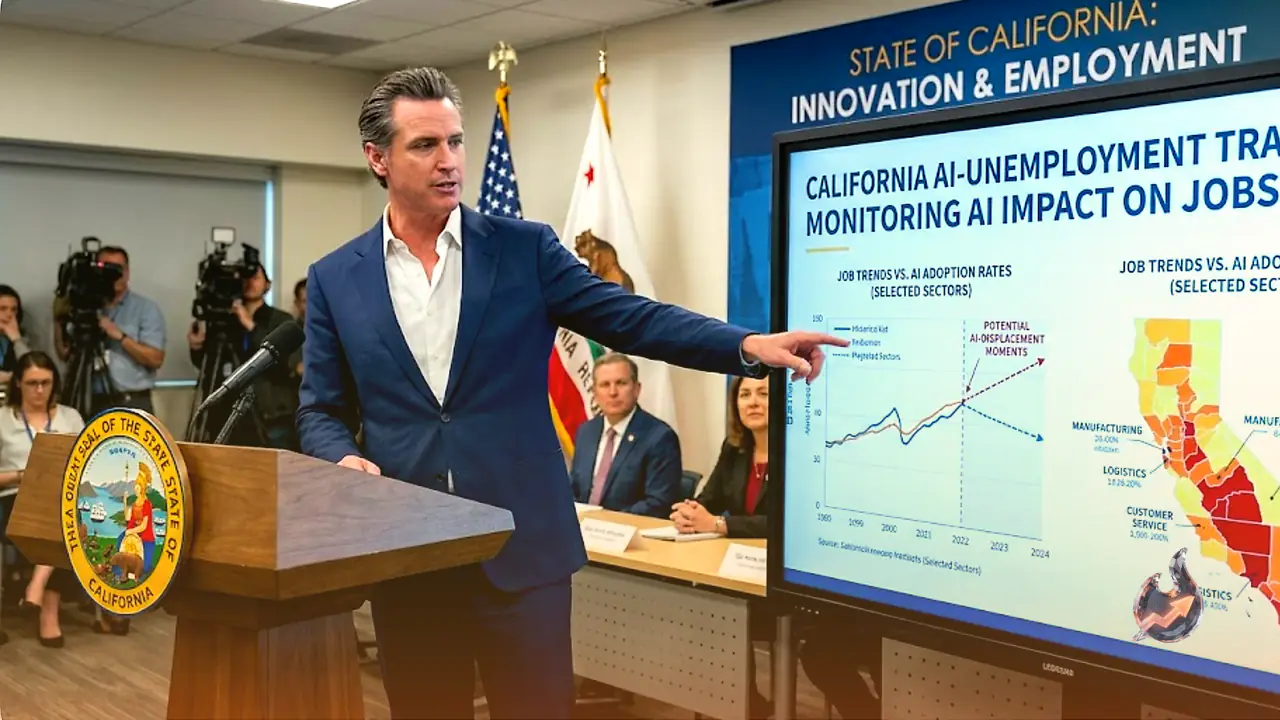
On Thursday, California Governor Gavin Newsom unveiled what the state is billing as the country's first AI-Unemployment Tracker, a public dashboard built to watch for signs that artificial intelligence is costing workers their jobs across the state. The launch adds to California's growing push to shape AI policy under Newsom, who is widely seen as a possible Democratic presidential contender in 2028.
"As part of my first-in-the-nation executive order on AI, my administration just launched a dashboard to track signs of job loss from AI and better support workers who might be impacted," Newsom wrote on X. "California won't just watch this emerging technology from the sidelines; we're going to act."
How the dashboard works
The tool was built by the California Employment Development Department together with researchers at the California Policy Lab's UCLA site. It will refresh every month and follow unemployment claims across the occupations considered most exposed to AI. State officials say the data should help pinpoint where workers may need retraining, help finding a new job, guidance on health coverage, or other support.
"AI is advancing quickly, and workers' concerns about what that could mean for their jobs are real," said Till von Wachter, Professor of Economics at UCLA and Faculty Director of the California Policy Lab's UCLA site, in a statement. "This new tracker helps replace speculation with evidence, giving us a clearer understanding of what's changing and how to best support affected workers."
A shift among lawmakers
The move reflects how policymakers are starting to respond to AI differently. Vermont Sen. Bernie Sanders has repeatedly raised the alarm about jobs lost to AI, while Missouri Republican Sen. Josh Hawley introduced bipartisan legislation in October that would require companies to disclose AI-related layoffs. In April, New York Assembly member Alex Bores floated an "AI Dividend" tied to jobs displaced by AI.
What the data shows so far
For now, California's data suggests the dreaded wave of AI layoffs has not materialized. Researchers found no evidence of rising statewide unemployment linked to AI, but they did spot higher unemployment claims among college-educated workers in occupations with heavy AI exposure after ChatGPT-3.5 launched in 2022, especially in the San Francisco Bay Area.
The announcement lands as worries about AI-driven job losses keep mounting. In January, Anthropic CEO Dario Amodei warned that AI could eliminate up to half of all entry-level white-collar jobs within five years. Since then, economists have begun walking back the earlier belief that AI would mostly assist workers rather than replace them. In April, a Federal Reserve study found that U.S. programmer job growth fell by roughly 50% after ChatGPT's launch, offering some of the strongest evidence yet that generative AI is reshaping hiring in highly exposed fields.