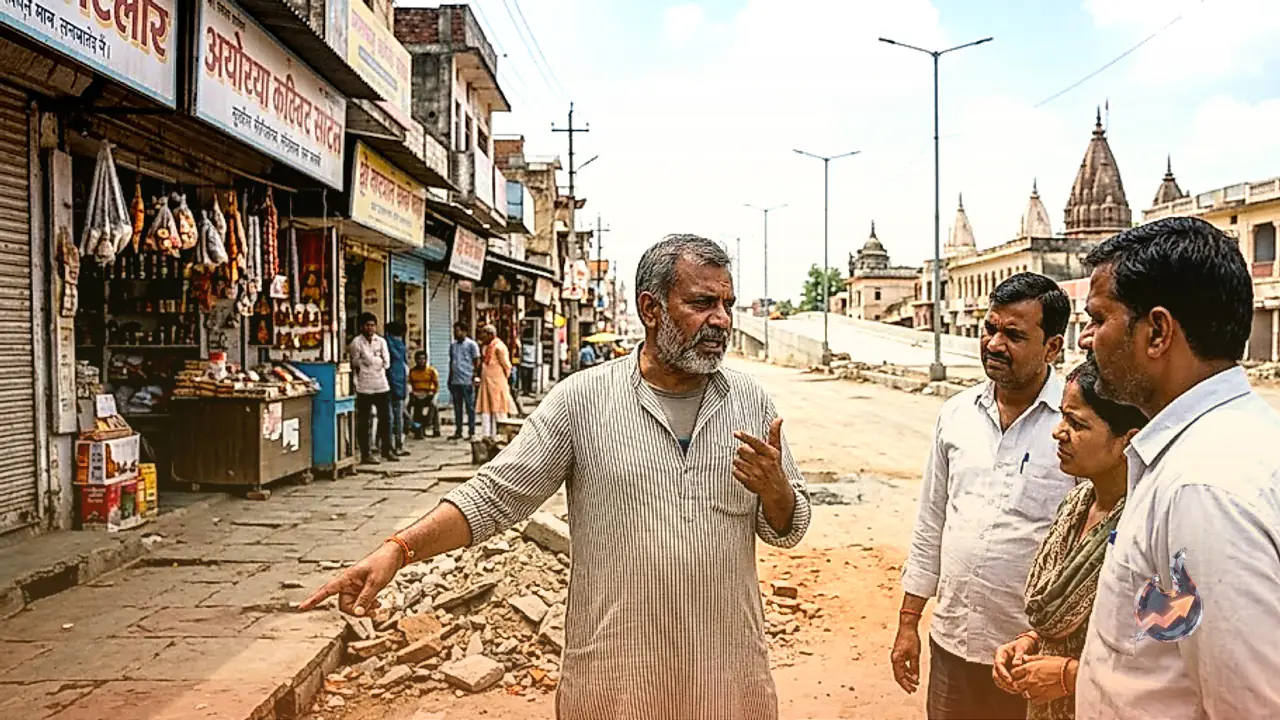


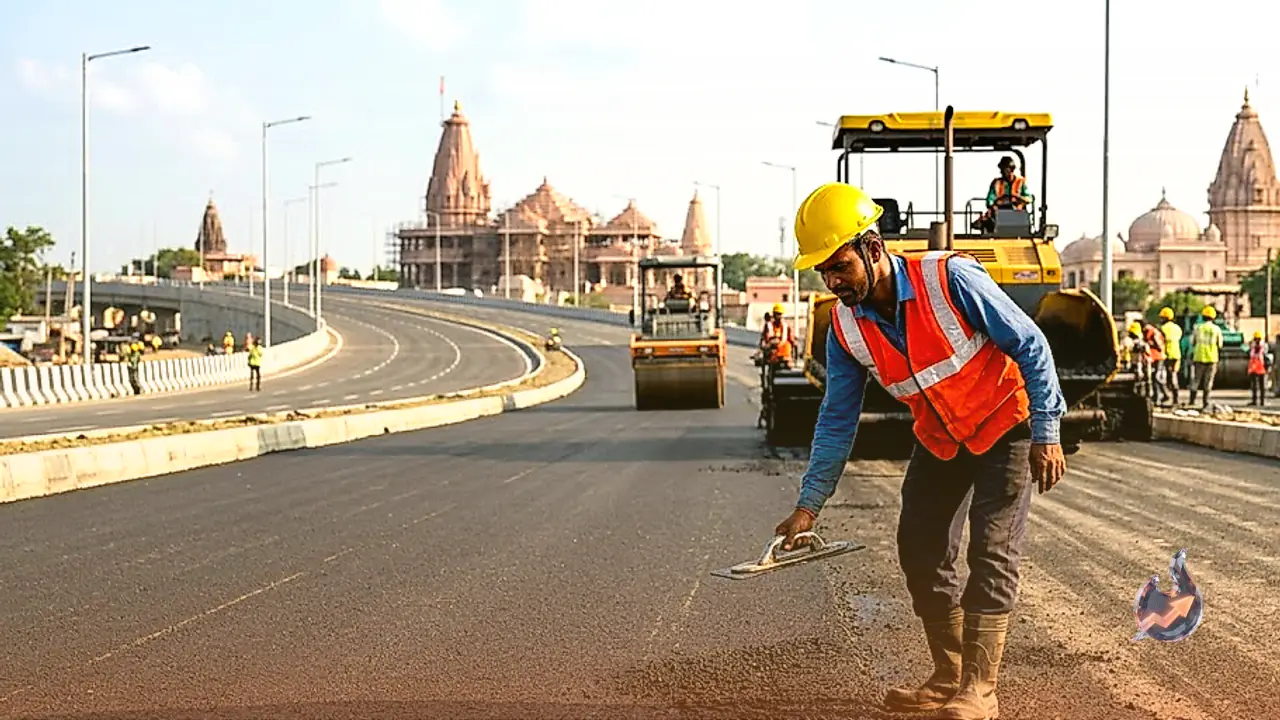


















The holy city of Ayodhya is weaving ancient memories of the Treta Yuga into its modern developmental framework. Just in time before the grand celebrations of Deepotsav, the Dashrath Path is taking final shape under the governance of Chief Minister Yogi Adityanath. Stretching across 15.390 kilometers, this magnificent four-lane corridor will connect pilgrims to a deeply emotional chapter of history where the memories of King Dashrath, the father of Lord Shri Ram, remain alive.
Running from the Saket Petrol Pump all the way to the Samadhi site of King Dashrath at Bilvhari Ghat, this route will not only streamline traffic movement across Ayodhya but also offer visitors a glimpse of the Treta Yuga amidst modern amenities. The total cost allocated for this expansive infrastructure project stands at 418.98 crore rupees. Stepping onto the Dashrath Path creates a unique intersection of ancient lore and contemporary urban planning.
The corridor is being built with a width of 14 meters, and approximately 92 percent of the construction work has already been wrapped up. Authorities have set a target to complete the remainder before Deepotsav so that both local residents and visiting pilgrims can reap its benefits. Modern lighting fixtures are being installed along the entire stretch, accompanied by a roughly one-meter-wide footpath and a central median divider.
These additions will guarantee smooth vehicular transit while substantially improving pedestrian safety. The Dashrath Path will ease travel across the inner localities of the city and mark a noticeable enhancement in connectivity. Strengthening transit links in the surrounding neighborhoods will also help manage the surging influx of religious tourism.
Crucial Infrastructure for Urban Mobility
Shashank Pandey, Assistant Engineer in the Provincial Division of the Public Works Department, noted that construction on the Dashrath Path project is advancing at a rapid pace. He stated that the roadway will play an instrumental role in upgrading Ayodhya's transportation network. With nearly 92 percent of the endeavor finished, work is being pushed aggressively to meet the pre-Deepotsav deadline. Equipped with modern lighting, sidewalks, and dividers, this four-lane bypass will relieve motorists from chronic traffic jams and cut down transit times significantly.
To enhance the cultural aesthetic, the Ayodhya Development Authority plans to install 30 symbolic pillars along the 15-kilometer corridor at a cost of 82.68 lakh rupees. A pillar will be erected approximately every 500 meters. Among these, 15 pillars will showcase various yoga postures, while the remaining 15 will display ancient weaponry stances.
Each pillar will stand about six feet tall and will be installed once the main corridor construction concludes. The yoga postures will communicate spiritual traditions and Indian heritage, whereas the weapon stances will highlight valor, bravery, and the glorious legacy of Sanatan traditions. Poses representing elements like air, fire, and longevity will lend a distinctive appeal to these structures. Illuminated by decorative lighting at night, the pillars will elevate the visual charm of the Dashrath Path and serve as a major point of interest for tourists and devotees, further cementing Ayodhya's cultural footprint. Readers interested in related city updates can check reports on donations received at the Ram Mandir or incidents such as the security alert at the Ayodhya medical college.