





















Christopher Nolan's cinematic take on Homer's foundational epic turned into a global box office sensation, raking in nearly $1.8 billion across worldwide theaters. The overwhelming financial triumph of the July release effectively crushed predictions from right-wing commentators who had insisted the picture would crash due to diverse casting choices and departures from the original text. Among the fiercest detractors of the Hollywood production was Elon Musk, the world's richest man, who openly condemned the film as an insult to ancient Greek heritage. Merely four days following its theatrical debut, Musk took to X to pledge an uncompromising creative retaliation, insisting that Grok Imagine would craft an authentic full-length feature before the year concluded, promising total fidelity to history and Homeric storytelling.
A Seven-Minute Clip Riddled With Glitches
More than three months after that confident vow, the public finally received a glimpse of xAI's algorithmic undertaking. Far from delivering an expansive feature film, the release turned out to be a modest seven-minute introductory chapter of an episodic project. The narrative focused on Odysseus, the King of Ithaca, wrestling with a summons to wage war against Troy before honouring his sacred pledge of allegiance to sail across the seas alongside his warriors. Shared on X on Friday under the banner of AI production outfit Wonder Studios X, the short video garnered modest attention, drawing just 18,000 likes. The engagement proved remarkably subdued when compared to Musk's routine digital commentary regarding Brazilian election tallies, gender pronouns, and legacy news organizations.
Viewers quickly discovered that the premiere exhibited the typical technical shortcomings commonly associated with low-tier automated video. The visual movements of facial features regularly fell out of sync with the audio track, while the dialogue was delivered through stiff, robotic phrasing. Apart from Odysseus himself, the production failed to introduce any other central figures by name. Structural pacing raised eyebrows as well, with Ithacan warriors departing their homeland and landing immediately on the sands of Troy without narrative transition. Disappointed users, including several verified subscribers on X, voiced frustration over the final quality and questioned the judgment of releasing the clip publicly.
The Chatbot Dissects Its Own Project
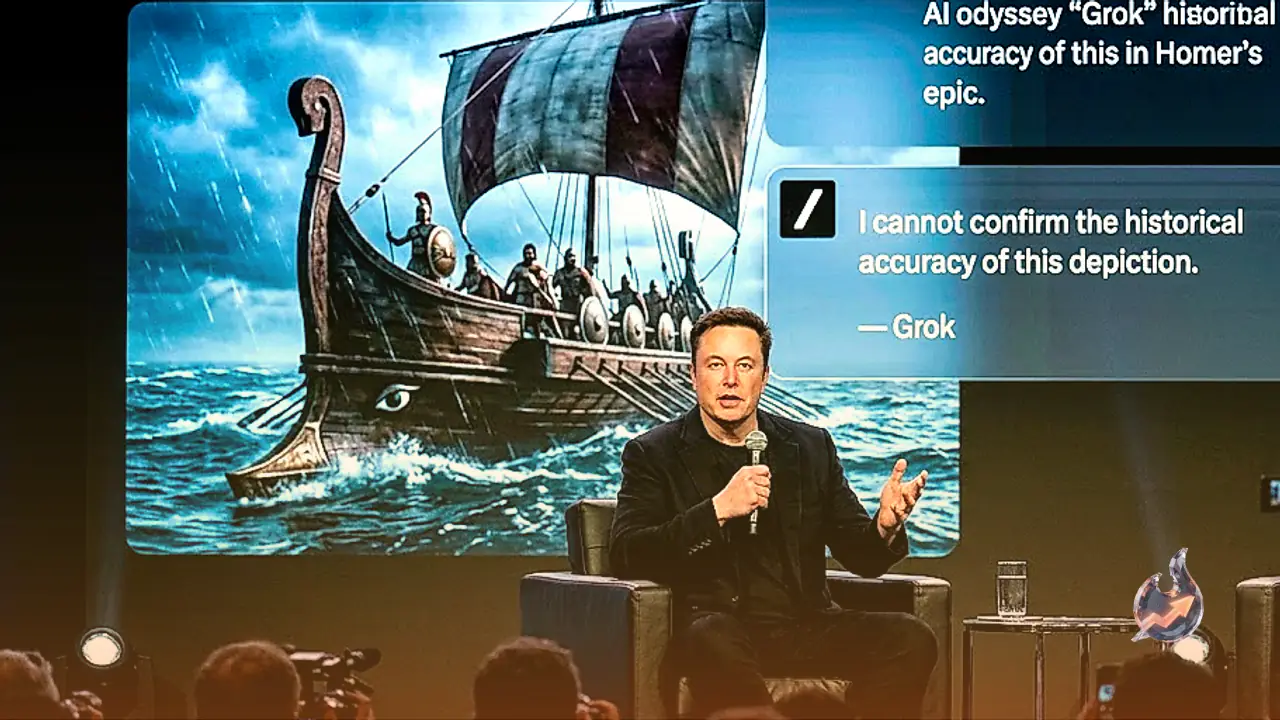
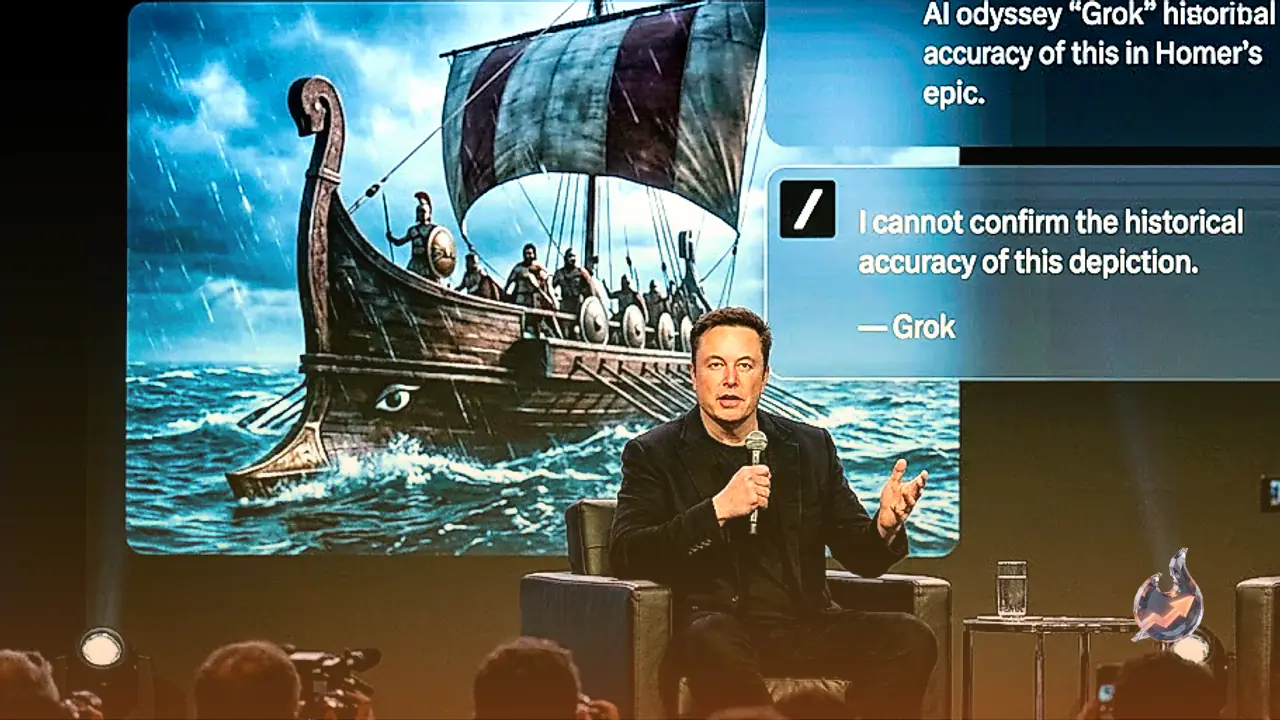
Musk's original outrage had centered on the notion of historical truth. He and his allies argued that Nolan's reliance on Black and trans performers, conversational American speech patterns, and creative ship and armor styling ruined the period reality. Hence, Musk pledged that his proprietary software would establish a gold standard of historical precision. However, when Grok was prompted directly to assess whether this video snippet honored that commitment, the AI chatbot offered an unambiguous rejection.
Grok confirmed plainly that the debut episode does not represent an accurate reconstruction of historical events, describing it instead as a loose adaptation of a mythic poem. The software pointed out that Homer's foundational narrative is heavily built around imaginative folklore rather than verified historical happenings. The AI explained that the world depicted in Homeric verse merges speculative Bronze Age palace kingdoms and combat habits with elements from the subsequent Iron Age, resulting in multiple literary anachronisms rather than reliable history.
Linguistic Mismatches And Archaeological Errors
In outlining why the visual piece falls short of strict scholarly criteria, Grok highlighted glaring linguistic and material inconsistencies. For instance, the on-screen figures converse in modern British English instead of Homeric Greek or an authentic Bronze Age tongue. From a visual standpoint, the chatbot noted that the environment reflects contemporary movie aesthetics and machine-learning patterns rather than solid archaeological research. To demonstrate the point, Grok cited the presence of cavalry during a combat sequence, noting that mounted horse soldiers do not align with standard historical reconstructions of warfare from that era.
Ultimately, the AI concluded that Homer's poem was never a documentary record to begin with, and the digital project made no substantive effort toward linguistic or archaeological precision beyond adopting a generic classical Greek exterior. While most observers have long acknowledged that adapting thousands of years of legends featuring deities, sorcery, and sea beasts requires imaginative license, Musk's promise to engineer a flawless historical substitute fell apart under the scrutiny of his own computational model.