



















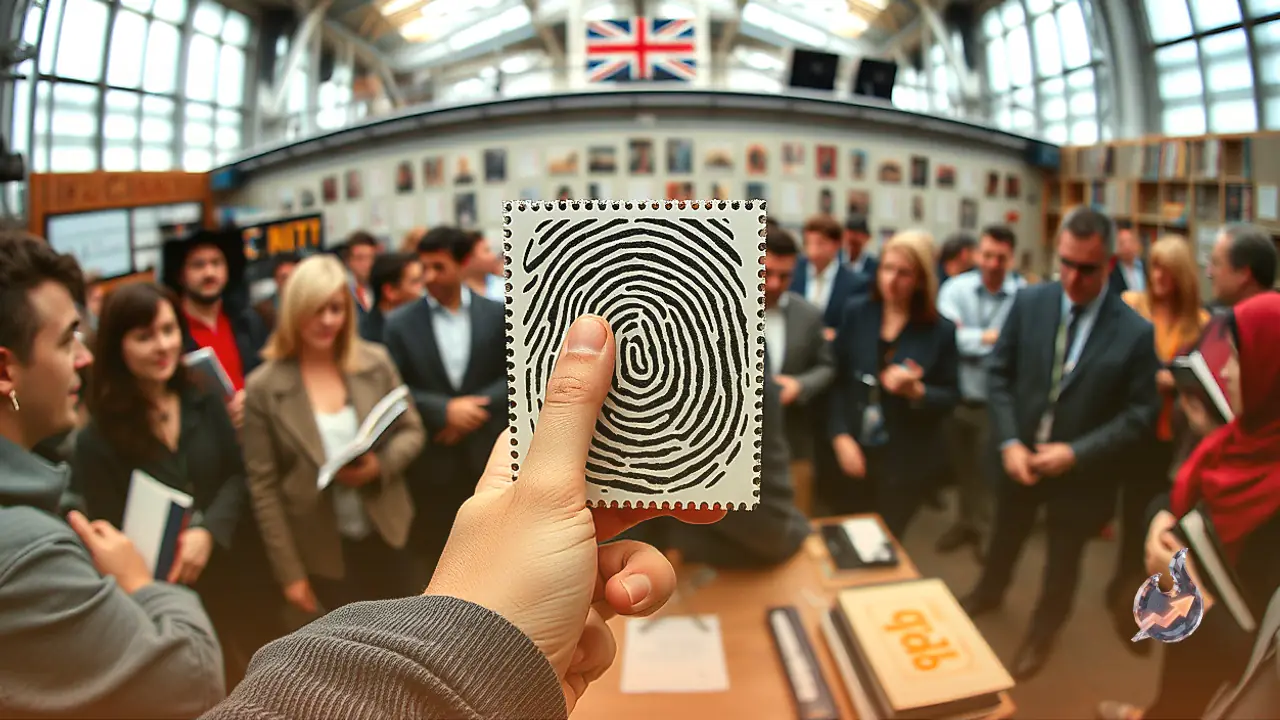

A British venture has introduced a formal certification mechanism designed to assure readers that their books are crafted entirely by human hands rather than synthetic text generators. Books by People recently confirmed that the UK Intellectual Property Office granted official approval for a distinctive mark that identifies human-authored literature. Resembling a thumbprint, the symbol will be stamped directly on book covers to signal that no artificial intelligence contributed to the manuscript.
Rebuilding Trust in the Literary Ecosystem
Addressing the growing presence of automated tools, Books by People cofounder Esme Dennys explained that while individuals remain free to produce or consume synthetic prose, readers who specifically seek works crafted by people deserve a transparent way to find them. Earlier attempts to identify human creators, including the Human Authored initiative, functioned primarily through an honor code where authors pledged that their creative workflow remained free of algorithmic assistance.
Books by People departs from voluntary declarations by implementing a structured verification pipeline. Authors must complete an authorship declaration, after which the text is evaluated by proprietary screening software. Beyond digital checks, human evaluators inspect early manuscript drafts, handwritten notes, editorial correspondence, and research records to detect genuine indicators of human labor. Dennys noted that the organization examines all evidence showing a natural progression of drafting and revising across multiple stages.
Commercial Model and Publisher Adoption
Participating publishers pay a fixed membership charge alongside an additional evaluation fee for each title submitted for review. Five publishing houses have entered the program so far, and the startup expects the first certified volume carrying the thumbprint imprint to reach retail bookshelves before the end of the year. This rollout arrives during a turbulent period for global publishing, marked by repeated controversies involving allegations of automated writing.
Recent disruptions include an agent rescinding a book contract valued at $2 million over suspected machine generation, a publishing firm pulling a released novel from distribution, and readers raising public doubts about whether a prize-winning short story was produced with algorithms. Despite these tensions, industry figures note that writers do not necessarily fear total replacement, largely because consumer appetite for synthetic novels remains deeply limited.
The Value of Authenticity and Creative Labor
Sci-fi author Ted Chiang, whose 1998 novella Story of Your Life inspired the film Arrival, characterized automated generation as standing near a mechanical conveyor belt watching manufactured objects drop. Chiang noted that being aware of such mechanical origin prevents readers from forming deep emotional attachments to the material, emphasizing that the knowledge of how a work came into existence directly shapes the reading experience itself.
Sam Jordison, codirector of independent publisher Galley Beggar Press, which plans to implement the new verification seal, noted that publishing has traditionally rested on reciprocal trust among authors, editors, and the reading public. Jordison remarked that encountering synthetic text posing as genuine human expression provokes a visceral sense of deception. Industry figures such as former Penguin Random House CEO Markus Dohle have similarly endorsed the initiative, describing human storytelling as the fundamental lifeblood of the publishing sector.
The Risks of Automated Screening Tools
While publishing houses view certification as a valuable credential, automated screening brings significant risks for authors who could face career-threatening false accusations. Publishers Licensing Services CEO Tom West cautioned that extreme surveillance could easily turn into a witch hunt, pointing out that critical flaws often hide within operational details.
New York software developer Pangram has positioned itself as a leading provider of detection tools, advertising a 99.7 percent accuracy rate in spotting synthetic text. Yet creators remain deeply skeptical of these claims, particularly since detection platforms rely on complex algorithms of their own. Debut author Jerry Falade, whose agent reportedly canceled a $2 million contract, stated that automated screeners mistakenly flagged his native Nigerian English phrasing as synthetic writing, producing a 97 percent automated score. In a personal essay, Falade pointed out that while creating a book demands months or years of intense labor, a flawed automated scan can ruin a lifetime of work in two minutes.
Setting Industry Standards Amid Imperfect Tools
Industry advocates argue that subjecting authors to persistent interrogations about the origin of their concepts creates an unhealthy precedent. West stressed that the default baseline within publishing must always assume an author created the work, rather than forcing creators to prove their innocence against algorithmic suspicion.
Dennys explained that Books by People intentionally avoids relying solely on detection algorithms, having recognized that keeping pace with evolving machine capabilities is technically unsustainable. Instead, the initiative prioritizes documentary trails, draft histories, and human oversight. In situations where documentation remains inconclusive, the organization claims it resolves doubts in favor of the author to protect writers from unjust allegations. Commenting on the broader principle, Chiang maintained that establishing a firm rule against automated deception is vital for publishers, concluding that even when enforcement mechanisms remain imperfect, adopting clear boundaries serves as an essential statement of artistic values.