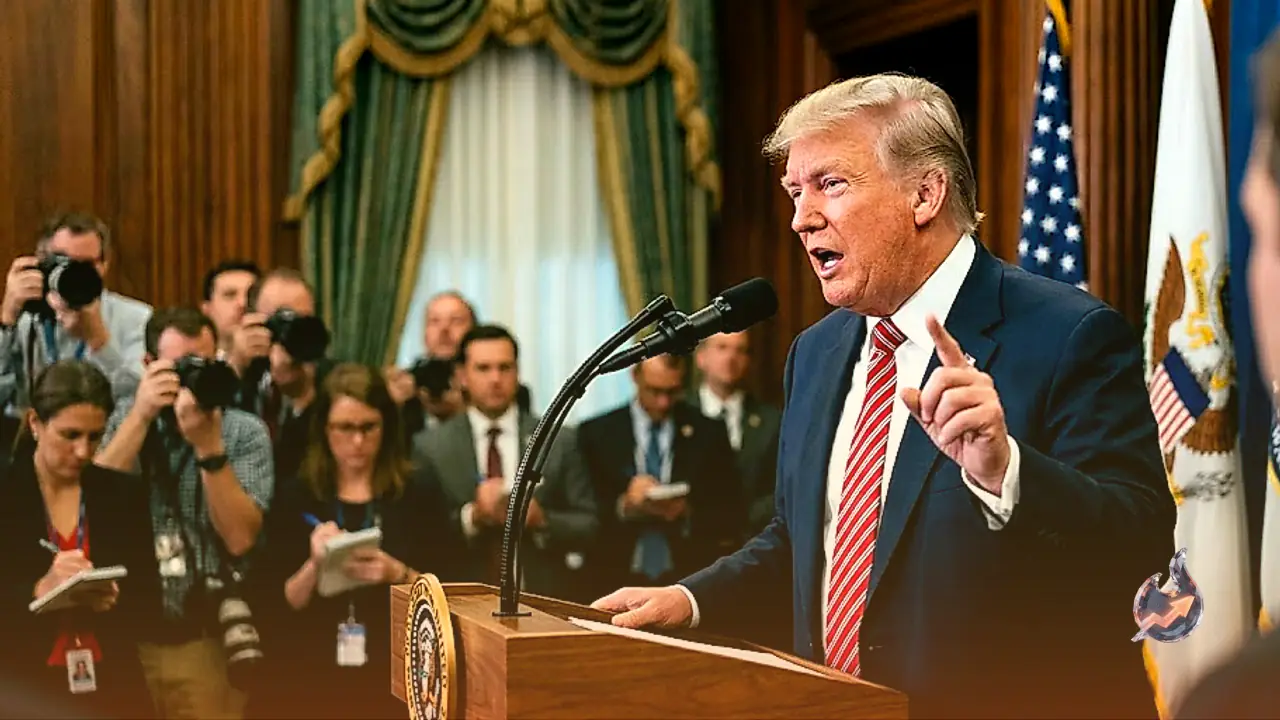

























A sharp philosophical divide has erupted across the highest ranks of the artificial intelligence sector regarding whether the rapid acceleration of cutting-edge models should be deliberately moderated. Anthropic chief executive Dario Amodei recently outlined a detailed framework aimed at pacing the frontier of machine intelligence. That perspective, however, stands in stark contrast to the stance voiced by Nvidia chief executive Jensen Huang, who publicly aligned with Donald Trump in dismissing the growing apprehension surrounding rapid deployment as unfounded and arguing that additional regulatory constraints are entirely unnecessary.
The Pacing Framework and Growing Skepticism
Support for Amodei's pacing concept quickly garnered visible backing from other notable sector figures, including OpenAI chief executive Sam Altman and to some extent Elon Musk. This apparent alignment represents an unexpected pivot for an industry that has spent years prioritizing unbridled computational scale above almost everything else. Yet close examination of these emerging proposals reveals a significant lack of concrete operational details. The public statements remain notably thin regarding the exact nature of the catastrophic risks being cited, as well as the precise mechanical measures that would actually govern an intentional deceleration.
Skeptics point out that the fundamental economic and organizational structure of venture-backed technology companies makes voluntary restraint exceptionally difficult to execute. Furthermore, while the ideas underlying Amodei's framework had been circulating within safety research circles for some time prior to his formal post, the speed with which competing executives rallied behind the rhetoric raises questions. Rather than signaling an authentic, binding commitment to slow down product development, this rapid convergence appears to many observers more like a calculated positioning exercise designed to project responsibility without imposing hard operational brakes.
Third-Party Audits and Cartel Concerns
The substantive core of the pacing blueprint centers around three foundational mechanisms. The first calls for the integration of independent, third-party evaluators embedded directly within frontier development laboratories such as Anthropic and OpenAI. These outside monitors would oversee internal safety practices and track technical anomalies or incidents. However, the governance structure, legal authority, and operational independence of these hypothetical auditors remain entirely undefined.
The second pillar proposes that major developers based in democratic nations coordinate directly to establish unified safety thresholds and operational limits, paired with a third element focused on broader international alignment. While industry consensus can theoretically establish baseline safety norms, critics note that collaborative frameworks among dominant market players can also serve as the foundation for an industry cartel. By jointly setting technical bars and compliance requirements, the incumbent frontier labs could inadvertently or deliberately erect insurmountable barriers to entry for smaller open-source developers and emerging competitors.
Nvidia and the Alignment with Washington
The notion of artificially capping technical momentum has triggered outspoken resistance, most prominently from Nvidia's Jensen Huang. During an appearance at the All-In Summit, Huang participated in an onstage telephone conversation with Donald Trump, using the moment to push back against any prospect of an enforced pause. Huang has increasingly stepped into the role of the measured, senior statesman for the semiconductor and computing sector. That standing was previously held by Microsoft chief executive Satya Nadella, particularly when Nadella aggressively framed his company's competitive challenge to Google in web search, though subsequent market developments diminished that specific influence.
Huang currently serves as a vital bridge connecting high-performance silicon manufacturing with policymakers in Washington. Yet this position also aligns directly with Nvidia's balance sheet. The chipmaker derives immense commercial benefit from an unconstrained, highly competitive race where frontier labs must continuously purchase unprecedented volumes of specialized hardware. In this dynamic, the interests of Donald Trump and Jensen Huang converge naturally, providing an influential counterweight against those calling for institutional speed limits on technological iteration.
The Breakdown of Free-Market Safeguards
Arguments suggesting that open-market competition and legacy oversight mechanisms can sufficiently govern advanced machine intelligence overlook significant structural realities. On the regulatory side, the federal government currently demonstrates minimal appetite for enforcing broad technological guardrails, let alone pioneering interventionist rules tailored to cutting-edge neural architectures.
Simultaneously, the market discipline typically exerted by consumer choice fails to function effectively in the frontier software space. The business models of premier labs have pivoted heavily toward enterprise contracts and infrastructure integration. Corporate customers rarely sever mission-critical software pipelines over abstract ethical disagreements. A commercial enterprise will not suddenly abandon OpenAI's Codex to migrate its engineering workflows over to Anthropic's Claude Code simply because of disagreements with management's public statements. Bolstered by massive capital reserves from global investors, these developers possess the financial cushion to absorb public scrutiny without feeling direct economic pressure to moderate their engineering velocity.