























The geopolitical situation in the Persian Gulf has reached a flashpoint following the announcement by the Islamic Revolutionary Guard Corps (IRGC) that it has completely blocked the Strait of Hormuz. In a swift response to this maneuver, the United States launched a series of strikes against multiple targets within Iran. According to Iranian state media, powerful explosions were reported in the coastal cities of Bandar Abbas and Sirik. The U.S. justified the military intervention as a direct consequence of an Iranian assault on a Cyprus-flagged vessel, an act that has further jeopardized an already fragile ceasefire agreement.
U.S. Central Command Strategy
The U.S. Central Command released an official statement confirming that at 7:15 p.m. (ET), their forces initiated the third round of strikes against Iran this week. This operation was triggered when IRGC forces launched an unprovoked attack on the Cyprus-flagged container ship 'M/V GFS Galaxy' as it traversed the Strait of Hormuz. The assault caused significant damage to the ship's engine room and ignited a major fire, leaving the vessel unable to continue its voyage. Furthermore, officials confirmed that a civilian crew member is missing in the wake of the attack.
Breach of Memorandum of Understanding
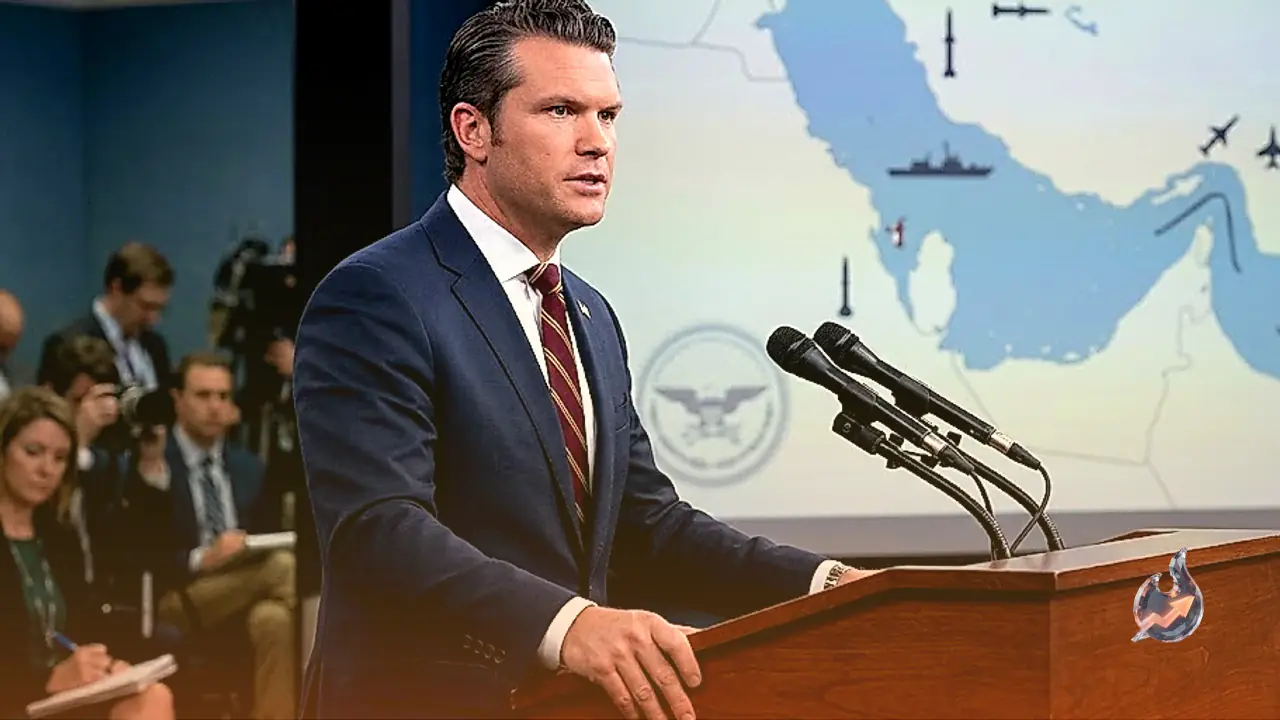
The U.S. statement emphasized that after being held responsible for previous attacks on commercial shipping, Iran was given an opportunity to adhere to a 'Memorandum of Understanding' to ensure maritime safety. Tehran, however, failed to comply with these terms. Consequently, the U.S. is now taking decisive measures to neutralize Iran’s capacity to threaten civilian mariners and commercial vessels passing through the vital waterway. Defense Secretary Pete Hegseth addressed the situation on social media, asserting, 'Iran made a bad decision. Now they will pay the price.' These military actions are being conducted under the express direction of the Commander-in-Chief.
Diplomatic Breakdown and Tensions
The escalation occurred following intense diplomatic discussions regarding the safety of the Strait. American officials in Washington had previously signaled that any further talks regarding the implementation of the ceasefire agreement reached last month were contingent upon the Strait of Hormuz remaining secure. Washington had explicitly requested a public declaration from Iran to guarantee safe passage. Instead, the Revolutionary Guards Corps claimed that various vessels had ignored their instructions and warnings to follow designated routes, noting that in at least one instance, warning shots were fired to stop a ship. Iran has since warned that it will consider targeting further enemy locations if the U.S. continues its military operations in the region.