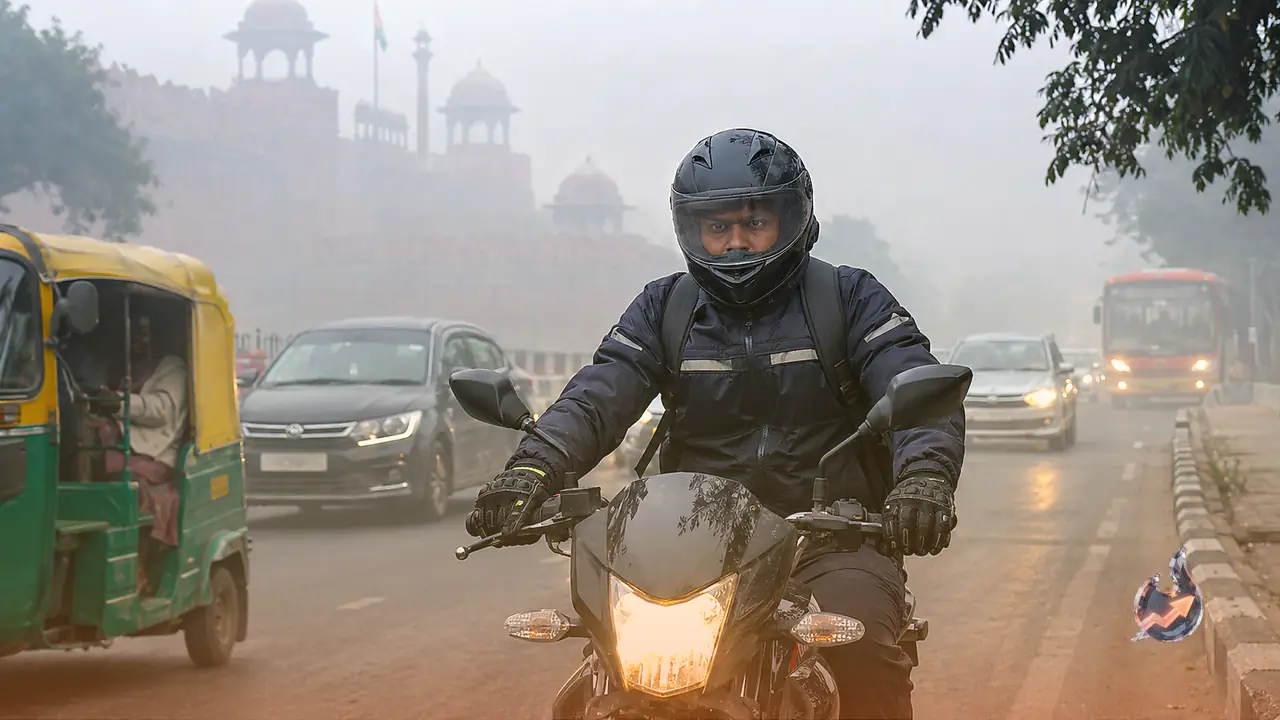

With the onset of the winter season, atmospheric conditions deteriorate rapidly across the National Capital Region, pushing air pollution levels into the severe category. For daily two-wheeler commuters navigating these conditions for work, navigating roadways turns into a major physical challenge. Toxic air and lingering smog not only inflict harm on the lungs and eyes but also drastically reduce street-level visibility. When dense natural fog merges with airborne particulates, roadway conditions turn significantly more treacherous.
Subdued visibility steeply escalates the probability of vehicular collisions, while hazardous pollutants enter the body directly through breathing. Under such harsh environmental conditions, even minor lapses in attention or safety discipline can result in severe consequences. To safeguard personal health and physical well-being, motorcycle and scooter riders must introduce critical adjustments to their regular riding routines. Maintaining specific safety habits makes navigating winter roads substantially safer.
Effective Respiratory Defense and Full-Face Helmets
Relying on standard cloth pieces or everyday handkerchiefs offers little defense against hazardous airborne particles. Two-wheeler commuters should instead rely on certified N95 or N99 protective masks to filter out fine particulate matter. In addition, riders should discard open or half-face options in favor of high-grade, full-face helmets equipped with tightly sealed visors. Keeping the visor completely closed while moving prevents toxic air and suspended dust from directly entering the nasal passages and mouth.
Eye Protection with Anti-Glare Glasses
Prolonged exposure to heavy smog frequently triggers intense burning sensations and watery eyes, which can instantly divert a rider's focus away from traffic. To mitigate this hazard, vehicle owners must keep their helmet visors thoroughly clear and free of smudges. Wearing zero-power anti-glare protective eyewear during journeys shields the eyes against dense smoke while neutralizing harsh glare from the street, allowing riders to maintain uncompromised visual concentration.
Lighting Discipline and Speed Moderation in Fog
Whenever thick smog and fog restrict clear sightlines, riders need to moderate their vehicle speed and travel at a steady, manageable pace. During early morning or nighttime commutes, operating the vehicle exclusively on low-beam headlights is essential. High-beam lighting reflects directly off moisture particles in the fog, creating a blinding glare that obscures the road ahead. Riders should also maintain an extended following distance behind leading vehicles and avoid harsh, sudden braking.
High-Visibility Apparel and Timely Signalling
Ensuring that larger vehicles spot your two-wheeler from a safe distance is critical during conditions of poor contrast. Commuters should wear brightly colored outerwear or garments fitted with retro-reflective tape that shines under ambient light. Turn signals and indicators should be activated well in advance before making turns or switching traffic lanes. If fog becomes extraordinarily dense and eliminates roadway orientation, avoid taking undue chances by pulling over at a safe roadside spot until atmospheric conditions improve.