


















Today, July 14, marks the death anniversary of Madan Mohan, the composer credited with giving ghazals a permanent home in Hindi cinema. His journey took him from the uniform of an army officer to becoming one of Bollywood's most beloved tunesmiths, and even though he passed away at just 51, the melodies he left behind still resonate with music lovers.
From Baghdad to Mumbai
Madan Mohan was born on June 25, 1924, in Baghdad, the capital of Iraq. His father, Rai Bahadur Chunilal Kohli, was employed there at the time, which is why the composer's earliest years were spent outside India. The Kohli family eventually returned home, spending time in Lahore before finally settling down in Mumbai. Even as a child, Madan Mohan was drawn to music. He received formal early training in classical music, but it was years of hard work, dedication and hands-on experience that truly shaped him into an accomplished composer.
Trading the army uniform for a music career
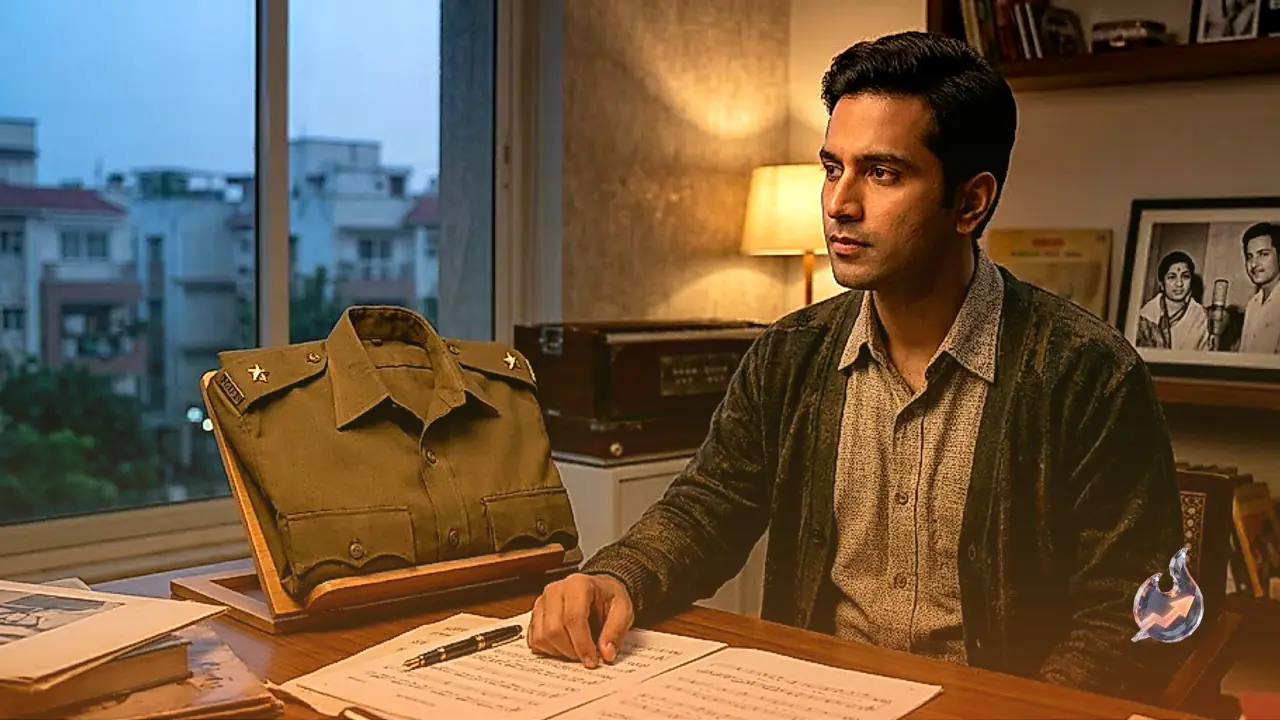
After completing his education, Madan Mohan joined the Indian Army in 1943 as a Second Lieutenant. Following roughly two years of service after the Second World War ended, he left the army and turned his attention fully to music. He then worked as a Programme Assistant at All India Radio's Lucknow and Delhi stations. It was there that he got the chance to work alongside and learn from stalwarts such as Ustad Faiyaz Khan, Ustad Ali Akbar Khan, Begum Akhtar and Talat Mahmood, an experience that deepened his musical understanding considerably.
Breaking into films
Madan Mohan began his film career as an assistant music director. The 1950 film Aankhen brought him recognition as an independent composer in his own right. From there, he went on to score memorable music for films including Ada, Dekh Kabira Roya, Sharabi, Woh Kaun Thi?, Mera Saaya, Haqeeqat, Dastak, Heer Raanjha, Mausam and Laila Majnu, each of which still carries its own distinct musical identity.
Giving the ghazal a new identity
Madan Mohan is particularly credited with giving the ghazal a fresh identity within Hindi films. Every tune he composed carried the depth of classical music along with a distinct sweetness of emotion. He created a string of superhit songs with legendary singers such as Lata Mangeshkar, Mohammed Rafi, Talat Mahmood, Manna Dey, Kishore Kumar, Mahendra Kapoor and Hemant Kumar. Among these, his collaboration with Lata Mangeshkar was the most cherished, and together the two created several songs that are still considered timeless. He also shared a remarkable creative rapport with lyricists Raja Mehdi Ali Khan, Kaifi Azmi, Rajinder Krishan, Sahir Ludhianvi and Majrooh Sultanpuri. Weaving emotion beautifully into every melody was, by all accounts, his greatest strength as a composer.
The golden years of his career
The decades of the 1960s and 1970s are regarded as the most golden phase of Madan Mohan's career. It was during this period that he composed timeless songs such as Lag Ja Gale, Naina Barse, Kar Chale Hum Fida and Ye Duniya Ye Mehfil, tracks that feel just as fresh today as they did back then. In 1971, he won the National Film Award for Best Music Direction for the film Dastak. Lata Mangeshkar was so struck by his talent that she affectionately called him the "Ghazal ka Shehzada", the prince of ghazals.
A short journey, an enduring legacy
Madan Mohan passed away on July 14, 1975, at the age of just 51. His career may not have spanned many decades, but the songs and melodies he gave Indian music are still regarded as one of its most precious legacies, continuing to bring the same comfort to music lovers across generations.