



















Throughout the 1990s, actress Madhuri Dixit remained a dominant force in Hindi cinema, capturing public attention not only for her unmatched dance moves and stellar performances but also for her widely discussed personal life. Over the years, media speculation constantly linked her name with high-profile co-stars. Reports associated her with leading men like Anil Kapoor, Aamir Khan, and Sanjay Dutt. Speculation also surrounded her bond with Indian cricketer Ajay Jadeja, while her captivating on-screen chemistry with Mithun Chakraborty kept audiences talking. However, beyond these famed actors and sports icons, there was another prominent name quietly tied to her name, one that fewer casual observers remember today. That name belonged to Suresh Wadekar, one of the most respected playback singers in the Indian music industry. For years, stories persisted about a potential marriage proposal between the two, but when Wadekar eventually spoke out about the matter, he offered a completely different account of what had transpired.
The Truth Behind the Marriage Proposal Claims
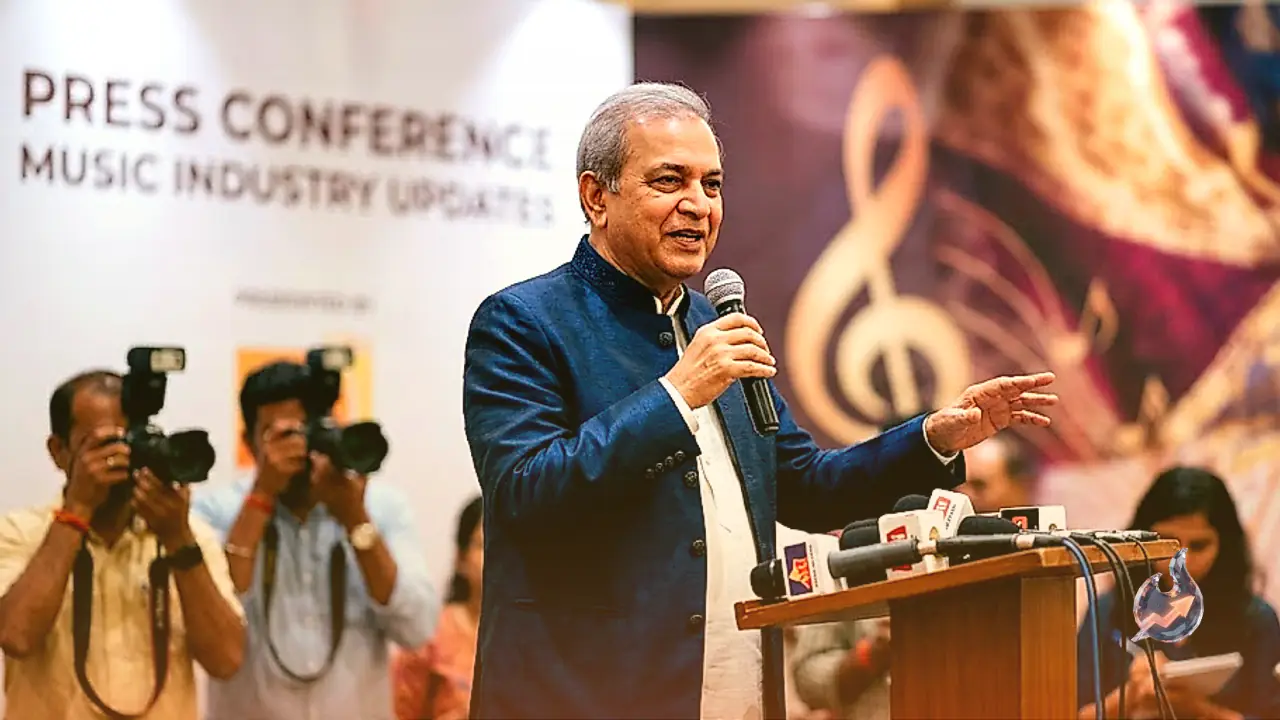
For a long time, persistent rumors suggested that early in Madhuri Dixit’s career, her family had sent a formal marriage proposal to Suresh Wadekar. According to those widely circulated stories, the singer’s family allegedly rejected the match on the grounds that the actress was too thin. This account became an enduring piece of Bollywood trivia for decades. However, when Suresh Wadekar finally addressed the claim during a formal interview, he firmly set the record straight. He stated that the story was completely false and that no such proposal had ever been brought to him or his family. Speaking with genuine warmth and respect for Madhuri Dixit, Wadekar clarified that he considered her a wonderful friend, thereby putting an end to years of unfounded gossip.
Early Life in Kolhapur and Classical Music Foundation
Behind the headlines of Bollywood speculation lies Suresh Wadekar’s extraordinary musical journey. Born on August 7, 1955, in Kolhapur, Maharashtra, he grew up in a modest household. His father, Ishwar Wadekar, worked in a local mill to support the family while harboring a deep passion for music. Listening to his father sing devotional bhajans at home inspired young Suresh to explore his own musical abilities. Recognizing his son’s innate potential, his father envisioned a career in singing for him and enrolled him in formal music training at an early age. Suresh Wadekar trained under Guru Pandit Jialal Vasant, learning the intricate nuances of Indian classical music. This rigorous instruction provided his voice with a unique texture and technical precision that later distinguished him in the industry.
Breakthrough via Sur-Singar and Early Film Hits
Suresh Wadekar’s major career breakthrough occurred in 1976 when he entered the prestigious Sur-Singar music competition. His soulful voice and flawless control caught the attention of the judging panel, which included legendary music directors Ravindra Jain and Jaidev. Impressed by his talent, Ravindra Jain offered him his first film playback opportunity in Rajshri Productions’ film Paheli. Around the same time, composer Jaidev chose him to render the poignant ghazal Seene Mein Jalan, Aankhon Mein Toofan Sa Kyun Hai for the movie Gaman. The song achieved widespread acclaim, establishing Wadekar as a formidable new talent in Hindi film music.
Collaboration with Laxmikant-Pyarelal and Becoming the Voice of Rishi Kapoor
Following his initial success, Suresh Wadekar’s career accelerated rapidly. In 1981, the iconic composer duo Laxmikant-Pyarelal paired him with playback legend Lata Mangeshkar for a song in the movie Krodhi. This marked the beginning of a prolific phase filled with classic tracks. He sang Megha Re Megha Re for Pyasa Sawan, Main Hoon Prem Rogi and Meri Kismat Mein Tu Nahi Shayad for Prem Rog, and the timeless ballad Aye Zindagi Gale Laga Le for Sadma. His vocal timbre matched actor Rishi Kapoor exceptionally well following Prem Rog, leading to Wadekar singing for several major Kapoor family projects, including Ram Teri Ganga Maili, Henna, and Prem Granth. Over his career, he collaborated with master composers such as Gulzar, RD Burman, AR Rahman, Vishal Bhardwaj, and Ilaiyaraaja.
Regional Works, Ajivasan Academy, and National Honours
Suresh Wadekar’s artistic contributions extended well beyond Hindi mainstream cinema. He recorded numerous devotional tracks and lent his voice to songs in Marathi, Bhojpuri, Konkani, and other Indian regional languages. Later in life, he dedicated himself to music education, establishing the Ajivasan Music Academy to train aspiring musicians and preserve classical traditions. His contributions have been recognized with top national honors. In 2011, he won the National Film Award for Best Male Playback Singer for the Marathi film Mee Sindhutai Sapkal. He has also received the Lata Mangeshkar Award and the Sangeet Natak Akademi Award. In 2020, the Government of India conferred upon him the Padma Shri, the nation’s fourth-highest civilian award, honoring his lifelong devotion to music.