



















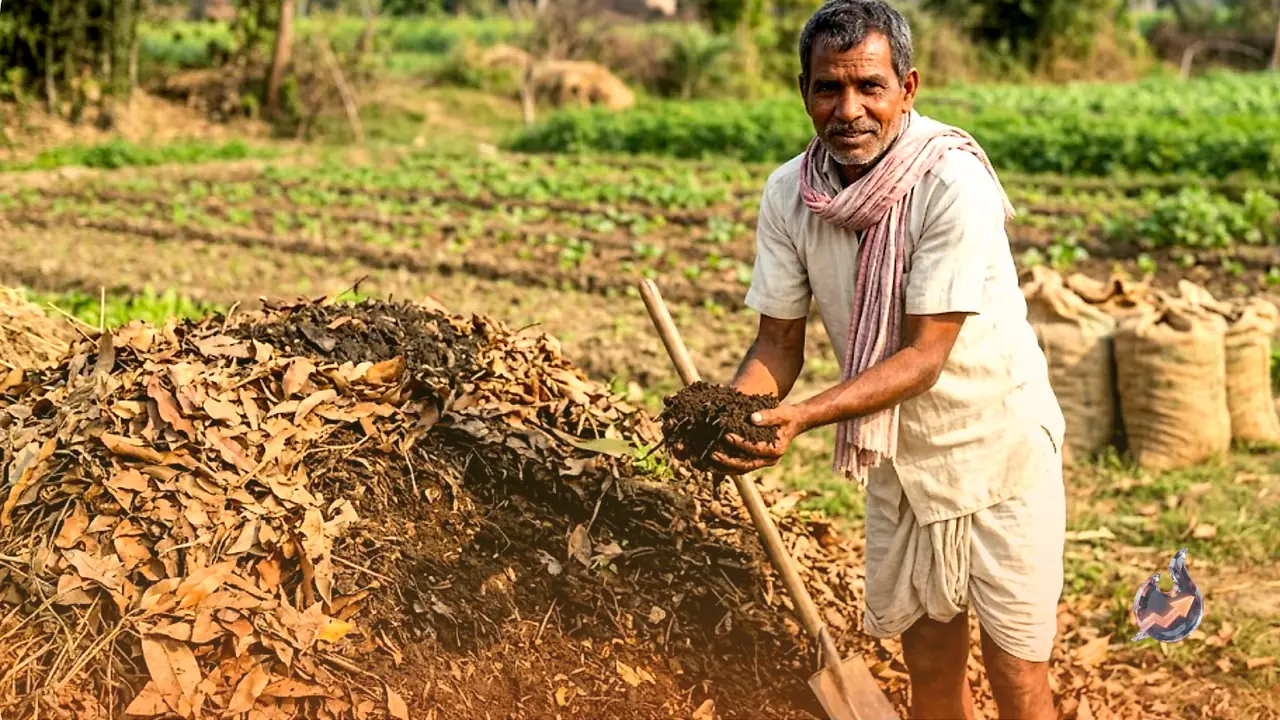

Upendra Singh, a progressive farmer from Aayar village in the Bhojpur district of Bihar, is setting a new benchmark for sustainable farming practices. While most people typically view fallen or dried leaves from gardens as waste—often burning them or discarding them entirely—Upendra Singh has identified these materials as a valuable resource. By systematically gathering these leaves, he creates high-quality organic fertilizer. This unique and environmentally friendly experiment not only provides a highly nutritious soil supplement for his crops but also significantly minimizes environmental pollution caused by burning garden debris.
The Process of Creating Nutrient-Rich Manure
Describing the method, the farmer explains that the process begins with collecting the dry leaves scattered throughout the garden. Once gathered, these leaves are spread layer by layer into a pit or a specifically designated area. To ensure effective decomposition, materials such as cow dung, lemon, and other natural organic ingredients are added to the layers. This combination allows the leaves to decay gradually, transforming them into compost enriched with vital nutrients. He emphasizes that maintaining proper moisture levels and regularly turning the mixture are critical steps to accelerate the preparation of the fertilizer.
Boosting Soil Health
A key aspect of this organic manure is its total lack of chemical substances. According to Upendra Singh, the fertilizer is completely safe for the soil. Its consistent application contributes to an increase in organic carbon levels within the soil structure. Furthermore, it fosters an environment where earthworms and beneficial microorganisms thrive, leading to better soil aeration and improved water retention capacity. As a result, crop roots grow stronger and healthier, allowing plants to undergo natural development without relying on synthetic inputs.
Cost Reduction and Enhanced Yields
Currently, Upendra Singh utilizes this organic fertilizer across his multi-acre fields and orchards. He notes that the practice has allowed him to drastically reduce his reliance on expensive chemical fertilizers, leading to substantial savings in overall cultivation costs. Beyond the financial benefits, he has observed a positive impact on both the quality of his produce and the total yield of his crops.
A Model for Environmental Stewardship
The habit of burning dry garden leaves contributes significantly to smoke and air pollution; however, Upendra Singh has successfully repurposed this waste into a productive agricultural resource. This strategy addresses waste management challenges while contributing positively to environmental protection. His efforts have now become a beacon of inspiration for neighboring farmers. Many cultivators have started visiting his farm to learn the intricacies of this composting method, with plans to implement it in their own agricultural practices. If more farmers adopt these natural and low-cost techniques, it could prove instrumental in promoting organic farming while ensuring the long-term health and vitality of the soil.