






















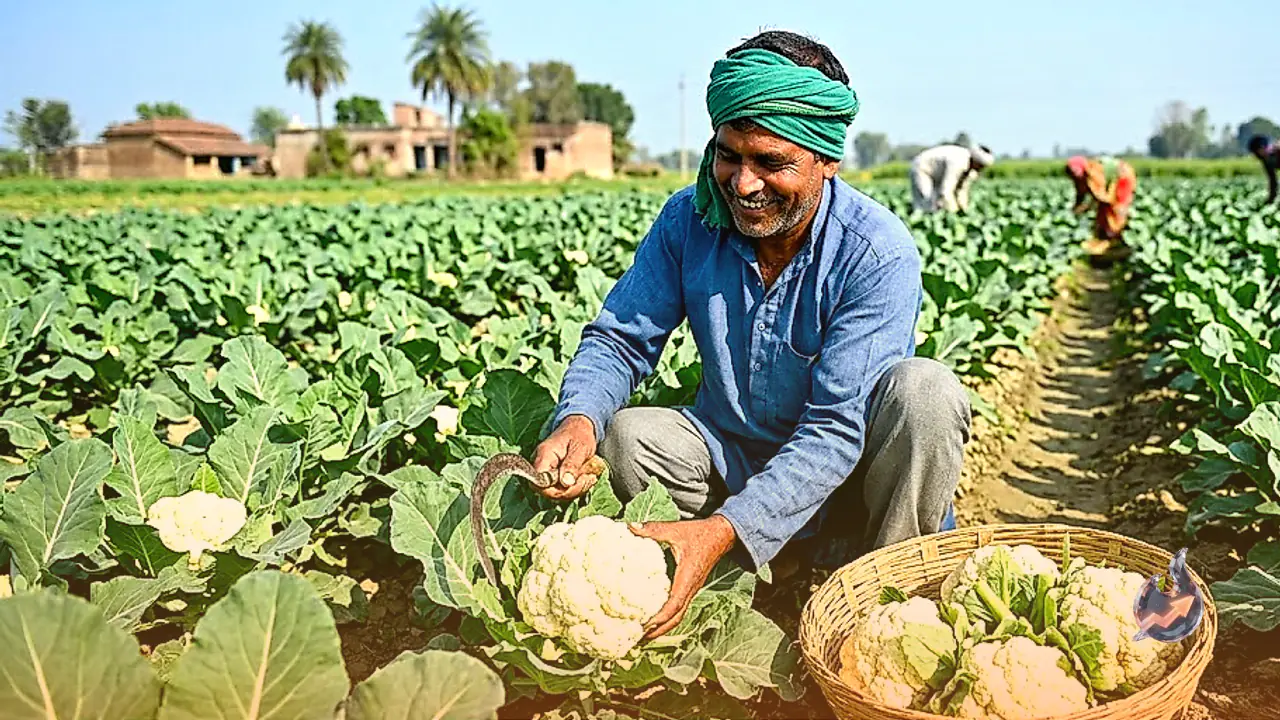

A significant transformation is currently underway across India's agricultural sector. Farmers are increasingly stepping away from traditional grain cultivation to focus on high-value cash crops that offer higher yields within shorter cycles and with optimized labor inputs. Central to this change is the adoption of scientific farming methodologies. For commercial vegetable growers, modern cauliflower cultivation has emerged as a highly lucrative venture. By utilizing high-yielding hybrid varieties alongside scientifically recommended practices, growers are managing to secure profits running into lakhs of rupees within a single farming season.
High-Yield Hybrid Varieties and 75-Day Profitability
The primary advantage of commercial cauliflower farming is its rapid crop turnaround time. By transplanting scientific hybrid varieties at the right time, farmers can complete their harvest and market their crop in just 70 to 75 days. This condensed growth window allows growers to quickly recover their initial investments while realizing substantial net earnings. Choosing the appropriate crop variety is the cornerstone of this financial success.
Renowned hybrid seeds such as Pusa Dipavali and Pusa Kartik are widely available in agricultural markets. These improved varieties produce cauliflower heads that are remarkably dense, large, and heavy. Because of their superior firm texture and visual appeal, crops grown from Pusa Dipavali and Pusa Kartik experience consistent, high demand in wholesale vegetable mandis and city markets, commanding premium prices for farmers.
Field Preparation, Sandy Loam Soil, and Drainage Management
Manohar Singh, a commercial vegetable farmer operating in Azamgarh, emphasizes that selecting quality seeds must be coupled with proper environmental and field management. He highlights that constructing an effective drainage system during land preparation is essential to prevent waterlogging, which can otherwise damage root systems and degrade crop health.
Soil quality plays a vital role in determining overall yield. Sandy loam soil is widely recognized as the most suitable medium for growing robust cauliflower crops. The soil pH should ideally range between 5.5 and 6.6. Maintaining this balance ensures efficient nutrient absorption. Prior to planting, the field should be thoroughly plowed to turn the soil into a fine, friable structure.
Nursery Bed Preparation, Decomposed Manure, and Fungicide Treatment
Developing a well-managed nursery prior to field transplanting is a mandatory step in the cultivation pipeline. When setting up nursery beds, farmers should mix well-rotted cow dung manure into the friable soil. This organic manure provides essential nutrients that stimulate early seedling vigor and healthy root establishment.
Equally critical is seed treatment before sowing. Seeds must be treated with Carbendazim or other certified fungicide preparations. High moisture levels in nursery beds often create ideal conditions for fungal pathogens, which can decimate young sprouts. Chemical treatment using Carbendazim shields the seeds against moisture-induced fungal attacks, drastically lowering disease risk after sowing and protecting the grower's financial investment.
Transplanting Spacing Rules, Evening Timing, and Initial Irrigation
Once seedlings are ready for field transfer, strict adherence to planting dimensions is necessary to maximize yield. Farmers should maintain a distance of approximately 45 to 60 centimeters between rows, while keeping plant-to-plant spacing at around 45 centimeters. Proper spacing ensures each plant receives adequate sunlight, air circulation, and soil nutrients without overcrowding.
Timing the transplanting process correctly is equally critical for seedling survival. Transplanting should strictly take place in the evening hours. Moving plants during the cooler evening prevents heat shock and wilting associated with high afternoon temperatures. Immediately after seedlings are set into the ground, applying light irrigation is essential. This initial watering enables the plant roots to establish a strong, firm anchor in the soil.