























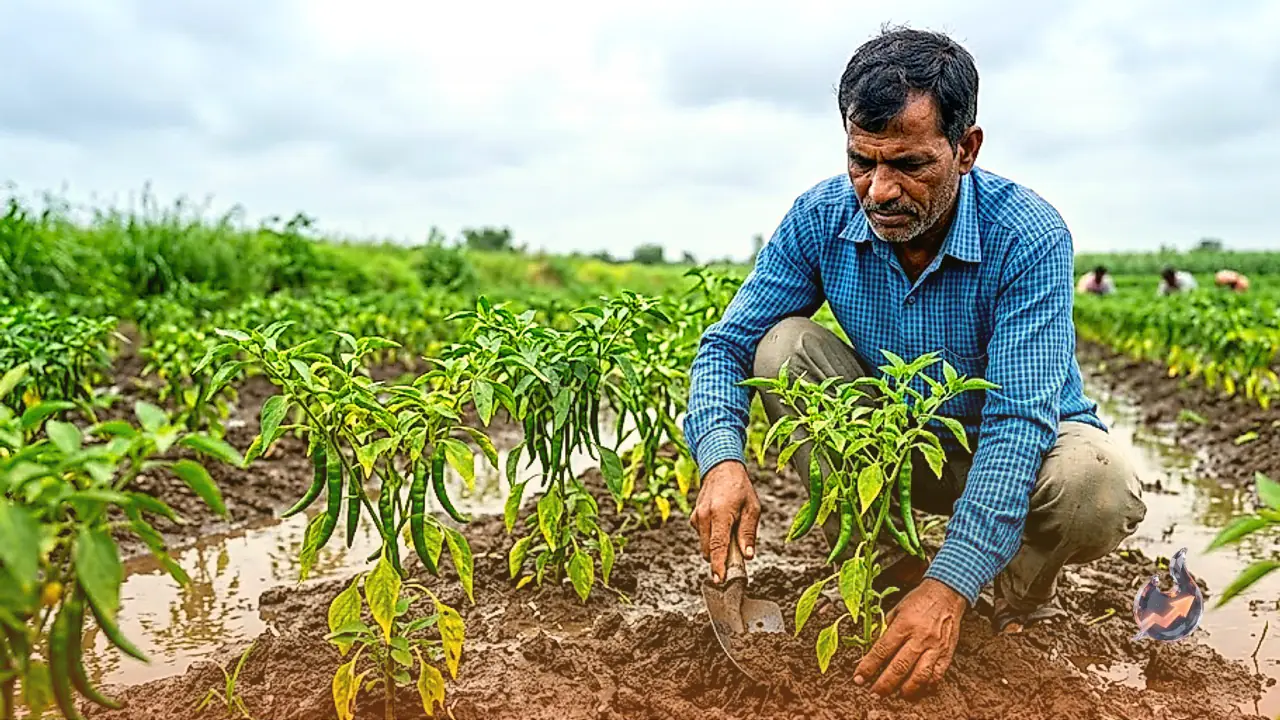

Protecting green chilli crops from heavy monsoon downpours remains a major challenge for cultivators. When rainwater stagnates around the roots of chilli plants for prolonged periods, the soil experiences a severe lack of oxygen. This excessive moisture creates an ideal breeding ground for harmful fungi. Crop protection scientist Dr Hadi Hussain noted that this extreme dampness causes the roots to rot, a condition known as root rot. As the root system deteriorates, the plant stops absorbing water and essential nutrients, causing the vibrant green chilli plants to wither suddenly.
Once affected by root rot, plants begin to droop from the top. Their green leaves lose color, turn yellow, and start falling off. Farmers often mistake this for a simple lack of sunlight, but underneath the surface, the roots have already turned black and weak. Gradually, the entire plant loses stability near the stem, falls to the ground, and the entire crop gets destroyed within days.
The very first and most crucial step after draining excess water is soil aeration. Gently loosen the hardened soil around the base of the plants using a hand trowel. This process helps trapped moisture evaporate quickly and allows fresh air to reach the roots. Once oxygen reaches the root system, fungal growth slows down, and the plants regain their ability to breathe.
For those looking to avoid synthetic chemicals, Trichoderma is a highly effective organic fungicide. It acts as a beneficial fungus that destroys harmful pathogens. Prepare a solution by thoroughly mixing 5 to 10 grams of Trichoderma per liter of water. Drench the soil around the plant roots carefully with this organic mixture. It enhances soil fertility and provides long-term protection against plant diseases.
If the fungal outbreak is severe and plants are drying up rapidly, chemical fungicides like Carbendazim should be used. Prepare a mixture at a rate of about 2 grams of Carbendazim per liter of water. Apply this solution directly to the roots of affected plants so it immediately contacts and eliminates the fungus. Using the correct dosage halts the spread of the disease instantly and saves the crop.
Drenching does not mean simply watering the plants; it involves applying the medicated solution in precise amounts around the main stem and root zone. Before drenching, ensure the soil is not overly muddy so the medicine can penetrate deep into the roots. Roughly 100 to 150 milliliters of solution per plant is sufficient. Pouring this around the roots allows the treatment to reach every soil particle and eradicate disease-causing organisms.
Prevention is always better than cure, so proper drainage systems should be established in fields or pots before the rainy season arrives. Create small drainage channels in fields so surplus water can flow away easily. Check the drainage holes at the bottom of pots to prevent water accumulation. Mounding a little soil around the stem to create a small ridge ensures water does not touch the stem directly, greatly reducing the risk of root rot.
After treating root rot, plants need time to recover. Until the plant is fully healthy, avoid applying excessive nitrogen-rich fertilizers or overwatering. Once disease-free, nourish the plants with mild organic manure or vermicompost. Keep inspecting the crop regularly. These timely and careful precautions will keep your chilli harvest safe throughout the rainy season.