






















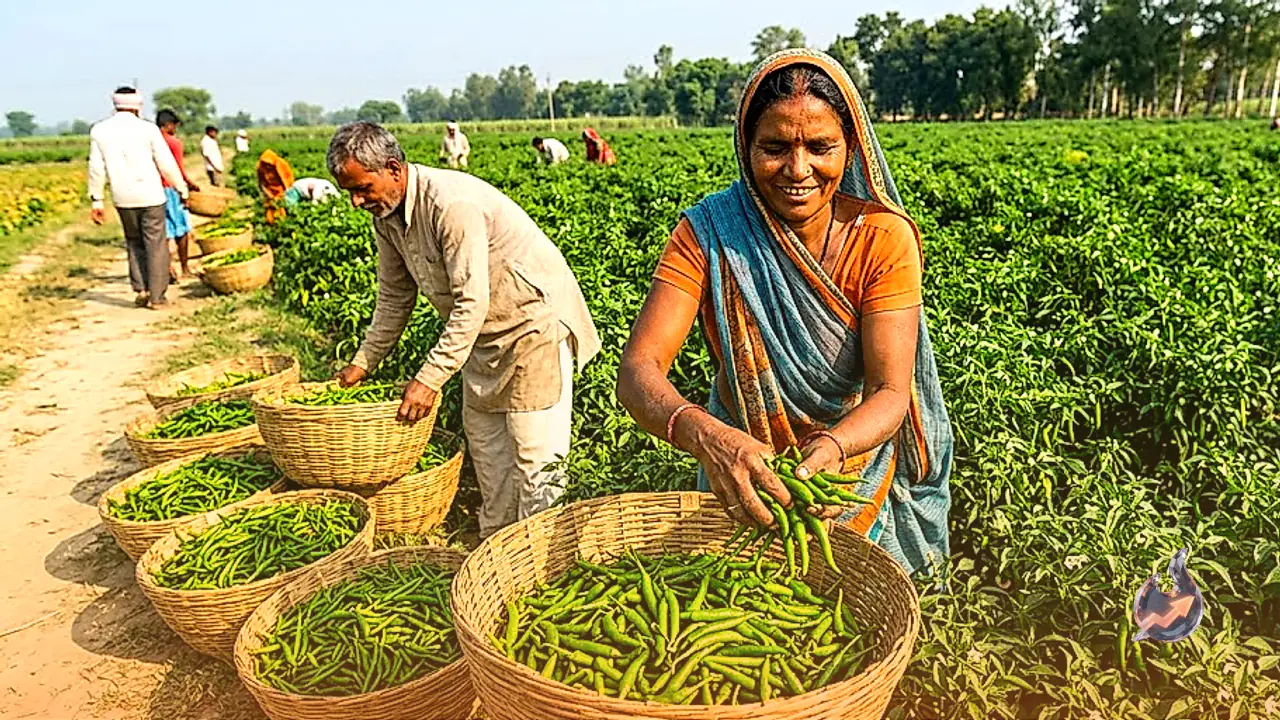

In the rural expanses of Agra district, Uttar Pradesh, local agricultural growers are increasingly diversifying away from conventional crops in favor of short-duration green chilli cultivation. Farmers in the Bichpuri countryside are harvesting a distinct variety of small, slender, and highly pungent green chillies that command strong commercial demand. Requiring just 60 days from initial seed sowing to reach the first picking stage, this low-cost crop allows smallholders to reap multiple harvests from a single planting cycle, securing a dependable stream of cash flow.
Low Input Costs and Rapid 60-Day Harvest Cycle
According to local grower Mahavir Singh from Bichpuri, green chilli farming demands minimal upfront expenditure compared to heavy seasonal staples. Proper land preparation, balanced fertilizer application, timely irrigation, and routine crop maintenance are all that is required to bring the fields to maturity. Within approximately 60 days of sowing, the fields yield their first picking of fresh green chillies.
A primary advantage of chilli farming is its recurring harvesting cycle. Depending on prevailing weather conditions and crop health, farmers can pick mature chillies repeatedly over an extended duration. This enables agricultural households to generate regular cash income every few days rather than waiting months for a single end-of-season payout.
Extensive Distribution Across Uttar Pradesh and Neighboring States
Once picked, growers transport their produce directly to agricultural mandis across Agra. Traders arriving from various districts of Uttar Pradesh, as well as neighbouring states, converge on these wholesale markets to purchase the harvest. Agra chillies are widely celebrated across trade circles for their strong aroma, distinct shape, and sharp spiciness.
From Agra mandis, wholesale merchants distribute the commodity to retail hubs and consumer markets across major towns and cities. Strong regional demand often translates to favorable market prices, boosting net earnings for local farming families.
Shift from Traditional Agriculture to Commercial Cash Crops
Facing climate variability and rising cultivation expenses, smallholders in Agra are strategically shifting toward fast-maturing horticultural alternatives. While conventional cereal crops demand long growing seasons and high water inputs, green chillies offer rapid economic returns within eight weeks.
The combination of modest capital investment, quick maturity, and sustained consumer demand has established green chilli cultivation as an increasingly popular cash crop across Agra's rural farming communities.
Culinary Popularity and Associated Health Claims
Highlighting the consumer appeal of the crop, farmer Mahavir Singh noted that the small, pungent chillies produced in Agra are sought after for enhancing food flavor. Beyond culinary uses, he added that consuming green chillies is traditionally believed to offer health benefits, claiming that green chilli seeds remaining in the digestive system help ward off various ailments.