























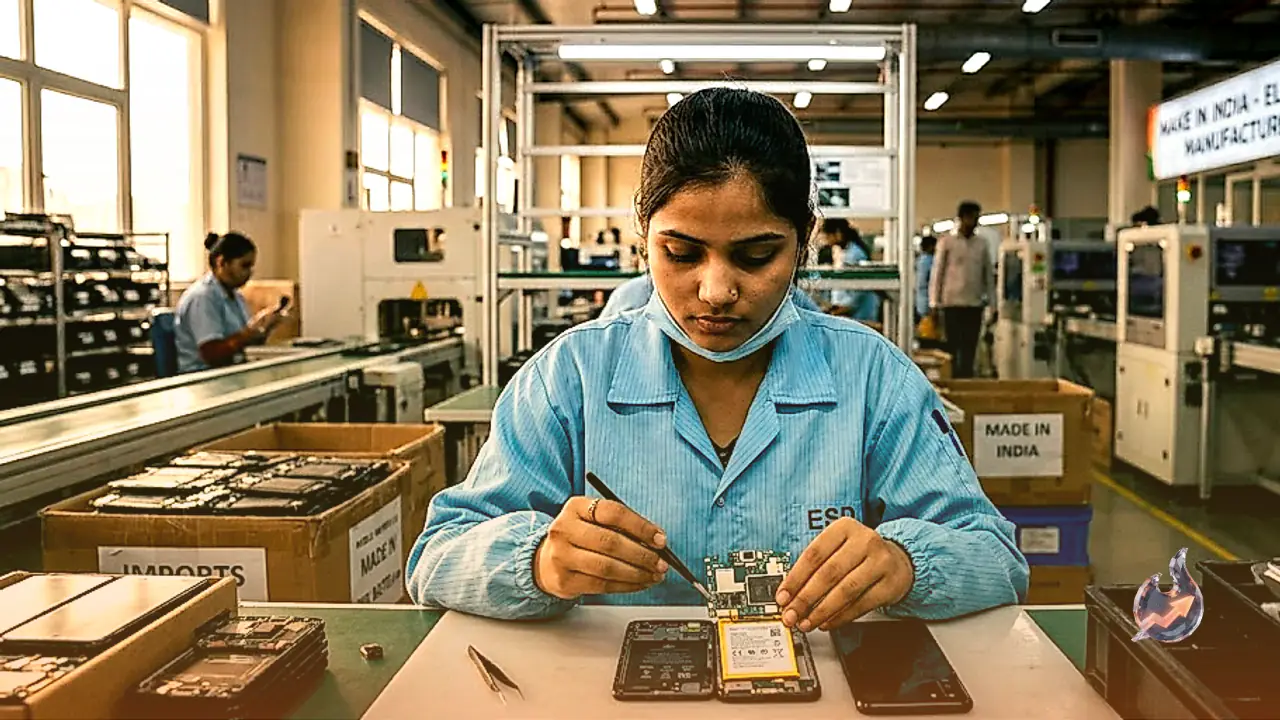

In a significant push for the electronic manufacturing sector, the government has announced the removal of import duties on various components used in mobile phones and battery production. This policy change, notified by the Ministry of Finance, will remain in effect until March 31, 2029. The initiative is designed to bolster domestic manufacturing capabilities while reducing dependence on imports. Additionally, support has been extended to the solar equipment and EPC sectors, which is expected to lower production costs and attract higher investment in these industries.
Extensive Relief for Battery Manufacturing Machinery
The government has significantly expanded the list of machinery exempt from import duties for the production of lithium-ion batteries. Approximately 85 types of machines are now covered under this tax relief. The list includes essential production equipment such as material mixing, coating, pressing, slitting, winding, stacking, electrolyte filling, welding, testing, and packaging machines. Furthermore, auxiliary equipment used in the battery manufacturing ecosystem, including solvent recovery systems, heat recovery systems, dust collection units, and effluent treatment systems, has also been included in this exemption. By defining clearer customs tariff categories, the government aims to make the import process more transparent and efficient for companies.
Incentivizing Mobile Components and Wireless Charging Technology
To further support smartphone assembly, the government has removed import duties on six key mobile components as well as several parts required for display assemblies. Included in this list are display cells, Flexible Printed Circuit Assembly (FPC), backlight units, frames, and Anisotropic Conductive Film (ACF). Moreover, to encourage local manufacturing of wireless charging modules, six specific components have been made duty-free, namely nano-crystalline assemblies, e-shields, PET liners, PC shims, coils, and neodymium magnets. These measures are specifically beneficial for display components used across automotive, medical, and industrial sectors.
Long-term Impact on Consumers and the Market
While this decision does not offer an immediate direct price cut for retail consumers, industry experts anticipate that lower production costs for electronics and batteries will eventually lead to competitive pricing for mobile phones, electric vehicles, and other electronic devices. Beyond price benefits, the move is expected to drive the creation of new employment opportunities by incentivizing domestic production units. As India seeks to strengthen its position within the global supply chain, the demand for lithium-ion batteries continues to grow across energy storage and EV sectors. The actual extent of price reductions will ultimately depend on corporate strategies, prevailing market demand, and overall operational costs.