





















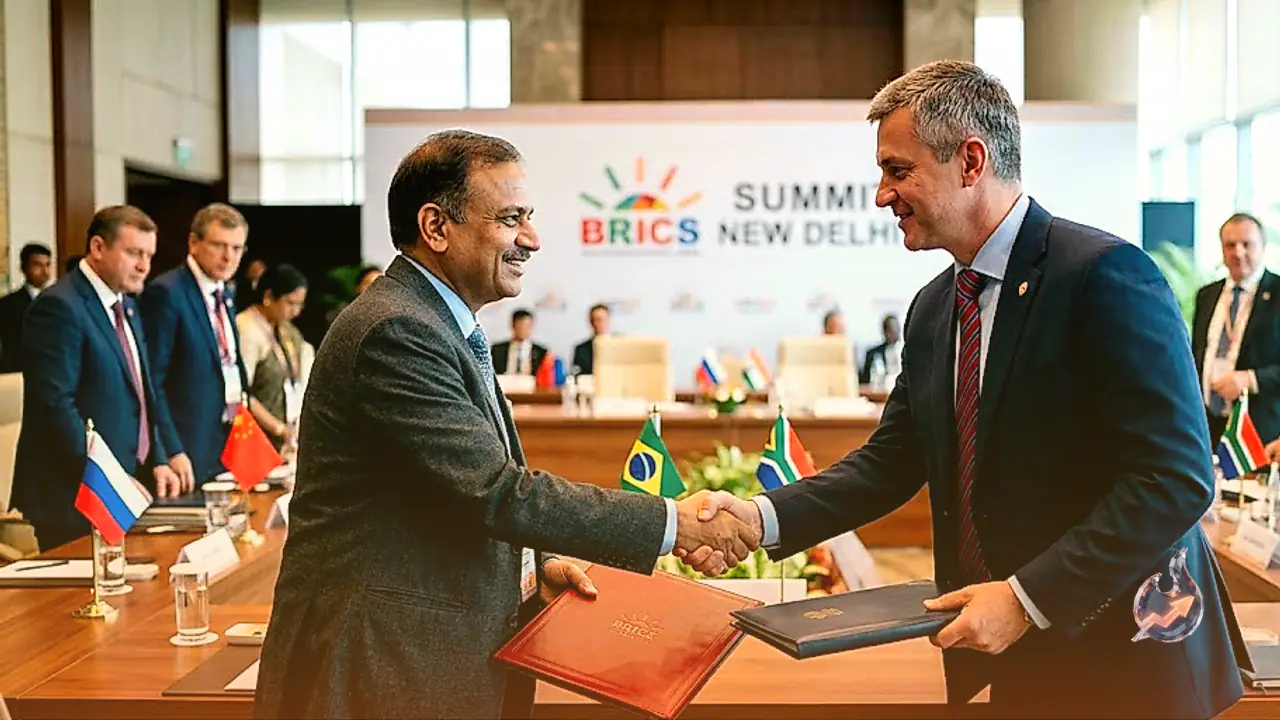

The 18th BRICS Summit currently underway in New Delhi is being viewed as a crucial milestone for the future of the Indian economy. Amid a global landscape marked by economic uncertainty and slowdowns, this major gathering of emerging economies could provide fresh momentum to domestic markets. Economic experts Sunil Shah and Pankaj Jaiswal have shared their detailed perspectives on the economic advantages India stands to gain from this high-profile summit.
According to financial analysts, the summit opens up several strategic advantages for the country across trade, foreign investment, and energy security fronts.
1. Exploring New Export Markets
The expansion of BRICS is actively opening new doors for Indian exports. This represents a prime opportunity to increase shipments of Indian goods and services to Russia, China, the UAE, Saudi Arabia, and various African nations. While direct relief from tariffs imposed by the United States is not immediately expected from the bloc, scaling up exports to alternative nations allows India to significantly reduce its reliance on the American market.
2. Emphasis on Local Currencies and Digital Payments
To challenge the dominance of the US dollar in global trade, member states are increasingly promoting commerce settled in local currencies. Expanding trade with Russia using local currencies eliminates payment complexities and assists in securing essential imports such as crude oil. Simultaneously, rapid progress is underway to streamline and accelerate cross-border transactions among BRICS nations through CBDCs and advanced digital payment mechanisms.
3. Investments in Infrastructure and Manufacturing from Gulf Nations
The presence of new member countries like Saudi Arabia and the UAE creates strong prospects for increased Foreign Direct Investment (FDI) into India. Experts note that Gulf countries are eager to deploy substantial capital investments into India's infrastructure, energy, logistics, and manufacturing sectors.
4. Strengthening India's Energy Security
The BRICS coalition includes the world's leading oil-producing nations, such as Russia, Saudi Arabia, and the UAE. Bilateral and multilateral strategic ties with these countries will prove immensely beneficial in safeguarding the nation's long-term energy security requirements.
Will BRICS Introduce Its Own Common Currency?
Financial analysts indicate that the immediate launch of a common BRICS currency remains highly unlikely. At present, the primary focus of all member states is firmly centered on conducting trade in their respective local currencies and strengthening digital payment systems.