






















Farming in India is moving beyond wheat and paddy fields, with more growers and entrepreneurs now turning to timber plantations for long term income. Teak, known as sagwan, has become an especially attractive choice because it needs relatively little upkeep and promises strong returns over time, and tissue culture teak in particular is drawing attention for how fast it grows and how good its wood quality turns out to be.
A businessman's four acre model plantation in Palamu
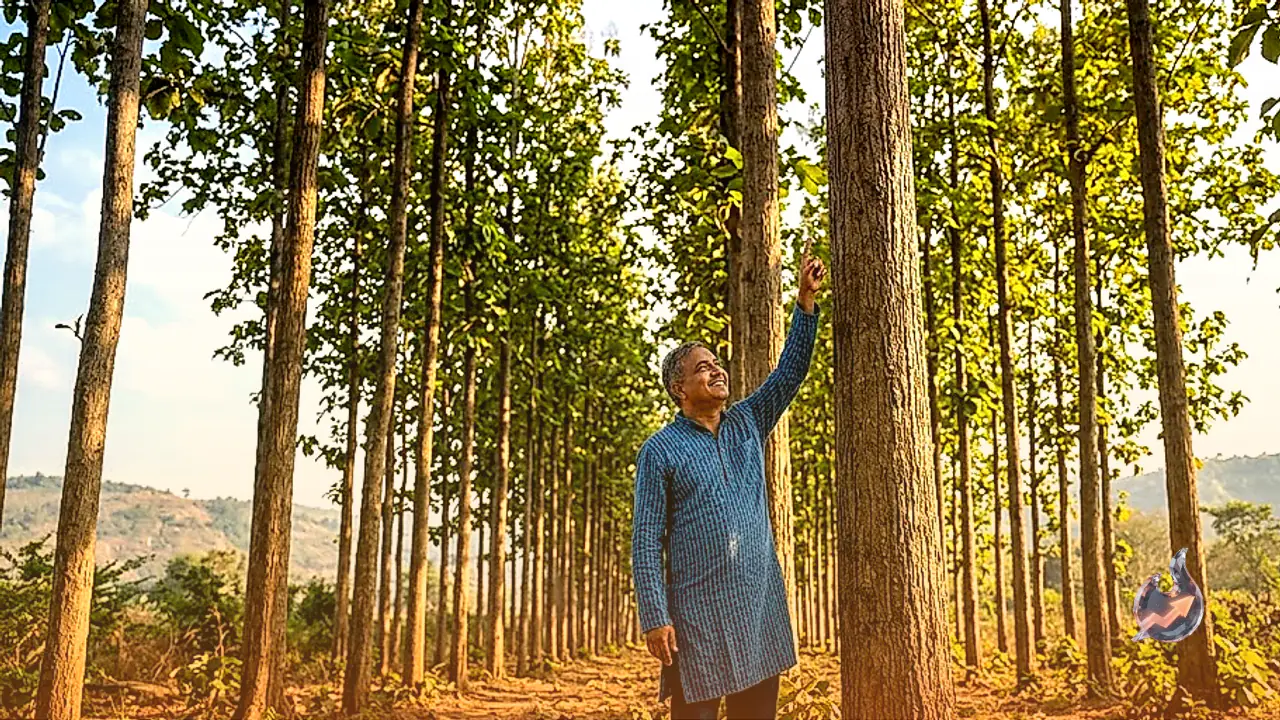
In Jharkhand's Palamu district, businessman and nature lover Satish Dubey has turned his four acre farm into a model plantation of timber and fruit bearing trees. Dubey, who lives in Basna village under Nawabazar block, has planted tissue culture teak saplings across this land, setting up what he hopes will be a solid source of income in the years ahead.
500 saplings from Nagpur, already 25 to 30 feet tall in two years
Dubey brought around 500 tissue culture teak saplings from Nagpur and planted them across his four acre plantation. It has only been two years since these saplings went into the ground, yet they have already reached a height of 25 to 30 feet. Dubey explains that the biggest advantage of tissue culture saplings is that they grow far faster than ordinary teak plants, while also producing better quality wood.
One tree could bring in up to Rs 1 lakh after 15 years
Speaking to Local18, Dubey said that if these teak trees are properly protected and cared for over roughly 15 years, a single tree could fetch a profit of close to Rs 1 lakh. With demand for timber steadily rising, prices are expected to climb even further in the future, which is why teak cultivation is increasingly being seen as a strong long term investment option for farmers.
Care matters early on, costs drop sharply afterward
According to Dubey, every pit was filled with 10 to 15 kilograms of decomposed cow dung manure along with organic material at the time of planting. The saplings need regular irrigation, care and weed control for the first two to three years. After that, the trees become sturdy enough that they no longer require special attention. The need for chemical fertilisers also drops sharply, which keeps the overall cost of cultivation under control.
A viable option for farmers with spare land
Dubey believes farmers who have extra land lying unused can take up timber cultivation as an alternative source of income. Advanced varieties like tissue culture teak, thanks to their fast growth, better quality and higher market price, can offer farmers long term financial security. His plantation in Palamu stands as an example of how, with the right planning and patience, timber cultivation can turn into a source of earnings worth lakhs of rupees in the years to come.