























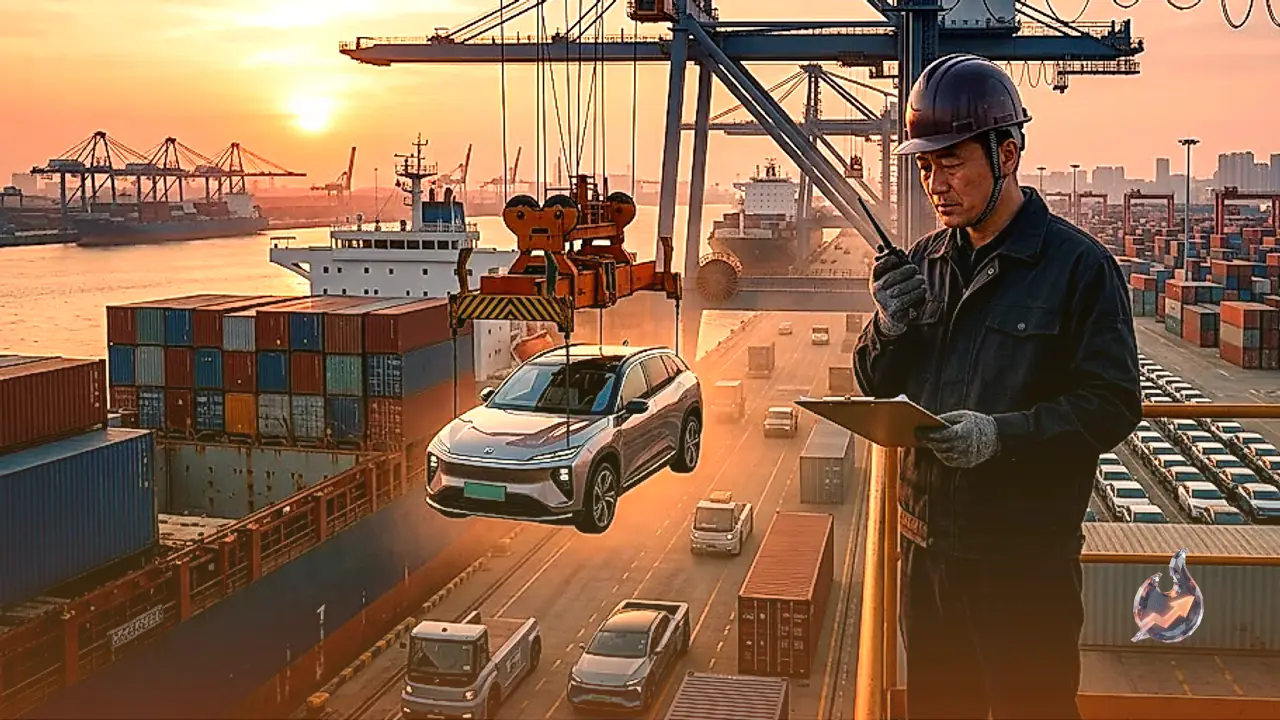

China's economy expanded at its weakest pace in three years during the April to June quarter, official data released on Wednesday showed, with the annual growth rate sliding to 4.3%. The figure came in well below what most forecasters had expected and marked a sharp step down from the solid 5% pace recorded in the first three months of the year. What makes the reading striking is that it arrived even as exports were racing ahead, powered by the boom in artificial intelligence and surging worldwide demand for Chinese electric vehicles. Around the same time, trade between India and China has also seen a notable jump.
West Asia Tensions Left China Largely Untouched
The war involving Iran pushed energy prices higher and fed inflation across much of the world. Yet that turbulence did little to dent China's economy. Customs figures show that exports rose 17.6% in the first half of the year compared with the same period a year earlier, while in June alone they jumped 27%. The trouble was that domestic spending and investment failed to keep up with that momentum. As a result, the gains flowing from China's export-driven manufacturing stayed narrow and never spread through the wider economy.
Money Pours Into Tech While Other Sectors Lag
A number of economists argue that China's economy is growing increasingly lopsided. Both the government and private companies are pumping enormous sums into new technologies such as AI, computer chips and robotics. Meanwhile, lower-value manufacturing and the job-heavy service sector are being left behind. Exports of high-tech products, including electric vehicles, computer chips and other electronic devices, have climbed sharply. Much of that push has come with heavy state support, since China's leaders have made the development of advanced technology one of their top priorities.
Overproduction and Goods Pushed Abroad
Last year China's global trade surplus hit a record $1.2 trillion. A gap that large stirred complaints from policymakers in other countries, who are uneasy about the trade imbalance with the world's second largest economy. Many of them have pointed to the government's hefty subsidies, arguing that this support leads to far more goods being manufactured than the country needs. That surplus output, they say, is then shipped off to overseas markets.
Worries Grow Over Jobs
As is happening in many other countries, the rapid spread of AI and robotics in China has raised a pressing question: will companies create enough jobs to sustain growth over the long run? The impact is already visible in how households behave. Chinese families have cut back on big-ticket purchases. A prolonged slump in the property market, combined with uncertainty over jobs and wages, has weighed heavily on people's willingness to spend.
Strong Supply, Weak Demand
Mao Shengyong, deputy head of China's National Bureau of Statistics, said that with the global situation remaining unstable and uncertain, the imbalance between strong supply and weak demand inside the country continues to be serious. He added that as China sharpens its focus on high-tech manufacturing and moves toward better quality economic growth, it will work to build a strong domestic market and to keep employment stable.
An Economy in Transition
Wei Li, head of multi-asset investment at BNP Paribas Securities (China), said the Chinese economy is passing through a period of major transition. China's leaders have set a growth target of 4.5% to 5% for the whole of 2026, below last year's 5%. The International Monetary Fund recently lifted its forecast for China's annual growth by 0.2 percentage point to 4.6%. Even so, it expects the economy to expand by just 4.1% in 2027.