





















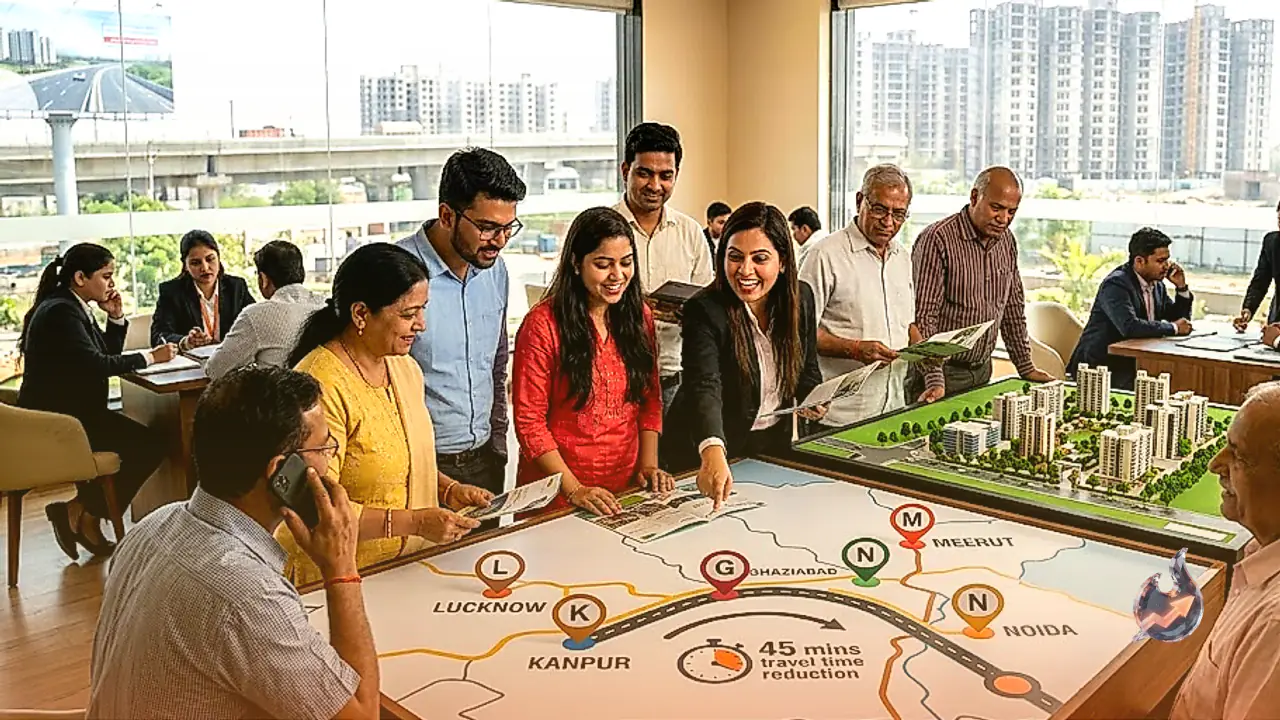

Uttar Pradesh has just been handed another major road project. The 63-kilometre Lucknow-Kanpur Expressway, connecting Lucknow's Shaheed Path to Kanpur's Chakeri, has been completed at a cost of around Rs 4,700 crore. It currently runs six lanes wide, with room to be expanded to eight lanes in the future if needed. The biggest benefit of its opening is the drop in travel time: a journey that used to take two-and-a-half to three hours can now be completed in just 35 to 45 minutes. Alongside the time saved, commuters get a faster, safer and far smoother ride between the two cities.
India's first barrier-less expressway
What makes this expressway stand out is that it is being regarded as the country's first barrier-less expressway. That means there will be no conventional toll barriers here, so vehicles will not need to stop and queue up to pay toll tax. To strengthen safety and traffic management along the entire stretch, cutting-edge technology has been installed, including artificial intelligence (AI) based cameras, an Intelligent Traffic Management System (ITMS), speed monitoring and Automatic Number Plate Recognition (ANPR). These systems are expected to push road safety to a new level. Given the shorter travel time, significant fuel savings and a much smoother driving experience, the expressway is set to benefit both everyday commuters and commercial vehicles alike.
Uttar Pradesh's infrastructure network keeps expanding
The Lucknow-Kanpur Expressway is not just a project that shortens the distance between two cities, it is another major link in the rapid, all-round infrastructure development taking shape across Uttar Pradesh. The state's connectivity network has already been strengthened by massive projects like the Ganga Expressway and the Delhi-Meerut Expressway. While the Delhi-Meerut Expressway has brought western Uttar Pradesh much closer to the national capital, the Ganga Expressway, still under construction, is linking the state's eastern and western ends. The pace of work over the past few years on expressways, the defence corridor, new airports, metro lines and large industrial projects has made Uttar Pradesh a top choice for investors from India and abroad.
Real estate demand surges in Ghaziabad, Noida and Meerut
Industry experts believe this improved connectivity is having a deep and direct impact on the state's real estate sector. Major hubs in western Uttar Pradesh, particularly Ghaziabad, Noida and Meerut, are seeing an unprecedented surge in demand for both residential and commercial properties. Thanks to the Delhi-Meerut Expressway, Meerut has effectively become a key extension of Delhi-NCR, leading to a flood of premium housing and township projects there. Ghaziabad and Noida, meanwhile, have emerged as the biggest hubs spanning everything from mid-segment to ultra-luxury housing, riding on their strong infrastructure. The effect is not limited to western UP either, the Purvanchal and Bundelkhand Expressways have driven up land prices sharply across nearly every corner of the state, big or small, opening up fresh avenues for investment.
Experts explain why demand will keep climbing
Rohit Kishore, CEO of Hero Realty, said the launch of the Lucknow-Kanpur Expressway is an important step that will give fresh momentum to development and connectivity in the region. He noted that better infrastructure has always been the foundation of urban growth, and areas with strong connectivity tend to emerge as the most preferred choice for modern residential communities in the future. He pointed out that being close to the airport and gaining improved access to Kanpur is turning Bantharaa into an emerging and promising area for residential development. He believes Lucknow is now entering a new phase of growth, one where world-class infrastructure and quality urban planning will give fresh direction to balanced and sustainable urban development.
Amit Agarwal, Director of Karyan Group, said the expressway will bring travel time between two major urban and industrial centres down to roughly an hour, making the movement of people, businesses and goods faster and easier, and in the process building a strong economic corridor. He explained that from a real estate standpoint, better connectivity has always been the biggest driver of property demand and price appreciation. He expects that areas emerging along the Lucknow-Kanpur corridor, especially Unnao and other peripheral development zones, will become a growing focus for developers interested in residential, commercial, warehousing and logistics projects. According to him, infrastructure has always been the backbone of urban development, and this corridor will become an important vehicle for long-term economic progress and lasting value creation in Uttar Pradesh.
Noida International Airport, the biggest game-changer of all
Beyond the expressway itself, the Noida International Airport is proving to be the single biggest game-changer in this entire transformation. As it edges closer to becoming operational, the economic momentum across the whole region has changed completely. The Jewar Airport is driving a major structural shift not just in real estate but also in the commercial sector, modern warehousing or logistics parks, and the IT (information technology) sector. Major global tech and IT companies are now setting up their global data centres and office spaces around Noida and Greater Noida, as well as near Jewar.