























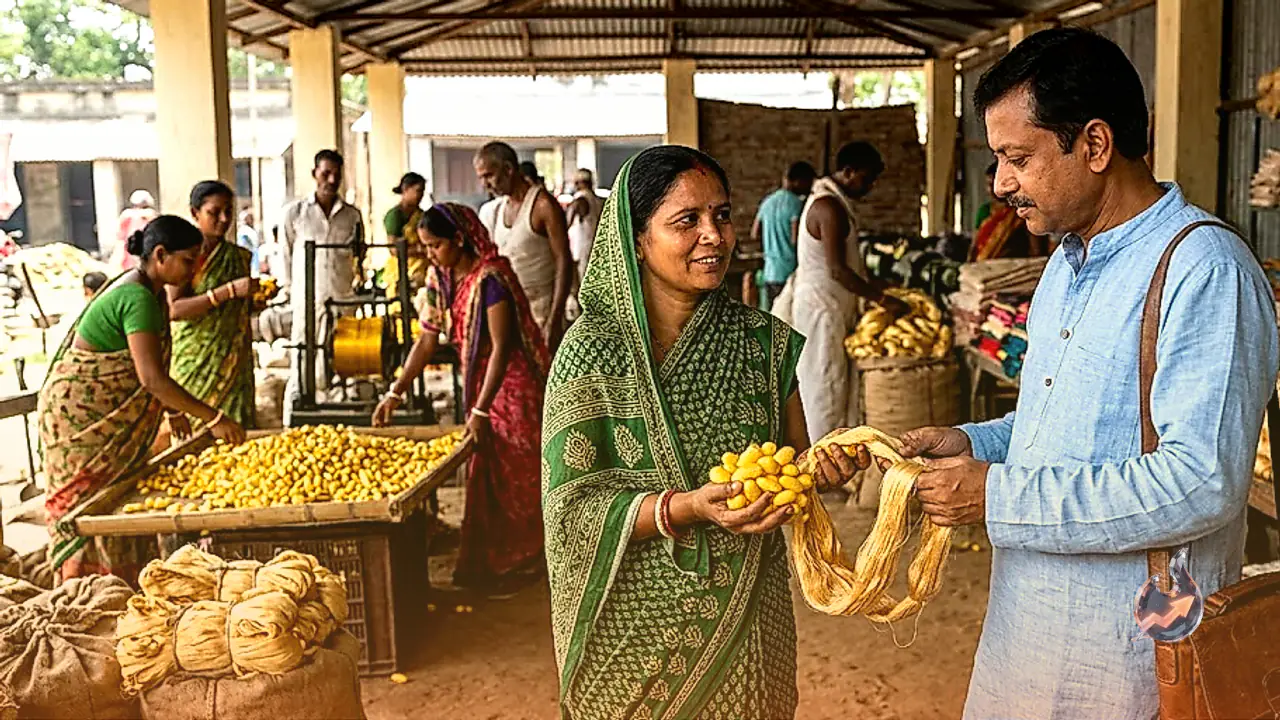

Farmers in the Lakhimpur Kheri district of Uttar Pradesh are transforming their agricultural prospects through silk production, generating substantial profits and establishing the region on the national textile map. Traders from major manufacturing hubs such as West Bengal, Banaras, Azamgarh, and Mau are regularly visiting the district to source silk directly, enabling local cultivators to earn hundreds of thousands of rupees with ease.
Kheri Ranks Fifth in Silk Insect Production
In terms of silk insect production, the Kheri district holds the fifth position in the sector, with roughly 4,000 individuals actively engaged in the enterprise. The silk harvested here is primarily utilized to manufacture saris and various fine garments, which drives traders to travel from distant regions to purchase and transport the material.
Shifting Preferences Toward Silk Over Sugarcane
Speaking on the agricultural shift, Deputy Director of Silk Arvind Kumar noted that while the Kheri district has traditionally been known for large-scale sugarcane farming, local growers are increasingly drawn to silk cultivation because it provides a steady stream of income four times a year, in contrast to sugarcane, which yields a profit only once annually.
In previous years, virtually the entire silk output of the region was purchased by visiting merchants from West Bengal and Azamgarh. However, the department is now launching a fresh initiative to promote silk processing locally, aiming to boost regional employment opportunities.
Cocoon Pricing and Mulberry Cultivation Scope
Silk cocoons are priced according to their quality grade in the marketplace. Premium-quality silk cocoons sell between 300 rupees and 400 rupees per kilogram, whereas medium-grade silk cocoons are priced from 200 to 250 rupees per kilogram. The district produces both yellow and white varieties of silk, supported by approximately 70 acres of land dedicated to mulberry tree cultivation across the area.