






















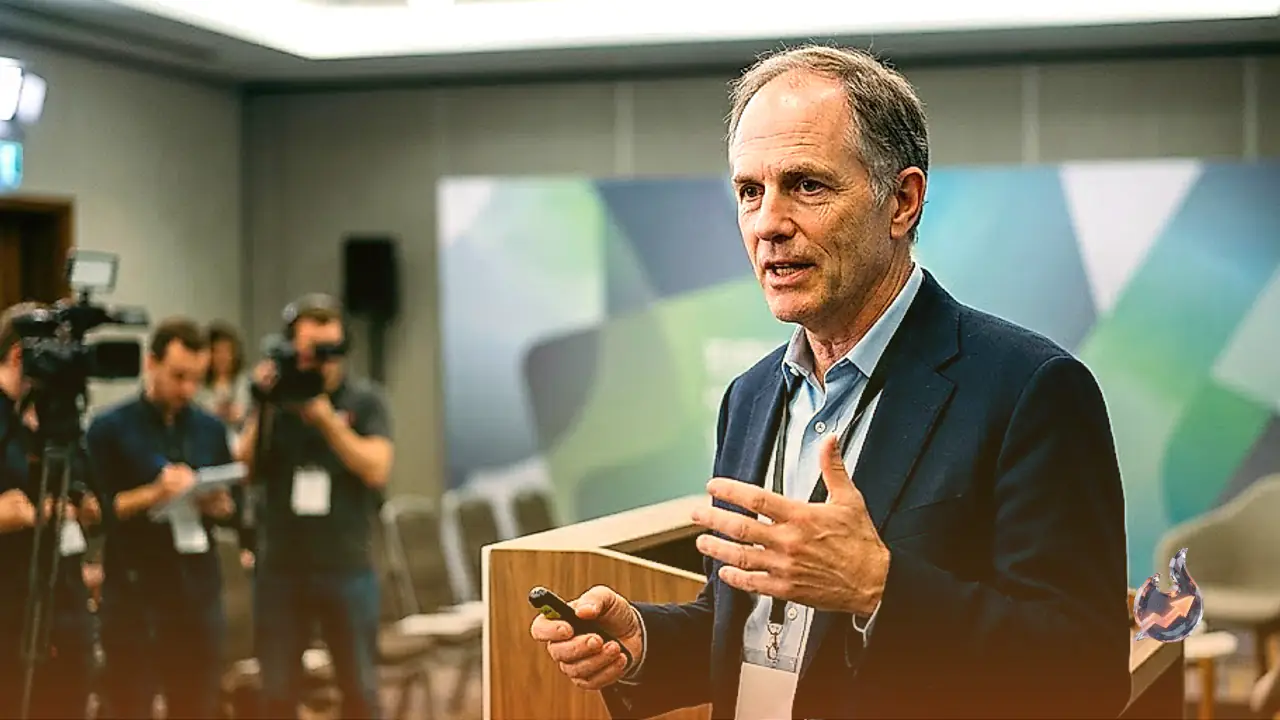

Prominent technology pioneer and founder of O'Reilly Media, Tim O'Reilly, has raised serious concerns regarding the current trajectory of artificial intelligence development and the strategies pursued by major tech conglomerates. According to him, the world's leading AI laboratories are misreading the future by convincing themselves that constructing the largest frontier models is the sole key to dominance. O'Reilly argues that these massive centralized models are isolating themselves from the practical everyday needs of ordinary users, asserting that the true future of AI lies in open-source architecture, modular systems, and decentralized participation.
The Critical Distinction Between Open-Source AI and Open-Weight Models
In contemporary technology discourse, the phrase open-source AI is frequently misapplied to describe mere open-weight models. Tim O'Reilly emphasizes that genuine open source encompasses a vastly broader concept. Drawing parallels to the 1990s, he recalled that while the rest of the industry was consumed by open-source licensing details, he advocated for a focus on system architecture and whether a platform genuinely enabled user participation.
According to O'Reilly, the fundamental question remains whether a system design empowers user freedom or enforces institutional control. Modern corporate AI laboratories are building architectures designed for user tracking and system control rather than user empowerment. Current systems lack a clean separation between the underlying model, the operational harness, and the user application. O'Reilly stresses the necessity for users to integrate their specialized expertise into AI tools cleanly, a process hindered by current proprietary corporate frameworks.
Frontier AI Limitations Versus Everyday Practical Needs
Silicon Valley tech giants operate under the assumption that building the most massive, compute-intensive model guarantees market leadership. While frontier systems like Anthropic's Claude or OpenAI's offerings optimize for highly specific tasks, they do not necessarily reflect the capabilities that everyday consumers demand. O'Reilly notes that top-tier models are no longer universally superior across all functions; in many creative writing tasks, models like Fable and Sol perform worse than lower-level alternatives.
The breakthroughs occurring at the bleeding edge of frontier AI are increasingly diverging from the practical tools required by the general public. O'Reilly cautions that this strategic misstep poses geopolitical risks for the United States. While US firms focus heavily on winning the frontier AI race, China could achieve broader societal impact by diffusing accessible, lower-level models widely across its economy and industry. The primary objective of AI technology should be giving individuals the freedom to innovate without artificial boundaries.
Cybersecurity Realities and the Case for Slowing Frontier Models
A common argument leveled against open-source software is that public access poses severe security threats by allowing malicious actors to bypass model guardrails. Tim O'Reilly firmly refutes this premise, pointing out that all major cybersecurity incidents recorded to date originate from proprietary frontier models rather than open-weight systems.
Risks concerning digital infrastructure vulnerabilities and synthetic pathogen development serve as compelling arguments for slowing the deployment of frontier models rather than restricting open-weight releases. O'Reilly envisions a future where frontier AI models resemble legacy mainframes or supercomputers, deployed strictly for specialized, complex problems, while lightweight open models permeate everyday consumer applications. Projects such as Pi, an open-source agentic harness, exemplify how independent developers are building flexible user-centric alternatives.
Resisting Proprietary Lock-in Through Open Memory Consortia
Major tech platforms, exemplified by Mark Zuckerberg's strategy at Meta, aim to lock users into closed ecosystems by leveraging AI systems that accumulate deep personal context. Under this corporate thesis, retaining complete user data creates an inescapable platform lock-in.
To counter this centralization, O'Reilly's non-profit organization, the AI Disclosures Project, is developing an open-memory consortium. The open-source counter-vision ensures that users retain full ownership of their personal data and contextual history. This architecture enables individuals to switch seamlessly between different AI models and service providers without sacrificing their accumulated digital context or surrendering privacy to a single corporation.
How Silicon Valley Venture Capital Distorted Free-Market Principles
Reflecting on an essay he authored for The Economist, O'Reilly highlighted how corporate leaders like Elon Musk exercise such immense control over their enterprises that their operational decisions become anti-capitalist. Rather than responding to organic market forces, company strategies are dictated by individual executive desires. While Silicon Valley frequently employs market rhetoric, its funding structure has undermined free-market competition.
Around 2010, venture capital firms altered industry dynamics by deploying billions of dollars to subsidize ride-hailing services like Uber and Lyft. Instead of allowing consumers and markets to select superior business models, venture capitalists used massive capital pools to select winners and stifle alternative approaches. This same flawed pattern is currently unfolding in AI, where capital concentrates into a handful of firms. O me O'Reilly compares this moment to the early 1990s PC era, predicting that the true future of AI will emerge from unfunded open-source innovation, just as the World Wide Web disrupted proprietary computing without venture capital funding.
The Publishing Industry Crisis and O'Reilly Media's Transformation
The traditional book publishing industry has experienced a continuous decline over the past 25 years. At its commercial peak, O'Reilly Media's book division generated approximately $70 million in revenue, a figure that has since contracted to $30 million. As print revenues diminished, the organization had to invent new mechanisms to compensate subject matter experts for sharing specialized knowledge.
With artificial intelligence platforms scraping vast amounts of copyrighted textual data, O'Reilly Media is working to construct tools that empower individuals to leverage expert knowledge effectively. Enabling users to summon vetted domain expertise represents a major technological capability, requiring new economic models that properly credit and compensate human knowledge creators in the AI era.
Artificial Intelligence as an Evolving Creative Medium
Concerns that artificial intelligence will inevitably replace human writers and journalists are viewed by O'Reilly as a misunderstanding of technological evolution. He frames AI not as an automated substitute for human thought, but as a brand-new creative medium comparable to written prose, oil paint, or musical composition.
Drawing an analogy to art history, O'Reilly noted that master painters like Michelangelo and Vincent van Gogh achieved vastly different artistic expressions using the exact same medium of paint. Similarly, distinct individuals engaging with LLMs will produce entirely unique outputs based on their personal vision and mastery. Dismissing AI-assisted writing will eventually seem as outdated as claiming that cameras cannot produce fine art. While human writing habits will shift just as horse riding transitioned from transportation to recreation, society is currently only in the initial stages of this technological paradigm.