





















The Consumer Disputes Redressal Commission in Thiruvananthapuram has issued a stern order directing Indian Railways to pay 50,000 rupees as compensation to a passenger for deficiency in service. The case stems from an incident where a traveler, despite possessing a confirmed reservation, was forced to stand throughout the entire night in a crowded train compartment. The bench, led by President P.V. Jayarajan along with members Preeta G. Nair and Viju V.R., held the Railways accountable after finding no evidence to support their claim that they had effectively addressed the passenger's plight. In addition to the compensation for mental agony, the Commission ordered the Railways to pay 3,000 rupees toward the costs of the legal proceedings.
The Ordeal of a Confirmed Ticket
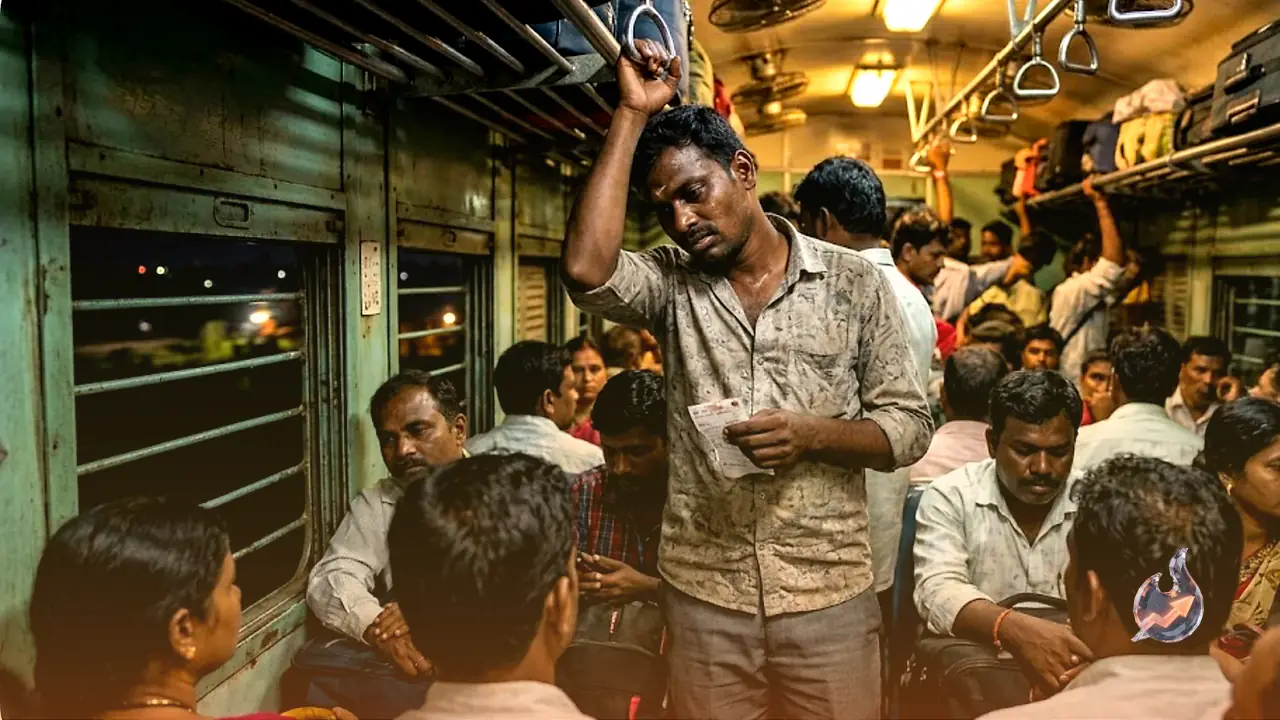
The complainant had booked a confirmed ticket under the confirmed quota for a journey from Bengaluru to Kochuveli. However, upon boarding the train, he discovered his reserved carriage was completely packed with individuals who lacked valid tickets. The overcrowding was so severe that the passenger could neither sit nor sleep, and even the aisles were entirely blocked, preventing any movement. When he contacted the Railway customer care helpline, he received no concrete assistance. Instead, he was merely advised to cooperate and adjust, with the operator citing the rush caused by the Navratri holiday season as an excuse for the lack of space.
Social Media Complaints and Defense
The passenger reached out on Twitter (X) in hopes of securing a solution, but no officials intervened to rectify the situation. Frustrated by the lack of response, he filed a formal complaint with the consumer commission, accusing the railway of gross negligence and poor service. In its defense, the Railway argued that the excessive crowd was due to four consecutive holidays during the festival period. They claimed that upon receiving the complaint, the Traveling Ticket Examiner (TTE) and the Railway Protection Force (RPF) were mobilized to remove unauthorized passengers and ensure the complainant got his reserved seat. Consequently, the Railways maintained that there was no deficiency in their service and argued that the case should be dismissed.
Lack of Evidence Leads to Ruling
After a thorough investigation into the complaint, the Commission scrutinized the photographic evidence provided by the passenger. The inquiry concluded that the allegations made by the passenger were accurate. The Commission observed that the Railway's claims of having resolved the situation were unsupported by any proof. The order emphasized that merely making assertions is insufficient; they must be backed by evidence. Since the Railway failed to produce any documentation to prove they had resolved the overcrowding issue or assisted the passenger as claimed, the Commission ruled that the service was indeed deficient. The Railways have been instructed to pay the compensation within one month. This ruling highlights that the Railways can face significant financial penalties for failing to uphold their duty toward passenger comfort and service standards.