




















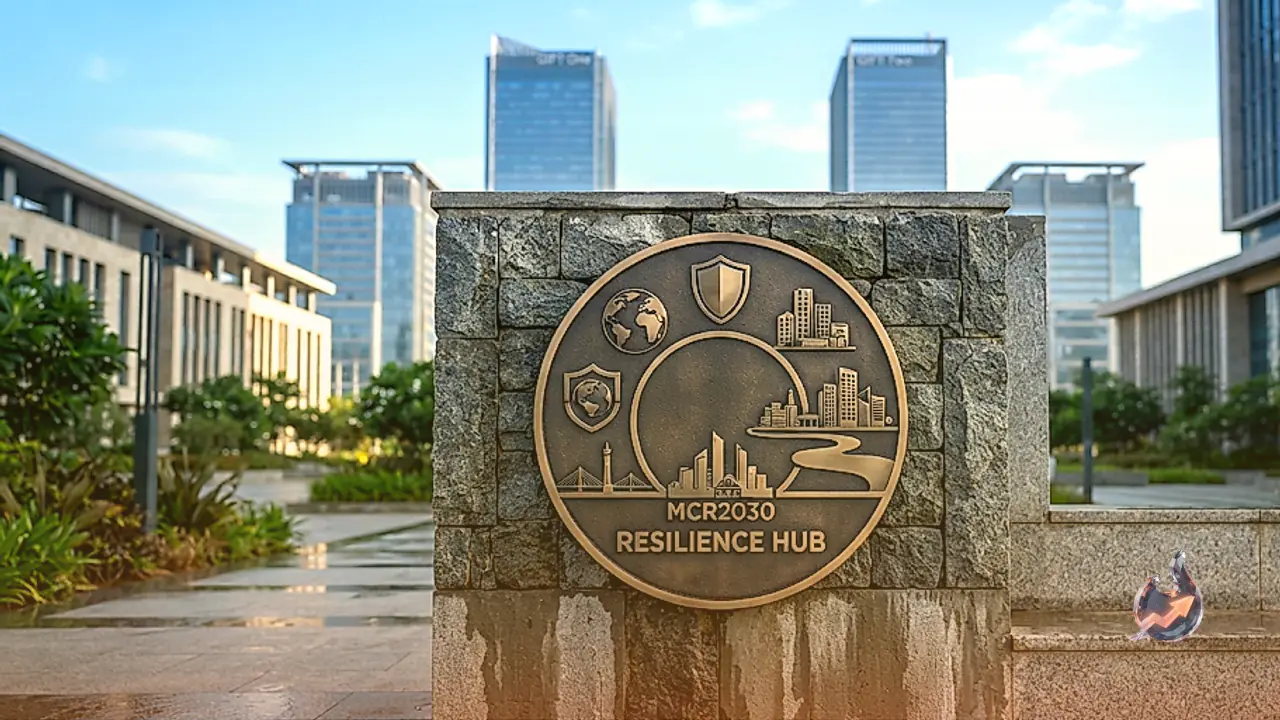

Gujarat International Finance Tec-City, widely known as GIFT City, has secured a landmark international recognition in the domain of urban disaster preparedness and infrastructure sustainability. The United Nations Office for Disaster Risk Reduction has officially designated the flagship financial district as the country's first Making Cities Resilient 2030 resilience hub. Following this formal elevation, the smart business district becomes the newest urban resilience hub within the Asia-Pacific region. In this expanded global role, it will serve as an active knowledge-sharing platform, allowing other metropolitan areas and emerging urban centers across India and overseas to learn from its disaster mitigation models.
The Critical Role of Disaster Resilience in Financial Districts
For any global financial and technology center, robust urban resilience forms the foundation of commercial continuity and stakeholder trust. Beyond safeguarding residents and the workforce, having durable emergency systems ensures that essential operations such as data services, international banking, and administrative networks experience zero downtime during unforeseen crises. GIFT City has systematically embedded risk reduction protocols directly into its urban master plan, civil engineering designs, and day-to-day utility maintenance.
Highlighting the broader strategic meaning of the United Nations recognition, Sanjay Kaul, Group Chief Executive Officer and Managing Director of GIFT City, emphasized the need for operational dependability. He noted, "Resilience is vital to the credibility of a global financial centre." He further explained that enterprises, investors, and community members must have full confidence that an international business district can anticipate risks beforehand, protect its people, and keep mission-critical services operating uninterrupted through extreme disruptions. The objective is to demonstrate that high-stakes financial competitiveness and safety-oriented urban resilience can advance together seamlessly.
Roadmap Execution and Strategic Planning Since 2022
Achieving resilience hub status represents the culmination of a multi-year institutional process that began when GIFT City joined the MCR2030 initiative in July 2022. The implementation was carried out in technical collaboration with the Gujarat Institute of Disaster Management and under continuous guidance from the United Nations disaster reduction wing. The project successfully completed Stage 1 and Stage 2 of the initiative's structured Resilience Roadmap and is currently carrying out Stage 3, which centers directly on active operational execution.
A critical step in this roadmap occurred in June 2023, when teams conducted a rigorous evaluation using the Disaster Resilience Scorecard for Cities. The diagnostic data gathered during that assessment formed the basis of an extensive Resilience Action Plan, which administrative authorities finalized in March 2024. That blueprint is now actively guiding infrastructure investments, maintenance routines, and response protocols across all zones of the commercial hub.
Multi-Tier Emergency Architecture and Response Assets
The operational framework at GIFT City functions across three distinct administrative levels: the overall city jurisdiction, individual high-rise commercial and residential towers, and core utility infrastructure. Each tier maintains independent disaster mitigation plans coordinated by a centralized Crisis Management Group and a structured Incident Response System. These specialized command structures are operated on the ground by professionally designated disaster management officers.
To evaluate emergency reflexes under stress, authorities have staged over 15 large-scale mock drills covering complex contingencies like high-magnitude earthquakes and structural fires. These tactical exercises test real-time evacuation procedures, utility shutdowns, and emergency worker coordination. Furthermore, the district maintains a dedicated disaster response logistics store housing more than 36 distinct categories of specialized emergency tools and search-and-rescue apparatus, ensuring immediate on-site response before external municipal assistance arrives.
Early Warning Systems and Community Volunteer Networks
The early warning network operating across GIFT City relies on real-time data feeds gathered from multiple scientific agencies. The command post pulls predictive meteorological models from the India Meteorological Department, automated emergency alerts from the National Disaster Management Authority's SACHET digital platform, regional seismic activity reports, and live readings from the city's own on-site weather monitoring station.
Once potential anomalies are detected, automated protocols alert designated disaster officers across buildings and utilities, who then collaborate with a trained corps of disaster risk reduction volunteers to disseminate actionable instructions across offices and public zones. The MCR2030 global initiative was initially established by the United Nations disaster agency in October 2020 to equip local governments with technical assistance, cross-border partnerships, and knowledge frameworks to withstand accelerating climate risks. Serving as an established hub, GIFT City will now assist peer cities in translating resilience plans into tangible municipal improvements.