



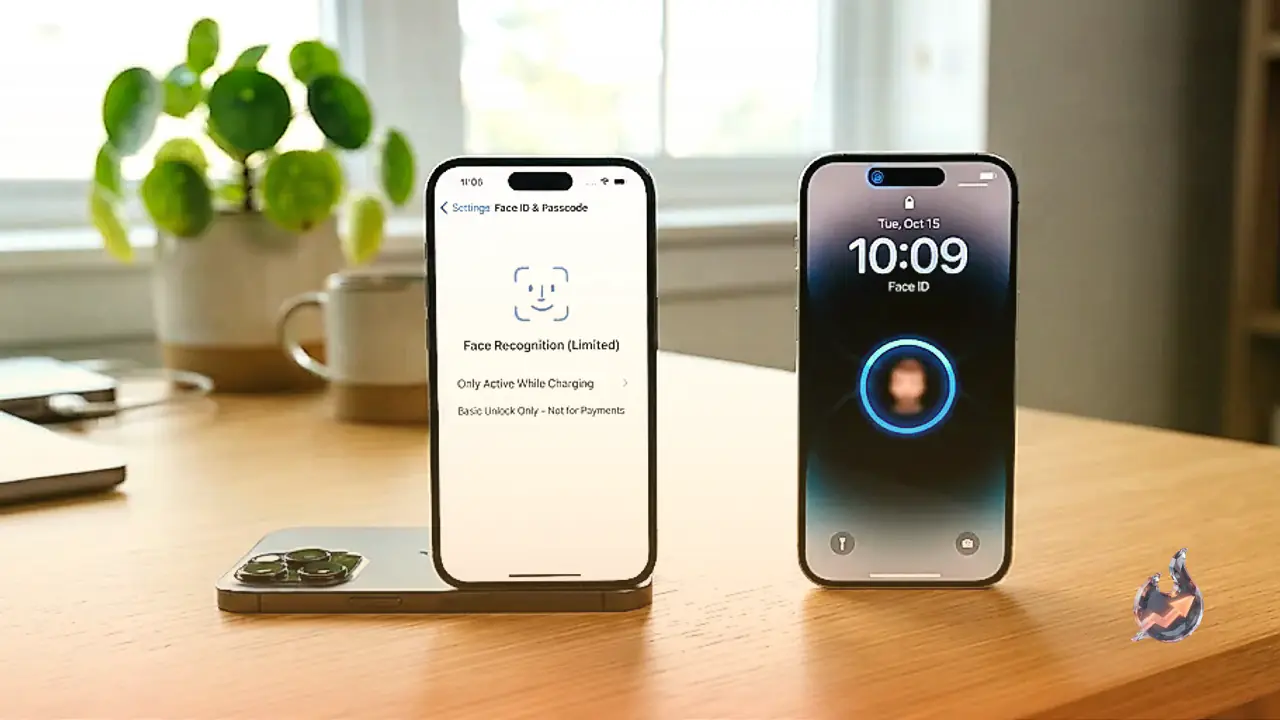



















A notable change is arriving for the iPhone Duo through an upcoming software update. Apple announced that it is bringing facial recognition to the device as part of the iOS 27.3 update. Since the hardware lacks the necessary components for the traditional Face ID system, the company has borrowed the capability from its recently launched smart display, the HomeView.
How the New Recognition System Works
The HomeView display personalizes content for up to six individuals in a household, recognizing users whenever they step in front of the camera. It also utilizes voice data for identification when a user issues a command to Siri. This recognition technology is safeguarded by the Secure Exclave, which is distinct from the Secure Enclave chip that normally houses Face ID data, serving as a memory-protected space inside Apple's A20 Pro processor. Experts note that it remains less comprehensive than standard Face ID and could potentially be more vulnerable to attacks.
Development Timeline and Future Expectations
Industry rumors suggest that Apple is working quickly to integrate proper Face ID into the second-generation iPhone Duo. However, tight development schedules might mean that the feature will not materialize until the third generation arrives in 2028. This timeline also underscores the inherent limitations present in the current implementation of the Duo's facial recognition technology.
Functional Restrictions and Security Limits
Users cannot employ this feature to authenticate financial payments or unlock sensitive content such as banking applications. Approving purchases through Apple Wallet still requires a thumbprint or a passcode. Instead, the function is built to unlock the foldable device without requiring the user to place a finger on the Touch ID sensor. Additionally, there is a strict time-based limitation in place. For the facial recognition to operate, a recent Touch ID or passcode authentication must have occurred within a 45-minute window. The capability is restricted exclusively to the front screen and camera, meaning it does not function when the iPhone Duo is unfolded. Furthermore, the iOS 27.3 update introduces a new toggle that allows users to automatically lock their iPhone Duo whenever they close the device.
Market Context and Competitor Landscape
Google's newer Pixel folding phones currently stand as the only devices on the United States market featuring secure facial authentication, although their performance in low-light conditions is not as effective as Apple's Face ID. Meanwhile, Samsung's facial biometrics found on Galaxy smartphones lack the strength required to protect sensitive information, serving primarily as a method to unlock the hardware.
A Rare Compromise for Apple
Apple's decision to roll out a watered-down iteration of Face ID represents an unusual compromise for the technology giant. It highlights just how significant of a friction point Touch ID has become for owners of the iPhone Duo.