























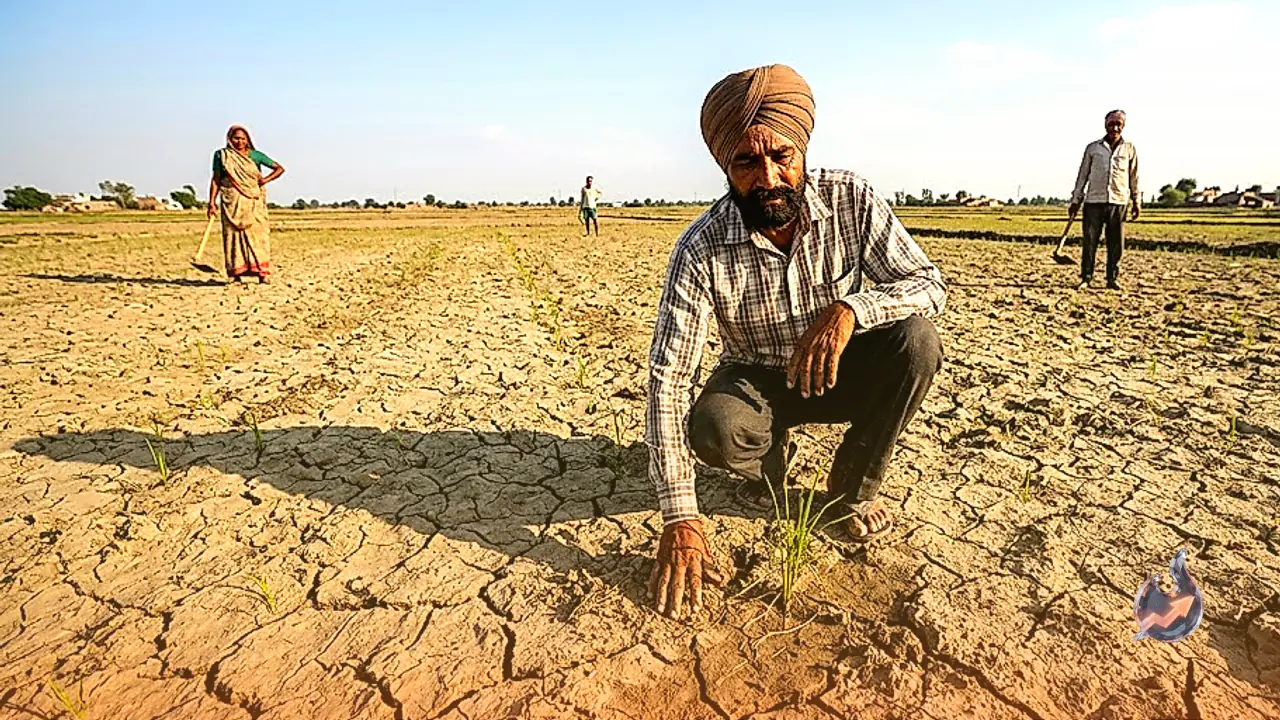

A sluggish monsoon has knocked India's summer planting season badly off track, with the total area sown under kharif crops running 16 percent lower than a year ago. Fresh figures from the Agriculture Ministry show that by 10 July farmers had planted 531.25 lakh hectares, against 632.69 lakh hectares over the same stretch last season. The shortfall is not confined to any one crop, it cuts across almost every major category, from paddy and pulses to oilseeds and cotton.
Kharif crops are usually sown in June, when the southwest monsoon arrives. This year, the influence of El Nino weakened those rains and pushed planting behind schedule. Because most farming in the country still leans on monsoon showers rather than assured irrigation, any disturbance in the rainfall calendar quickly shows up in the sowing data.
Where El Nino bites the hardest
El Nino's impact is felt most strongly across nine to ten states. These include the Marathwada and Vidarbha regions of Maharashtra, the coastal belts of Gujarat, Rajasthan, Madhya Pradesh, Chhattisgarh, northern Karnataka, the eastern part of Uttar Pradesh and Bundelkhand. These are the very areas where cultivation depends heavily on the rains, which is why a weak monsoon leaves the deepest mark here.
Paddy and pulses take the sharpest blow
The area under paddy slipped 8.63 percent to 114.69 lakh hectares, down from 125.53 lakh hectares a year earlier. Pulses fared even worse. The total pulses area fell 23.31 percent, from 73.85 lakh hectares to 56.63 lakh hectares. Within pulses, arhar dropped to 19.54 lakh hectares from 28.03 lakh hectares a year ago, while urad came down to 9.34 lakh hectares from 13.29 lakh hectares. Moong sowing also shrank, sliding from 24.08 lakh hectares to 21.52 lakh hectares.
Coarse cereals and oilseeds slide further
Coarse cereals were not spared either. Their area fell 22.47 percent to 98.69 lakh hectares, compared with 127.30 lakh hectares last year. Oilseeds followed the same downward path, dropping 21 percent to 117.83 lakh hectares from 149.18 lakh hectares. Soybean, the biggest of the oilseed crops, was down 16 percent at 90.51 lakh hectares, against 107.72 lakh hectares a year earlier.
The full picture at a glance
- Total kharif crops: down from 632.69 to 531.25 lakh hectares, a fall of 16 percent.
- Paddy: 125.53 to 114.69 lakh hectares, down 8.63 percent.
- Total pulses: 73.85 to 56.63 lakh hectares, down 23.31 percent.
- Arhar: 28.03 to 19.54 lakh hectares, down about 30.28 percent.
- Urad: 13.29 to 9.34 lakh hectares, down 29.72 percent.
- Moong: 24.08 to 21.52 lakh hectares, down 10.63 percent.
- Coarse cereals: 127.30 to 98.69 lakh hectares, down 22.47 percent.
- Total oilseeds: 149.18 to 117.83 lakh hectares, down 21 percent.
- Soybean: 107.72 to 90.51 lakh hectares, down 16 percent.
- Cotton: 93.95 to 79.54 lakh hectares, down 15.33 percent.
- Sugarcane: 56.72 to 57.58 lakh hectares, up 1.51 percent.
- Jute / Mesta: 6.16 to 6.28 lakh hectares, up 1.94 percent.
Sugarcane and jute buck the trend
Amid this long list of declines, a couple of crops offered some relief. The area under sugarcane rose slightly, from 56.72 lakh hectares to 57.58 lakh hectares. Jute or mesta also edged up, from 6.16 lakh hectares to 6.28 lakh hectares. Among the cash crops, however, cotton lost ground. So far this kharif season its area has fallen 15.33 percent to 79.54 lakh hectares, compared with 93.95 lakh hectares over the same period last year. The overall message is clear, until the monsoon picks up pace, this planting gap will keep weighing on farmers.