























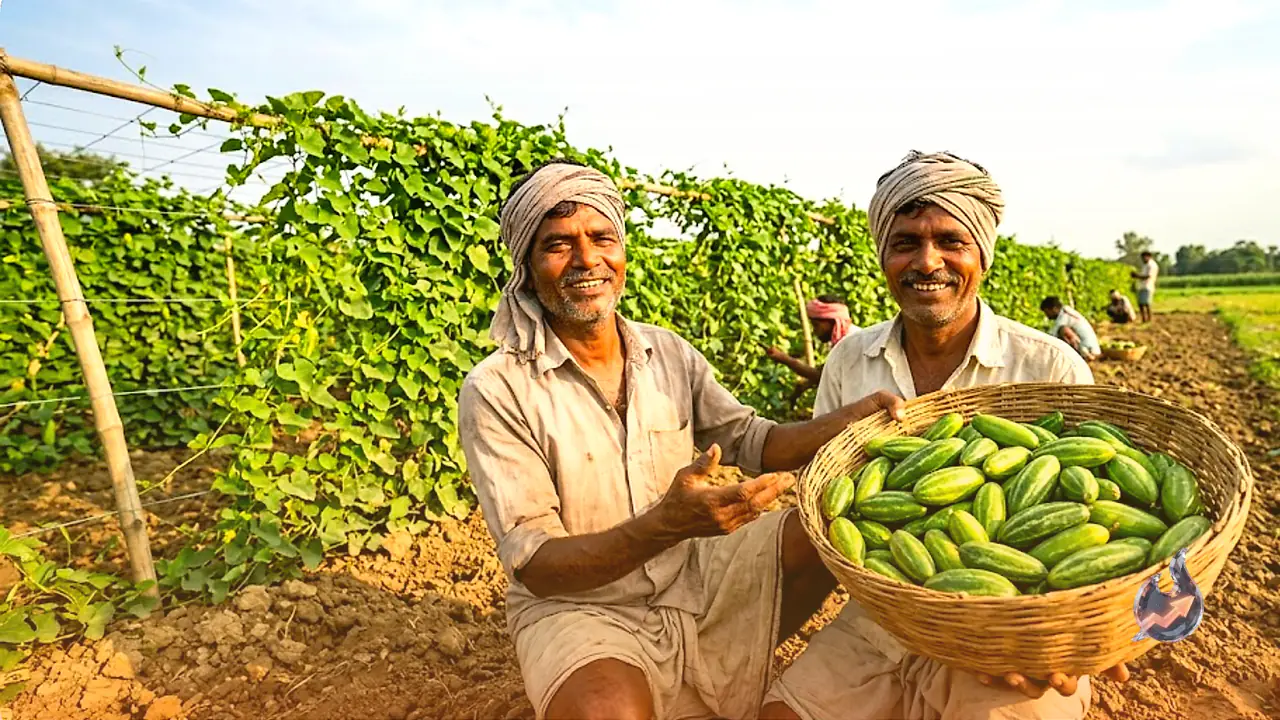

Farmers in West Champaran, Bihar, are increasingly shifting towards high-yield vegetable crops to boost their seasonal earnings. Among the various agricultural options, pointed gourd cultivation has emerged as a highly lucrative venture. Most local cultivators adopt it as a primary crop due to its ability to deliver impressive financial returns in a relatively short period. When comparing investment costs with final earnings, pointed gourd offers one of the best profit-to-cost ratios among green vegetables, which is why both farmers and wholesale merchants prioritize its production and trade.
Perfect Timing and Soil Selection for Pointed Gourd Sowing
According to agricultural experts, the ideal window for summer and monsoon pointed gourd cultivation ranges from June to July, though it can be extended until the first week of August under certain conditions. The weather and soil dynamics during these months are exceptionally conducive to the robust growth of the crop. Ravikant Pandey, a progressive farmer with nearly two decades of experience in pointed gourd farming in the region, shares that loamy soil is the absolute best for this vegetable. Field preparation requires deep plowing followed by a thorough application of well-decomposed cow dung or organic compost. This practice enriches the soil's fertility structure and provides the young saplings with all vital nutrients right from the initial stages.
Sowing Guidelines and Efficient Irrigation Practices
Maintaining precise spatial dimensions during sowing is critical for a high-yield output. A distance of 1.5 to 2 meters should be maintained between crop rows, while individual plants must be spaced 50 to 60 centimeters apart. The seeds need to be planted at a depth of about 2 to 3 centimeters in the soil. A gentle irrigation cycle should be performed immediately after sowing to lock in the moisture necessary for healthy germination. Subsequent watering must be carried out at regular intervals depending on the weather. However, farmers must ensure that water does not accumulate or clog the field. Stagnant water often triggers root rot and increases the vulnerability of the crop to devastating fungal infections.
Nutrient Management and Combating Pests
Achieving maximum crop yield requires a strategic combination of organic and chemical fertilizers. It is recommended to apply well-rotted manure or compost two to three times during the growth cycle, supplemented by balanced doses of nitrogen, phosphorus, and potash. Alongside nutrition, protecting the crop from pests and diseases is crucial. Pointed gourd is highly susceptible to pests such as pod borers, aphids, and leaf miners, which can be managed using appropriate organic or chemical pesticides. Additionally, fungal diseases like downy mildew and powdery mildew pose significant threats. Applying targeted fungicides and ensuring optimal spacing between plants will facilitate healthy air circulation, drastically reducing the spread of such fungal issues.
Harvesting and Preserving the Produce
One of the biggest advantages of pointed gourd farming is its quick turnaround time, as the crop becomes fully ready for harvest within 90 to 100 days. Once the vegetables mature, they must be plucked with utmost care to avoid bruising. To command the best price in local and regional markets, the harvested gourds should be stored in a cool, well-ventilated, and dry environment. Proper storage preserves their freshness for an extended duration, allowing growers and traders to maximize their profits during supply cycles.