























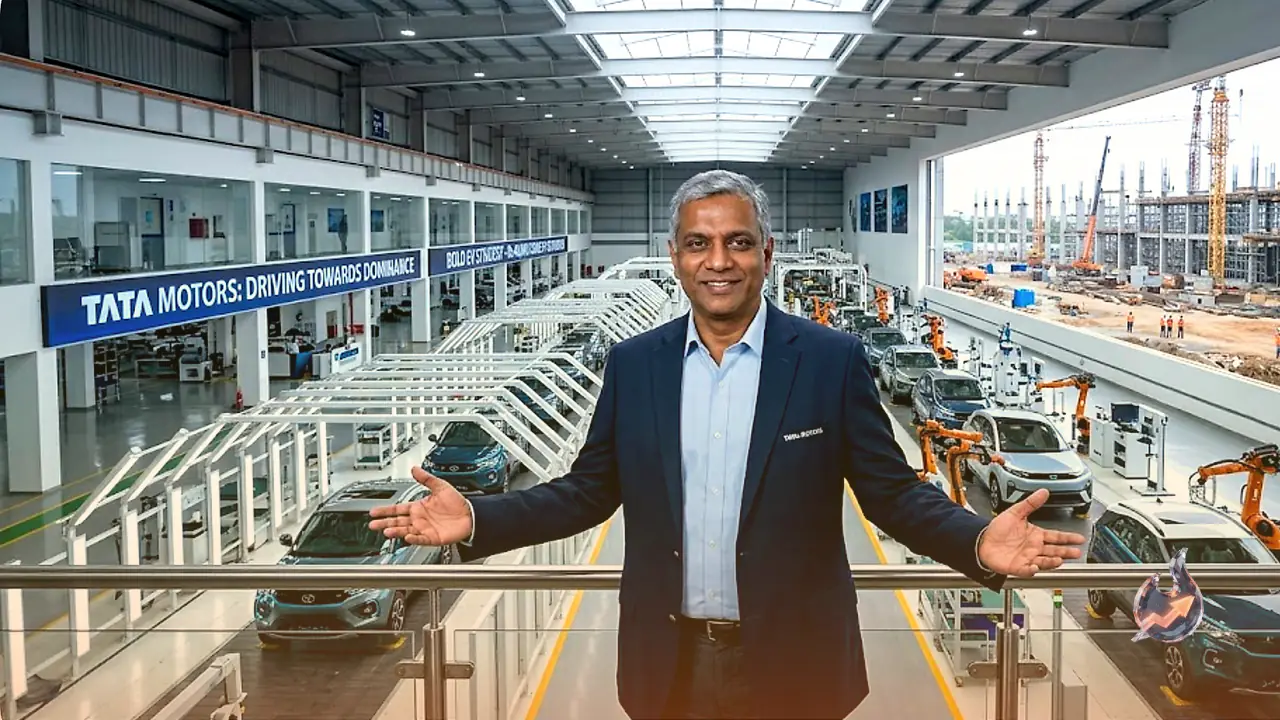

In a major move to solidify its position in India’s rapidly growing automotive market, Tata Motors has detailed a comprehensive growth strategy for its passenger vehicle division. This roadmap, which spans the next five years, aims to significantly elevate the company’s retail volumes, market presence, and financial profitability. Speaking at the company’s 81st Annual General Meeting, Chairman N. Chandrasekaran announced that Tata Motors is aiming to push its annual passenger vehicle sales beyond the 12 lakh unit milestone by the fiscal year 2030. To achieve this, the auto major plans to scale up its domestic market share from the current 14.2 percent to a robust 20 percent, positioning itself as an even more formidable player against rivals in the SUV and electric vehicle spaces.
Strategic Investment of Rs 40,000 Crore and Financial Targets
To support this aggressive expansion plan, Tata Motors has committed to investing approximately Rs 40,000 crore over the coming years. This capital expenditure will be directed toward developing next-generation products, enhancing manufacturing capacities, and integrating advanced automotive technologies into its lineup. Through this massive investment, the automaker intends to transition its passenger vehicle operations into a highly efficient and self-sustaining business. Alongside this, the company has set a target to generate a robust free cash flow of around Rs 10,000 crore, ensuring strong liquidity and financial health during this phase of intense growth.
The financial targets outlined for the passenger vehicle segment are equally ambitious. Shailesh Chandra, the Managing Director and Chief Executive Officer of Tata Passenger Mobility, stated that the division is aiming for a top-line revenue of Rs 1.4 lakh crore by the fiscal year 2031. This growth trajectory is designed to be accompanied by a double-digit EBITDA margin, an EBIT margin exceeding 5 percent, and a five-fold increase in Profit Before Tax compared to current operational levels. On a broader group level, Tata Motors has established long-term financial benchmarks, targeting an overall consolidated revenue of 60 billion dollars, a consolidated EBIT margin of 10 percent, and a group-level Profit Before Tax of 5 billion dollars.
New Product Launches and Transition to Electric Mobility
Product innovation remains at the core of Tata Motors' roadmap to capturing greater market share. The company plans to introduce 6 completely new nameplates over the next few years, while simultaneously rolling out comprehensive updates for more than 20 existing models in its portfolio. On a standalone basis, this product offensive will expand Tata Motors' passenger vehicle lineup to 15 distinct nameplates. This expansion will also see the brand entering new vehicle segments where it currently does not have a presence, thereby opening up fresh customer bases and revenue streams.
Electric vehicles will play a pivotal role in this long-term strategy, with the company aiming to lead the country’s clean energy transition. By the end of the fiscal year 2030, Tata Motors expects electric vehicles to account for over 30 percent of its total passenger vehicle sales. Given that the Indian EV market is growing at a rapid pace, and Tata Motors already holds a commanding position in this segment, the company is ramping up its technological investments and localized supply chains to defend and grow its leadership in the green mobility space.
Overcoming Past Production and Supply Chain Disruptions
The newly laid-out five-year plan comes on the heels of major external disruptions that affected the company's performance in the previous fiscal year. During the fiscal year 2026, a major cyberattack targeted Jaguar Land Rover, a key subsidiary of the group, which severely disrupted manufacturing operations for nearly two months. This halt in production had a direct bearing on the company’s overall financial outcomes. For the fiscal year 2026, Tata Motors reported an 8 percent decline in consolidated revenue, which fell to Rs 3.35 lakh crore, while its total sales volumes across divisions dipped by 1 percent to end at 9.49 lakh units. By deploying this new investment cycle and launching multiple advanced powertrains, the company aims to put these historical production setbacks behind it and establish a resilient growth trajectory.