























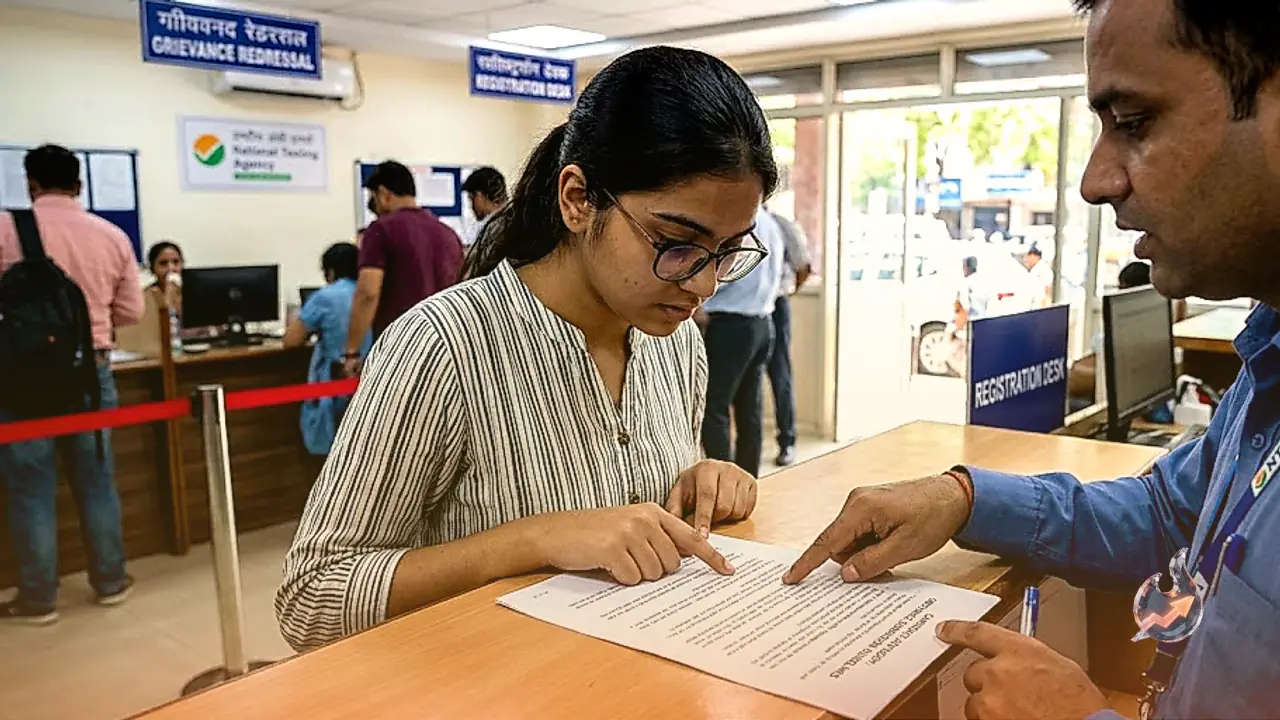

Candidates who have recently appeared for competitive examinations and emailed the National Testing Agency regarding an issue without receiving a response should carefully review their submission process. The helpline and communication servers of the agency receive thousands of messages on a daily basis. However, a significant portion of these communications lacks basic identifying particulars, such as the candidate's full name, roll number, or application number.
Increasing Mail Volume Prompts Official Candidate Advisory
Searching for a specific candidate's profile within a massive database without crucial reference numbers is nearly impossible for the agency's support staff. To streamline this process and address student grievances without administrative delay, the National Testing Agency released an official candidate advisory on social media platform X. The agency urged students to follow simple standard procedures when lodging complaints, ensuring their emails reach the correct branch for swift action.
1. Always Initiate Correspondence From Your Registered Email ID
The email address provided during the initial examination registration serves as the primary verification credential on the official agency servers. Candidates frequently make the mistake of dispatching emails from accounts belonging to friends, family members, or internet cafes. When non-registered accounts are used, the automated verification system fails to trace the associated candidate profile. Utilizing the registered email ID enables instantaneous verification, allowing the administrative desk to proceed with the query immediately.
2. Include Your Application Number and Exam Name in the Subject Line
The subject line serves as the first filter for helpdesk officers reviewing heavy email traffic. Generic subjects containing vague phrases lead to queries getting buried under high volumes of incoming correspondence. Clear guidelines specify that candidates must explicitly mention their Application Number in the email subject line. Furthermore, candidates should state the specific examination name, such as NEET UG, JEE Main, or CUET, within brackets to facilitate instant identification and correct file allocation.
3. Keep Explanations Concise and Attach Supporting Documentation
Rather than writing exhaustive narratives, candidates should outline their specific problem within 4 to 5 concise lines. Whether the issue pertains to clerical errors on the admit card, transaction failures during fee payment, or portal server glitches, candidates must attach clear screenshots or official documents. Presenting concrete evidence alongside a succinct explanation enables the technical department to verify the glitch rapidly and initiate immediate corrective measures.
4. Direct Queries Exclusively to the Designated Exam Helpdesk
Because the agency administers numerous national-level competitive tests, distinct support desks and dedicated email channels exist for different examinations. Sending a query regarding an engineering examination to a medical entrance test support address stalls the resolution lifecycle. Applicants are strongly advised to check their official admit cards, information bulletins, or official web portals to retrieve the correct support email address designated exclusively for their specific examination.
Administrative Commitment to Fair and Rapid Grievance Handling
The testing organization reaffirmed its commitment to reviewing every candidate query with utmost seriousness and objectivity. Clear and correctly formatted inputs from students significantly expedite the internal processing timeline. Following these systematic guidelines saves valuable time for candidates while ensuring that all examination-related queries receive a prompt and accurate resolution.