





















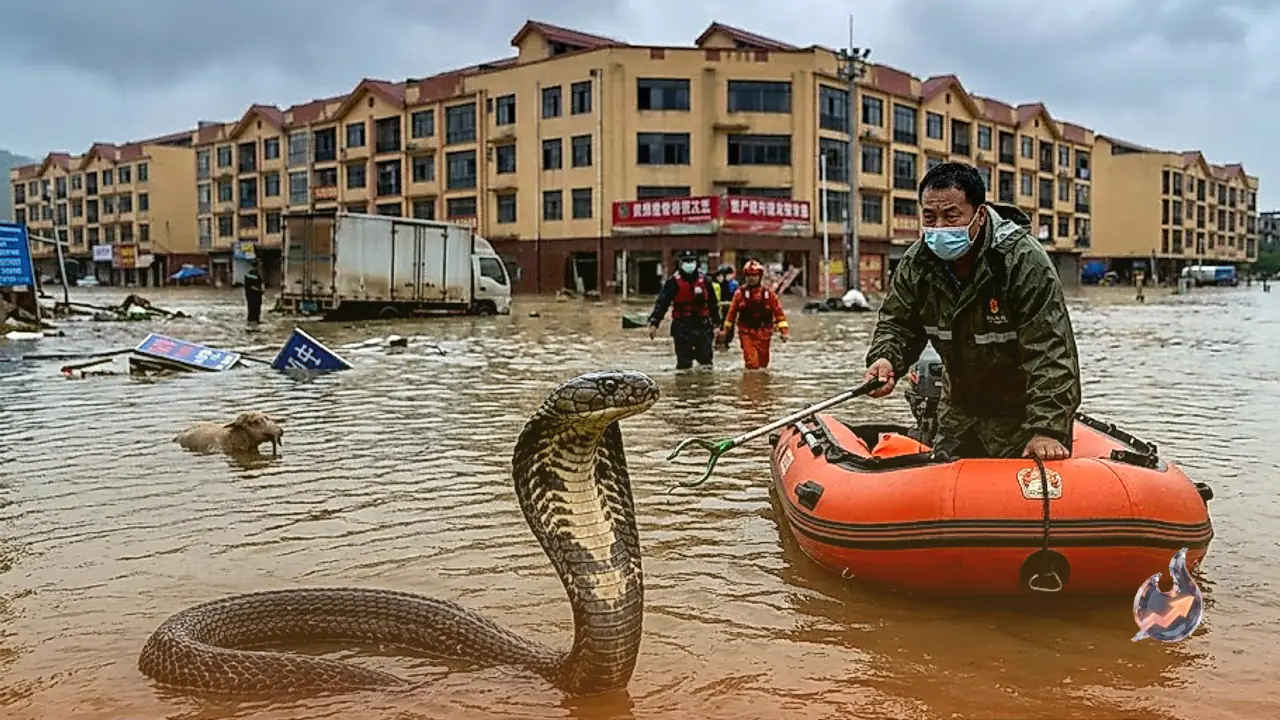

The relentless onslaught of Typhoon Maysak has plunged southern China into a double catastrophe. In addition to submerged neighborhoods and battered infrastructure, a bizarre and terrifying crisis has gripped the city of Hengzhou, where massive floodwaters have released a wave of dangerous reptiles into public spaces. What began as a severe weather emergency has transformed into an active wildlife hazard as approximately 900 snakes, including highly venomous species, escaped from local breeding facilities. The escape has forced local authorities to issue urgent warnings, advising residents to remain indoors after dark as emergency response teams scramble to manage the threat.
The Jasmine Capital and the Snake Industry Hub
Historically, Hengzhou has been celebrated for a much gentler trade. Known widely as the "Jasmine Capital" of China, the region has nurtured jasmine cultivation for over five centuries, supplying the primary ingredient for the country's famous jasmine tea. However, the last few decades saw the area adapt to a vastly different and highly lucrative trade, transforming it into the country's premier snake farming hub. Located in the Guangxi province near the border with Vietnam, the region is a natural habitat for over 100 different species of snakes. By the year 2020, the local industry had expanded to encompass more than 14,000 active snake farms housing a staggering population of approximately 20 million reptiles. While these animals were originally bred primarily for culinary consumption, the modern industry revolves around pharmaceuticals, traditional medicine, and advanced biomedical research.
Wall Collapses and Venomous Hazards
The sheer volume of rainfall and subsequent flooding proved too much for the infrastructure of these specialized farms. The torrential water currents easily breached the containment walls of multiple snake farms, allowing hundreds of captive reptiles to slip away into the rising waters. Among the escapees were highly dangerous species, including the Chinese krait, the green pit viper, and the Chinese cobra. Frightening footage emerged showing numerous snakes swimming effortlessly through flooded urban lanes and agricultural fields. This wildlife escape has added a lethal layer of danger to an already devastating natural disaster. The overall death toll from the flooding has reached 39 individuals. Tragically, this figure includes a local woman who succumbed to a venomous snakebite, with experts strongly suspecting that she was bitten by an escaped cobra from one of the inundated breeding facilities.
Zoo Escapes and Tragic Losses
The flooding did not spare the region's recreational parks, leading to critical emergencies at the Guigang Zoo. As floodwaters rushed through the facility, a variety of animals managed to escape their enclosures. The list of runaway animals included two zebras, a humpback ox, three miniature horses, two donkeys, as well as ostriches, emus, and raccoons, creating chaotic scenes as exotic wildlife wandered through the storm. In the midst of the chaos, zoo workers put their own safety on the line to ensure that the most dangerous predators remained confined. Zoo owner Yin Feifei emphasized that preventing the escape of large carnivores was their absolute priority to protect human lives, even under extreme pressure. While the workers succeeded in keeping the lions locked inside their designated enclosures, the rising waters proved fatal. Tragically, three lions drowned within their flooded pens before they could be relocated to higher ground.
Relentless Capture Operations
Subduing the immediate threat has required an exhausting, round-the-clock operation by specialized wildlife handlers. Zhu, a veteran member of a local snake-catching squad, described the immense physical toll of the operation. His team, consisting of only seven to eight members, worked continuously for 48 hours without any rest to clear the flooded areas. Their intense efforts yielded the capture of between 2,000 and 3,000 snakes in just two days. While the vast majority of the retrieved reptiles were non-venomous rat snakes, the handlers also had to safely bag numerous highly toxic species. The ongoing presence of these animals in residential areas keeps the city on edge, with local administrators reiterating that people should avoid traveling outdoors at night until the situation is fully resolved.