






















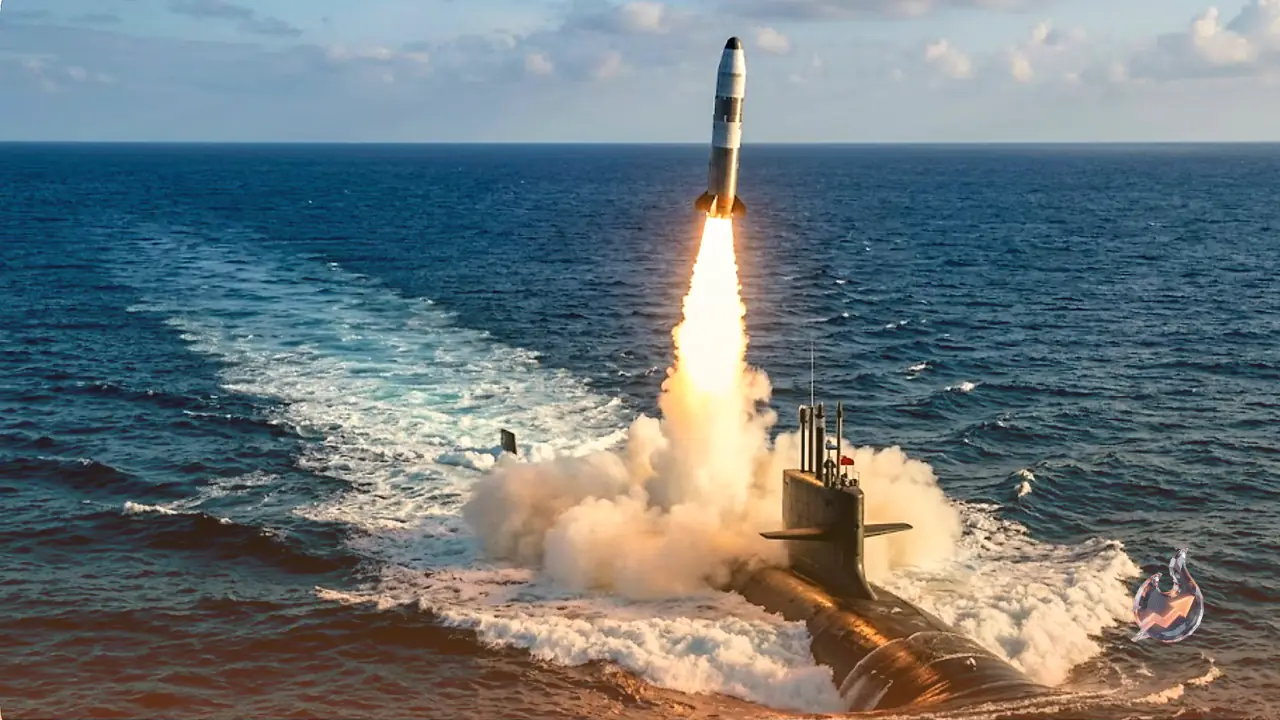

China's military stirred up tension across the Pacific on Monday after successfully test-firing a missile from a nuclear-powered submarine. Several countries in the region reacted sharply to the launch, calling it a threat to regional peace and stability.
What Japan Said
Japanese government spokesperson Minoru Kihara said the missile neither crossed Japanese territory nor entered its exclusive economic zone. He confirmed that China had already informed Japan in advance about the ballistic missile launch, so there was no element of surprise when it happened. Even so, Kihara did not hold back his criticism of Beijing. He said China is rapidly ramping up its defense budget without adequate transparency and is expanding its nuclear missile capability, including intercontinental ballistic missiles, at a fast pace and on a large scale. He added that the test caused no damage to any Japanese ship or aircraft, but Japan would remain fully vigilant going forward.
Japan Raises Concern, Urges China to Reconsider
According to the Japanese government, China notified it of the missile test at around 11:30 am. Soon after, Japan told China to reconsider such missile tests so that Japan's security is not put at risk. Japan also expressed serious concern over China's continuously growing military activities in the region.
Taiwan Condemns the Test
Taiwan's presidential office also strongly condemned the missile test. Its spokesperson, Karen Kuo, said China is using such tests to try to intimidate the international community, and that this approach is damaging peace and stability around the world. Kuo urged China to exercise restraint, respect the rules-based international order, and immediately stop such irresponsible, unilateral actions.
Australia and New Zealand React Too
Australia's Foreign Minister Penny Wong also responded to the test, saying it risked increasing instability across the entire region. New Zealand's Foreign Minister Winston Peters said his country is deeply concerned about the test of a missile capable of carrying nuclear weapons. Peters said the test appears to be part of China's continuing pattern of behavior, similar to what it demonstrated in 2024 when it test-fired an intercontinental ballistic missile, or ICBM, into the southern Pacific Ocean.