






















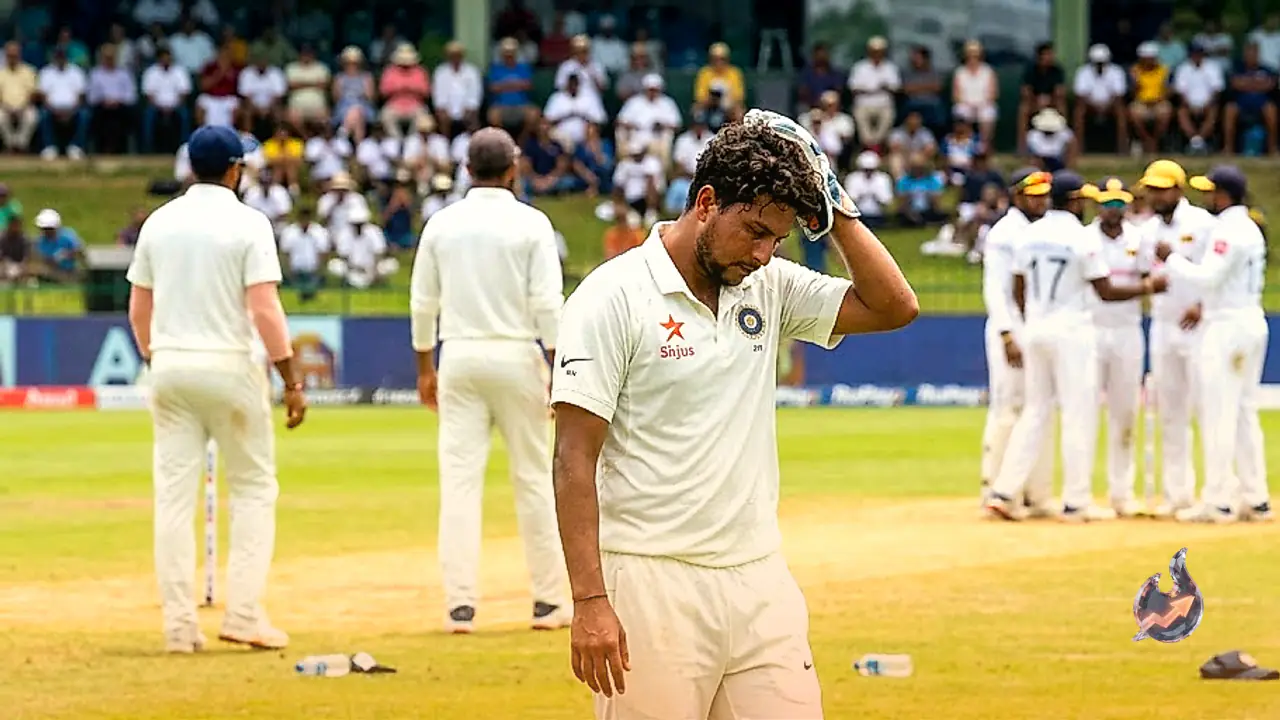

The Indian cricket team missed a prime opportunity to secure a decisive victory in the Colombo Test against Sri Lanka, as the match culminated in a thrilling draw. After imposing total control over the proceedings during the opening three days of the contest, India saw their momentum slip away during the final two days. Despite bowling out the hosts cheaply in their first innings, the Indian bowling attack failed to maintain the upper hand in the second innings, allowing Sri Lanka's stubborn batting line-up to salvage the game.
Enforcing the Follow-On Proved to Be a Tactical Misstep
Holding a commanding first-innings lead, India's decision to enforce the follow-on initially appeared to be a bold and aggressive maneuver. However, as the pitch conditions evolved, this strategic choice ultimately backfired on the visiting side. Requiring the Indian bowling unit to bowl in two consecutive innings took a heavy physical toll, significantly sapping the sharpness and stamina of both the fast bowlers and the spin combination.
In modern Test cricket, a more prudent approach would have been for India to bat in their second innings and set Sri Lanka a daunting target in the fourth innings. Batting on a deteriorating, turning track in the fourth innings is notoriously difficult for any chasing team. By asking Sri Lanka to follow on, India inadvertently handed the host batters a chance to resurrect their innings during the calmest batting conditions of the match, particularly during the final sessions of the third and fourth days when the surface played at its truest.
Indian Spinners Struggled on a Slow, Low-Bounce Track
While the Colombo pitch offered visible turn, the spin duo of Ravindra Jadeja and young Manav Suthar was unable to break through the Sri Lankan resistance. Tactical and technical shortcomings undermined their effectiveness. The surface provided turn but lacked essential pace and bounce. On such a slow track, batters enjoyed ample time to react, shift onto the backfoot, and play defensive strokes with relative ease.
The Sri Lankan batters neutralized the Indian spinners by utilizing their feet superbly and frequently employing sweeps and reverse-sweeps to disrupt the bowlers' rhythm, line, and length. Ravindra Jadeja stuck to his traditional tight line, but his lack of variation in speed allowed the host batters to read him comfortably. Meanwhile, youngster Manav Suthar showed signs of inexperience, struggling to bowl consistent wicket-taking deliveries during high-pressure spells.
Failure to Contain Sonal Dinusha Exposed Planning Flaws
Throughout the two-match Test series, Sri Lankan batter Sonal Dinusha stood as an unyielding obstacle for the Indian bowling attack. Accumulating 420 runs across four innings, Dinusha transformed the contest into what virtually looked like India versus a single batter. His consistent run-scoring highlighted a major tactical lapse from the Indian team management.
Despite Dinusha being Sri Lanka's sole in-form batter, the Indian camp failed to execute a concrete strategy to dismiss him. As Dinusha anchored the innings, the Indian head coach and bowling coach could only watch helplessly from the pavilion. Furthermore, after dismantling Sri Lanka's top order, India struggled to wrap up the tail, allowing the lower order to consume crucial overs and add vital runs. The surface, instead of breaking up, became increasingly slow over the final two days, enabling batters to comfortably negotiate the Indian attack.
Key Lessons for Subcontinent Test Conditions
This match served as a stark reminder for Team India that turning tracks in the Indian subcontinent do not automatically guarantee a win. Achieving success in Test cricket demands astute decision-making, adaptive tactical planning, and sustained bowling discipline. Moving forward, the Indian team management must re-evaluate their pitch assessment and tactical execution to ensure potential victories are not squandered in similar scenarios.