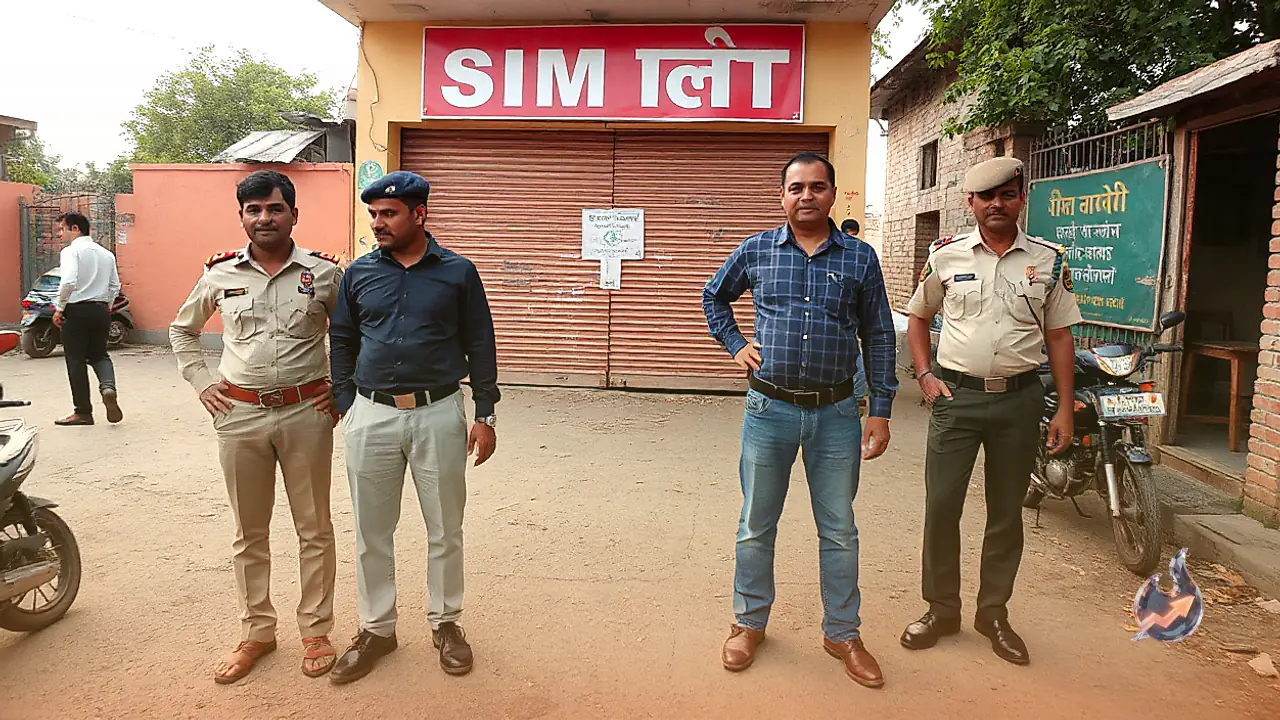

The fraudulent scheme involving OTPs and fake APK files, which originated from Jamtara, is no longer confined to just Jharkhand and has expanded its footprint across multiple states in the country. Through this sophisticated cyber crime network, crafty fraudsters have targeted a total of 22,139 individuals in a short span and swindled them out of a staggering sum exceeding 20 crore rupees. Delivering a major blow to this nationwide network, the Western District Police of Delhi carried out swift and decisive operations. The cyber team of the Western District Police successfully apprehended 22 accused individuals involved in this criminal enterprise within just five days. According to police officials, this entire syndicate was operating its network from Jamtara in Jharkhand, with deep-rooted connections extending across Jharkhand, Bihar, West Bengal, and Uttar Pradesh. This interstate gang has fleeced thousands of ordinary citizens sitting in different corners of the country through various deceptive tactics. A total of 2,080 complaints against these arrested accused have already been registered on the National Cyber Crime Reporting Portal. To successfully execute this large-scale operation, Delhi Police formed seven special teams comprising a total of 64 police personnel to monitor every single lead meticulously.
Delhi Police Conducts Raids Across 17 Locations in Four States
Operating strategically, these special teams of the Western District Police conducted coordinated raids across more than 17 suspicious locations spanning four states between November 11 and November 15. Apart from Jamtara, extensive searches were conducted in Deoghar and Giridih in Jharkhand, Nawada and Jamui in Bihar, Asansol and Kolkata in West Bengal, and Gorakhpur in Uttar Pradesh. Over the past few months, the police had received more than a thousand complaints regarding cyber fraud and unauthorized bank account hacks. When police teams initiated a thorough technical and ground-level investigation into these complaints, it was revealed that these fraudsters were infiltrating victims' bank accounts by tricking them into downloading malicious APK files on their mobile phones. Following this crucial breakthrough, the police examined over 20 formal e-FIRs and complaints lodged on the National Cyber Crime Reporting Portal. This comprehensive technical scrutiny brought to light 32 suspicious APK files. Subsequently, detailed forensic examinations of these files were conducted, and 56 Telegram profiles utilized for orchestrating the fraud were also incorporated into the investigation.
Targeting Senior Citizens Through Fake APK Files and Deceptive Messages
During the detailed investigation, it emerged that this gang impersonated legitimate bank officials and sent deceptive messages to people via WhatsApp. Senior citizens and elderly individuals were the primary targets of this syndicate. The fraudsters duped these elderly victims under the pretext of depositing life certificates, updating bank account KYC, issuing fresh credit cards, enhancing credit card limits, and updating electricity and gas bills. Subsequently, an APK file was sent to the victims, with instructions that downloading the file onto their mobile phones would instantly complete their pending tasks. As soon as an unsuspecting individual downloaded the file and granted the necessary permissions, complete data and control of their mobile phone fell directly into the hands of the fraudsters. Gaining access to the phone data granted the accused unauthorized access to the victims' sensitive banking details, personal messages, OTPs, calls, and photo galleries. Following this, the culprits either transferred all the funds from the victim's bank account to another account or used their credit card details to make extensive online purchases.
A Three-Tier Operational Structure Fueling the Cyber Fraud Syndicate
The extensive police probe further revealed that this cyber syndicate operated in a highly organized manner across three distinct tiers. At the primary level of this hierarchy, software developers creating the APK files formulated a specialized digital panel. Through this panel, fake APK files were generated using the names and identities of various prominent banks and government welfare schemes. Subsequently, access to this specialized panel was distributed to other individuals functioning as distributors. These distributors established sub-distributors beneath them, providing them with separate user IDs and passwords while charging a heavy monthly rental fee. These sub-distributors then commissioned APK files tailored with customized names and designs according to their specific requirements. Finally, these malicious files were channeled down to field-level cyber fraudsters who utilized them to ensnare ordinary citizens. According to police data, this syndicate successfully targeted 22,139 people nationwide and siphoned off more than 20 crore rupees from them.
Electronic Devices Recovered and Cyber Fraud Complaints Witness a Sharp Decline
During the course of the raids, the police seized a substantial quantity of digital and electronic equipment from the possession of the accused. The seized items include 63 sophisticated mobile phones, two laptops, two MacBooks, and one tablet. These electronic devices yielded concrete evidence of APK panels and digital traces utilized for executing the fraudulent activities. The police are currently conducting forensic analyses of these devices to unearth other accomplices and trace the wider network associated with the gang. This major police operation has yielded clear, positive results on the ground over the past few days. Complaints regarding cyber fraud executed via APK files in the national capital Delhi have registered a sharp decline of over 50 percent. According to police data, while 1,406 such complaints were received between November 2 and November 10, the figure dropped significantly to just 724 following the police operation between November 11 and November 17.