
























After a long stretch of pain in the crypto market, there is finally a sign of a turn. According to a Glassnode report published on Wednesday, Bitcoin's (BTC) recent recovery may mark the early stages of a bottoming process, as improving macroeconomic data continues to rebuild investor confidence and put a floor under prices. The core argument is simple: as the big economic numbers get better, so does sentiment, and that returning confidence is what is supporting the market from below.
The biggest driver of that confidence was softer inflation data out of the United States. After June's inflation print came in cooler than expected, Bitcoin actually outperformed both US and European equities. In other words, the same news that lifted stock markets in the usual way sent Bitcoin climbing far more sharply.
Why one inflation print sparked such a move
For Glassnode, the fact that the market rallied so hard on a single inflation number is itself a major signal. "That sensitivity is the tell. A market this eager to rally on one inflation print is a market where sellers are spent and buyers are waiting for a reason," the firm wrote. Put plainly, the selling has largely run out of steam, and buyers only need a trigger to step back in.
The levels that matter
The report points to one important technical detail. Bitcoin is currently trading above the average onchain cost basis of all investors, while remaining below the short-term holder (STH) cost basis near $69,000. That means older and average holders are back in profit, but those who bought most recently are still underwater.
Glassnode also noted that long-term holders have largely stopped realizing profits. The recent outflows have increasingly been sold at a loss, a pattern that typically signals the late stage of a bear market, the phase when weaker hands have already been shaken out.
Buyers soaked up June's sell-off
What stands out is that during June's decline, buyers absorbed much of the heavy selling pressure. Glassnode's Accumulation Trend Score showed broad buying activity across both small and large wallet cohorts while Bitcoin was trading near its recent lows. As prices then stabilized, that accumulation moderated somewhat.
Institutional money is returning, but cautiously
Institutional flows are also showing signs of improvement. US spot Bitcoin ETF redemptions have slowed considerably from June's heavy outflows, suggesting that the selling pressure is beginning to stabilize.
Looking at the numbers, Bitcoin funds netted $181 million in inflows on Tuesday, partially offsetting the previous day's $424 million in outflows. Yet this is only a minor recovery, and the turnaround has not been backed by strong buying, a sign that institutions are still treading carefully. "Until inflows return and hold, this remains a market where institutions have stopped fleeing but not started buying," Glassnode wrote.
Bearish bets thin out in derivatives
In the derivatives market, traders are steadily stepping back from bearish positioning. The options put-to-call ratio has fallen to its lowest level of the year, which means demand for downside protection has dropped.
But Glassnode added a warning. Even though bearish bets are being removed, the recovery is not being supported by strong spot market demand. "What the unwind has not produced is actual buying. Futures and options traders repositioning is not the same as money entering the spot market, and that absence is the clearest caveat on the whole recovery," the report stated.
Where prices stand now
At the time of writing, Bitcoin was trading at $64,660, down 0.4% over the past 24 hours. On Wednesday it consolidated above $64,500, pointing to waning bullish momentum and increased profit-taking as sellers re-emerged at these levels. Technically, the zone around $65,160 remains a key resistance area, and the softer-than-expected US inflation data has improved risk sentiment across the crypto market.
Moves across the rest of crypto
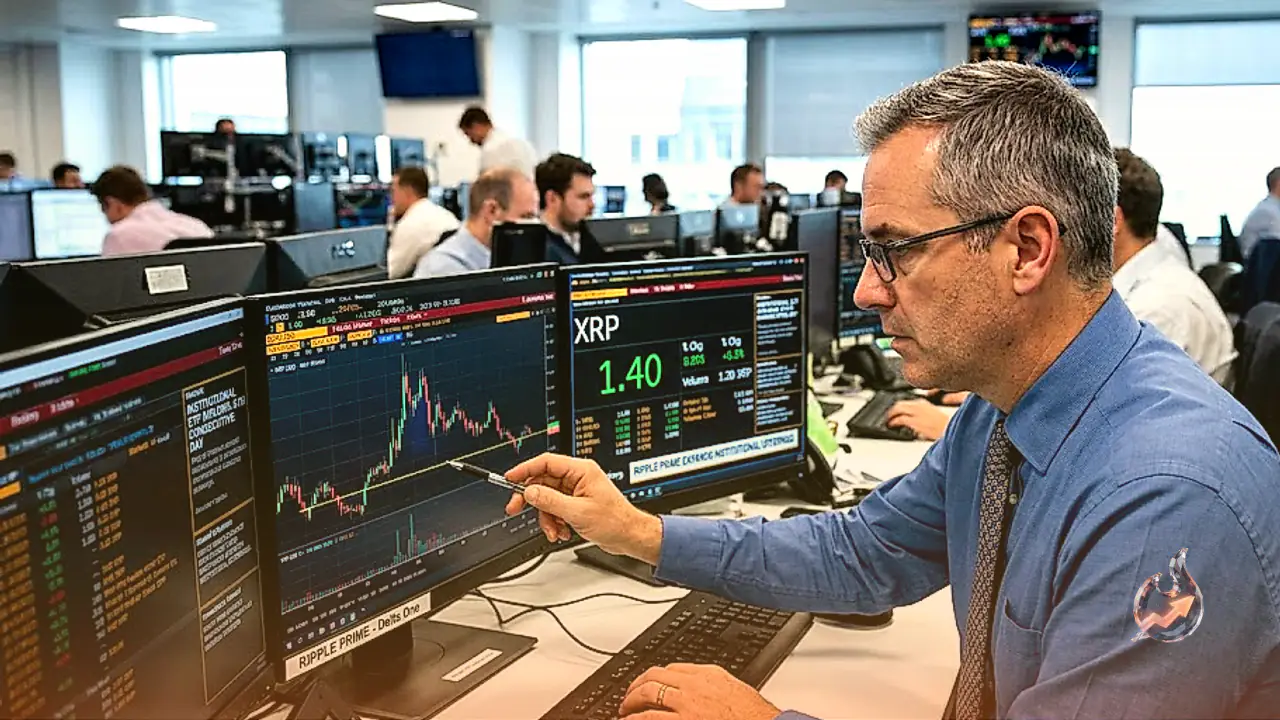
Beyond Bitcoin, other major cryptocurrencies were active too. Ripple (XRP) held above the $1.10 support it had reclaimed on Wednesday, extending its rally. That move followed US Producer Price Index (PPI) data for June, which showed that price pressures in the world's largest economy are cooling. Chainlink (LINK), meanwhile, edged higher on Wednesday and held on to its 5% gains from the previous day. Retail speculative demand for LINK is rising, with its futures Open Interest up 6% over the past 24 hours.
The overall picture is this: after the previous day's macro-driven rally, the crypto market paused on Wednesday to catch its breath. Easing selling pressure and thinning bearish bets have genuinely improved conditions, but until real money returns to the spot market, questions over how durable this recovery is will remain.