
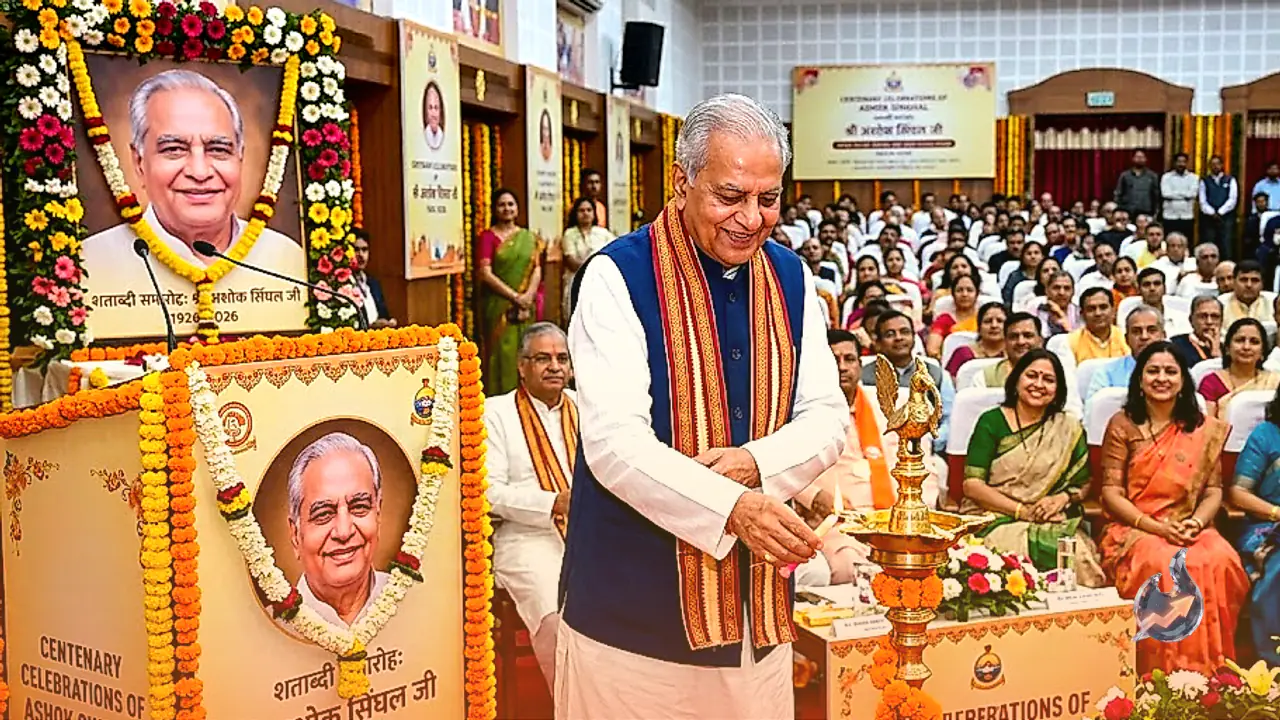




















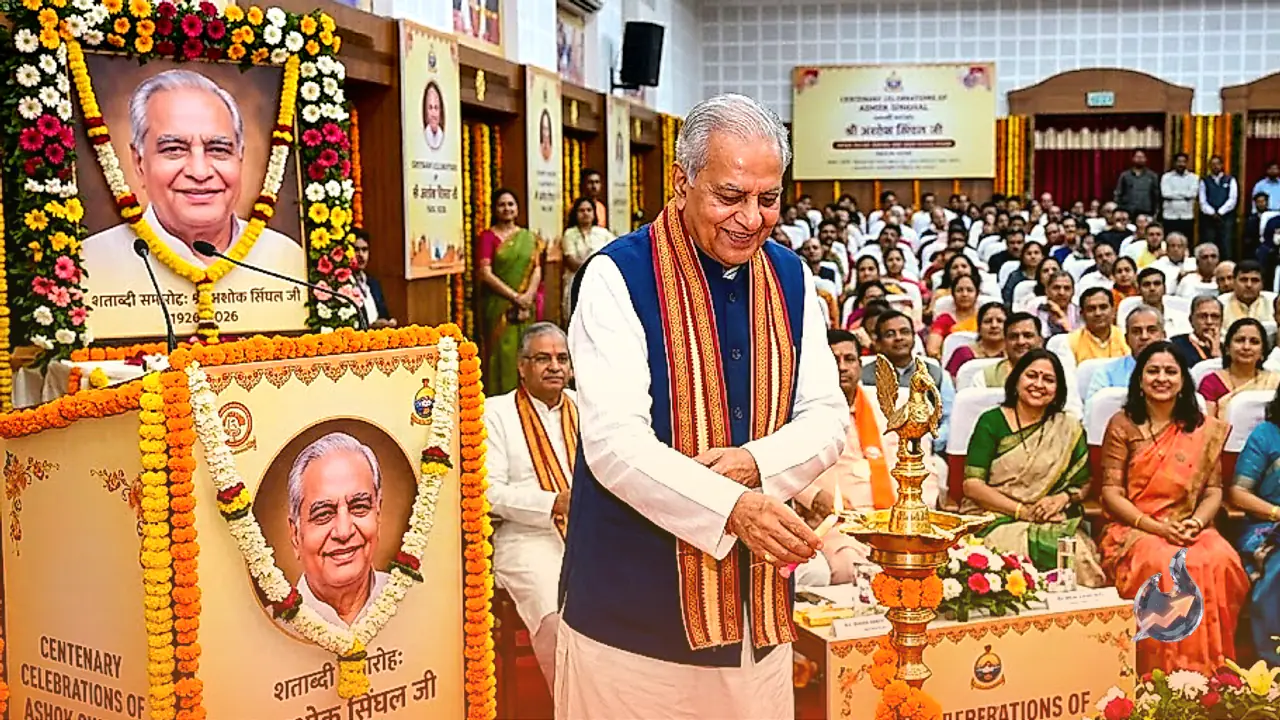

The birth centenary year of the late Ashok Singhal marks the commemoration of a remarkable life devoted entirely to cultural revival and social welfare. His journey stands as a powerful testament to the principle that a life dedicated to the greater good of humanity far outweighs personal achievements. Over several decades, he advanced organizational causes and spiritual pursuits with unwavering commitment, leaving an indelible mark on the nation's socio-cultural landscape.
Early Background and Family Roots
Born into a distinguished and well-established family, Ashok Singhal had a father, Mahavir Ji, who served with distinction as an administrator. His brother B.P. Singhal pursued a career as a police officer before later serving as a member of Parliament, while another brother, V.P. Singhal, became the chief secretary of Tripura when the state was newly formed. Despite this strong professional background across commerce and agriculture within his family, Ashok Singhal chose a distinct path driven by deep compassion and a desire to serve others from a very young age. Growing up in Prayagraj, he spent considerable time by the banks of the Sangam interacting with ascetics and pilgrims, which profoundly deepened his understanding of India's cultural ethos.
Grassroots Work and Disaster Relief
Joining the Rashtriya Swayamsevak Sangh early in life, Ashok Singhal undertook extensive and arduous journeys across remote parts of the country. He held a special affinity for the tribal regions of Gujarat, constantly brainstorming ways to uplift marginalized communities standing at the very end of the societal ladder. Whenever natural disasters struck the nation, he was invariably among the first to arrive on the ground to guide relief operations, leaving an unforgettable impression on those who worked alongside him during crises such as the 2001 Kutch earthquake. His powerful articulation and oratorical grace captivated audiences wherever he traveled.
Milestone Movements and Global Gatherings
His organizational genius extended to orchestrating major international events. In 1993, he played a central visionary role in organizing a grand conference in the United States to mark the centenary of Swami Vivekananda's historic address in Chicago. Similarly, his presence at the World Hindu Conference held in Port of Spain, Trinidad and Tobago, in the year 2000 brought immense enthusiasm to all delegates present. Furthermore, his monumental role in the Ram Janmabhoomi movement remains unforgettable, from his rousing speech at the 1991 Boat Club rally to his resolute spirit during the peak of the agitation. The grand Ram temple standing in Ayodhya today is built upon the selfless sacrifices of stalwarts who poured their entire existence into making it a reality.
Education, Music, and Social Harmony
Deeply committed to eliminating social discrimination, Ashok Singhal firmly believed in fostering absolute harmony and brotherhood. In a powerful reflection of this inclusive vision, he advocated for the very first brick of the Ram temple in Ayodhya to be laid by Kameshwar Chaupal, a prominent worker from a marginalized community in Bihar. An alumnus of Banaras Hindu University, he also maintained a profound passion for education, particularly Vedic learning, and music. He was deeply associated with the Ekal Vidyalaya initiative, which brought basic schooling to remote tribal villages. Known for his melodious voice, he often sang inspirational songs during organizational gatherings, infusing fresh energy into fellow workers. As his centenary is celebrated, his ideals continue to serve as an enduring beacon for the younger generation to fulfill his dreams for the nation.