


















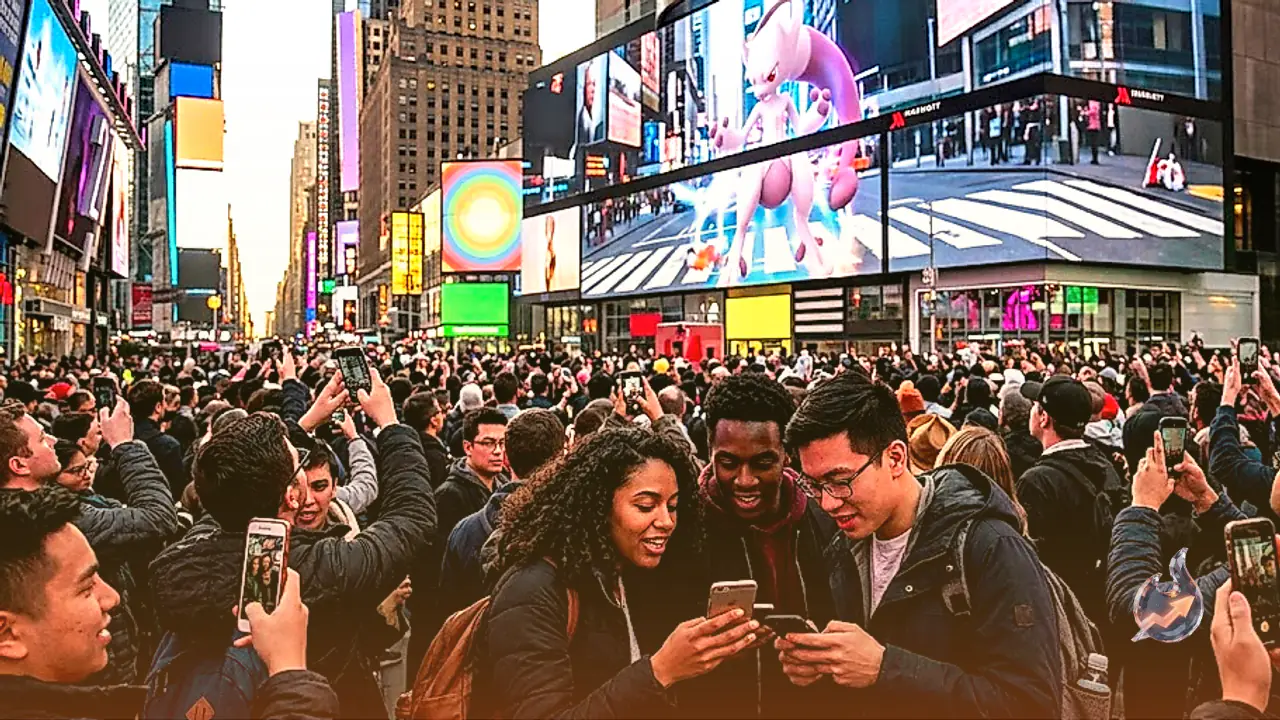

Ten years after Pokémon Go's debut trailer first teased a mass battle against Mewtwo in the middle of Times Square, that scene finally played out for real. Thousands of trainers gathered in New York's Times Square this week as part of celebrations marking the tenth anniversary of the mobile game, taking on a giant Mega Mewtwo Y that took over the billboards ringing the square.
A game that reshaped mobile gaming
Pokémon Go, built by Niantic, turned into a global phenomenon almost overnight when it launched in 2016. The mixed reality title, which sends players out into real streets, parks and landmarks to hunt digital creatures through their phone cameras, crossed 130 million downloads in its very first month. That same year it hit a record peak of 232 million active players and pulled in close to $1 billion in revenue, numbers that were almost unheard of for a mobile app at the time.
What made the game remarkable wasn't just its launch spike but its staying power. Niantic set out to build one of the first mobile "forever games", a title designed to keep players coming back for years rather than weeks, and by most measures it has succeeded. According to Statista, players have spent more than $6 billion on Pokémon Go over its lifetime. Last year, Niantic itself was bought by Scopely, one of the biggest mobile game publishers in the world and the studio behind titles such as Monopoly Go!, in a deal worth $3.5 billion.
The ten year old promise finally kept
Before Pokémon Go even launched, its first trailer promised features that didn't actually exist at release, including trading Pokémon with friends and battling other trainers. The clip closed with a dramatic shot of trainers streaming into Times Square as every billboard lit up to show a massive collective fight against a fearsome Mewtwo. In ten years of Pokémon Go Fest events staged around the world, Niantic and later Scopely had never actually recreated that exact scene, until this week's anniversary event.
"We sort of made promises to players on the type of game that this was going to be," said Michael Steranka, vice president of product at Scopely, who has worked on Pokémon Go at Niantic since 2017. "Now, 10 years later, when we look back at that trailer, we feel like we've actually delivered on a lot of the promises made there."
How the Times Square night unfolded
Invitations for the event went out to 2,000 Pokémon Go players spread across New York City's five boroughs, distributed through the game's network of community ambassadors. Scopely deliberately kept the event invitation only to avoid overwhelming an area that is already among the busiest public spaces on the planet. According to Mark Van Lommel, Scopely's director of marketing communications, invited players were only told about themed raids taking place near Times Square, without knowing the full surprise that awaited them.
Later in the evening, notifications went out inside the game telling ticketed players to make their way to Times Square for a special event. Once they arrived, they were treated to a live EDM performance from Loud Luxury before Mega Mewtwo Y appeared across the surrounding screens and a mass battle began. Mega Mewtwo Y was ultimately defeated by the assembled trainers.
The whole event was livestreamed across Pokémon's official websites and social channels. This weekend, a separate Pokémon Go Fest Global virtual event will let trainers everywhere take on the same Mega Mewtwo Y encounter from wherever they are, minus the Times Square screens. "Everyone around the world can play that for free this weekend," Van Lommel said.
A decade of numbers behind the phenomenon
Scopely says more than 800 million people have played Pokémon Go across its ten year history, and players have caught more than 1 trillion Pokémon between them to date. The game had more than 100 million active players in 2024, and it generated $1 billion in revenue in 2025 alone. Active players spend around 45 minutes a day engaging with the game on average, and collectively they have walked more than 62 billion miles while hunting for PokéStops and Pokémon.
Kim Adams, vice president of Game Development at Pokémon Go, said the company's network of community ambassadors, vetted volunteers who organize local real world gaming groups, has grown from just 50 people two years ago to more than 3,000 around the world today.
Live events are one of the features that set Pokémon Go apart from other mobile games, and Scopely says it sold nearly 1 million tickets to such events in 2024. Since last year, the company says engagement has grown by double digits, with daily playtime up 10 percent and real world exploration by players up 29 percent.
Not always smooth: lessons from early failures
Getting thousands of players to raid together at once hasn't always gone smoothly. Howie Ragunton, a US Federal Aviation Administration worker who has played the game since its 2016 release, recalled the very first Pokémon Go Fest held in Chicago in 2017, which turned into a disaster after overloaded cell networks and unstable servers left players unable to play. "They've learned throughout the years," he said.
Ragunton's own connection to the game runs deeper than most. He met his wife while playing Pokémon Go and proposed to her at a Pokémon Go event in June. He says the game changed the course of his life, since he started playing it right after relocating from Texas to Chicago for work. "The game helped me socialize; it made me go out, and that's kind of what I love about it," he said.
Because his job requires frequent travel, Ragunton spends a lot of time contributing to Niantic's Wayfarer program, nominating local landmarks in the middle of America as Waystops, submissions that can later turn into PokéStops that other players visit to collect in game items. He isn't paid for the volunteer work, though he does receive some in game freebies in return.
Data contributed by fans like Ragunton also feeds into improvements across Scopely's other games, which Adams says is exactly why the company puts such weight on community feedback. "We are nothing without all of those people who contributed to the game in that way; we are in service of them," she said.
"Pokémon Go has helped me stay sane," Ragunton said. "I don't work at big airports all the time; I work at these airports that don't even have passenger flights, they just have private flights, but they're in nowhere places, in small towns. But Pokémon Go is always there."
Building a game for the next generation
Whether Pokémon Go will still be running strong for its 20th anniversary in 2036 remains an open question, but Steranka believes the Pokémon intellectual property has clearly helped sustain the game's momentum so far. He argues, though, that it's the in person communities the game has built over the past ten years that will carry it into the next decade, which is why the plan is to keep investing in those spaces and helping create more shared memories. A key goal going forward, he said, is to keep building Pokémon Go as a game that spans generations within the same family.
"I will go out to a park with my mom, who's turning 70 next week, my wife, and my two kids, the oldest of whom is 3 and a half years old, and all of us can enjoy Pokémon Go together," Steranka said. "Maybe the exception is my 6 month old."
Steranka said the mobile game remains one of the first points of contact people have with the wider Pokémon universe, and one of the ongoing development challenges is building features that appeal across all age groups at once. He declined to reveal what's next for the franchise, including whether the company might experiment with hardware again, but said the company's "world class" engineers would explore any technology that genuinely makes sense for the game.
"What we don't want to do is adopt technologies for the sake of adopting technologies," Steranka said. "But if we feel that something has a genuine opportunity to make the game better, make the experience better, make the immersion better for our players, then that is something we are going to be exploring and investing in."
Adams said that after ten years of what she described as a respectful relationship with The Pokémon Company, and now operating under Scopely's management, the team feels "supercharged" heading into the future and plans to keep leaning into its key differentiator: community.
"People right now need more joy in their lives," Adams said. "Life can get particularly hard, and if I'm standing in the grocery store line and some Pokémon can brighten my day, I'm not the only one. To them and to us, it's not just a game."