


















Jaipur is known not only for its forts and palaces but also for the small, personal heirlooms its residents have quietly preserved across generations. In Raja Bhatt ki Haveli, near Hawa Mahal Bazar in the walled city, Vishnu Kumar Bhargava has spent nearly 50 years building exactly such a treasure, a rare collection of Indian currency notes issued from the years after independence right up to the present. Tourists from within India and abroad now travel specifically to Jaipur to see this collection.
A family hobby that grew into a priceless archive
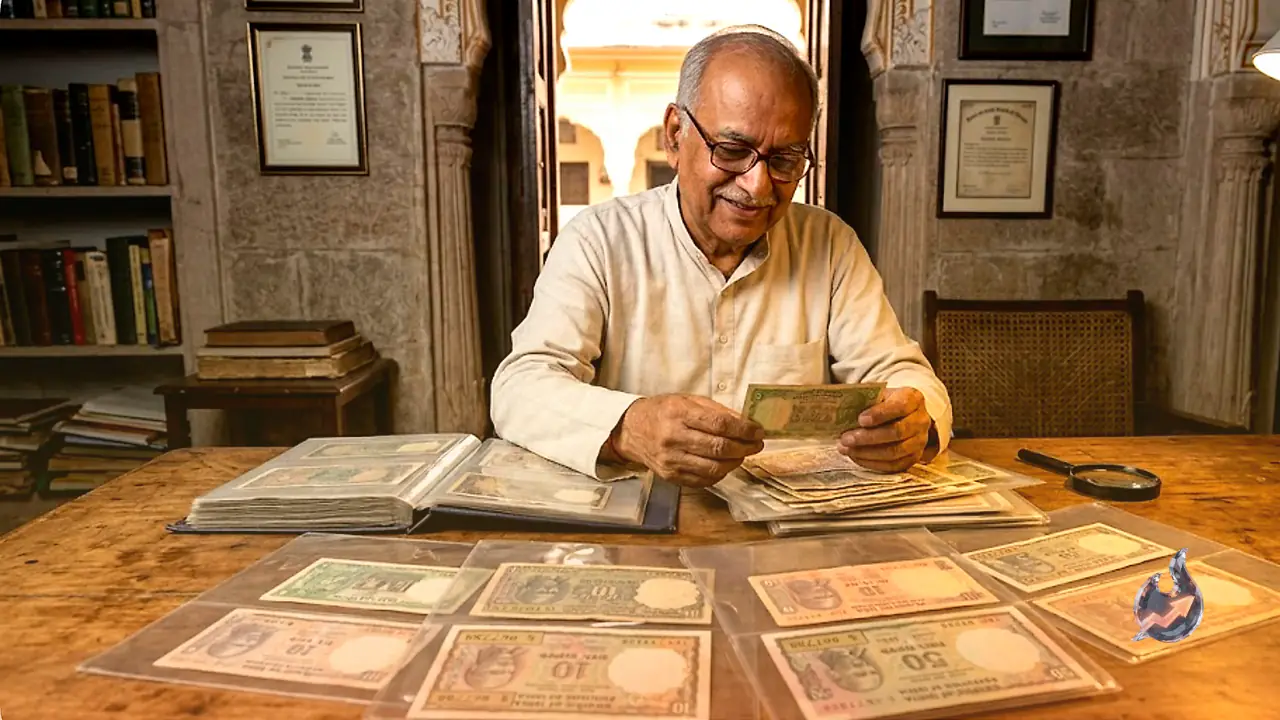
Bhargava, 75, says his family has followed a tradition of preserving old coins, stamp papers, postal tickets, ledgers and currency notes for years, and he has simply carried that legacy forward. That is why he now owns a collection of more than 500 rare Indian notes, something not everyone gets the chance to see up close. The haveli itself has turned into more than just a home; it now functions as a small gallery of India's currency history, with every note carrying the story of a different era.
From the one rupee note to the thousand rupee note, every piece tells a story
According to Bhargava, the currency of every country in the world carries its own distinct history within it, and India is no exception. His collection includes notes ranging from one rupee to one thousand rupees that circulated during different periods. He points out that Indian notes have always stood out for their attractive designs, symbols and imagery tied to Indian culture. Over time, the security features on these notes have also changed, making it easier to detect counterfeit currency. Bhargava has been building this collection continuously since 1950, and it now includes fancy notes, notes with different serial number series, and multiple different versions of the same denomination. Some rare notes have still not made their way into his collection, but he continues to closely track every new and differently numbered note that comes into circulation, adding any special note to his collection as soon as he gets hold of it.
Notes with numbers like 786 and 667788 are the biggest highlight
After 1950, the central government issued several new notes from time to time, featuring images of Indian farmers, historic monuments and the country's cultural identity. The biggest highlight of Bhargava's collection is that it includes several rare notes carrying double digit serial series like 667788 and special numbers like 786. Notes with such numbers are always in strong demand in the market, and many people are willing to pay large sums to acquire them.
He values them as heritage, not for the money
Despite offers of large sums of money, Bhargava is not in favour of selling any of these notes. He says these are not just pieces of paper but a part of the heritage of Indian currency, which he wants to preserve for future generations. That is why tourists visiting Jaipur and people interested in the history of Indian currency arrive in large numbers at Raja Bhatt ki Haveli, spending hours poring over this remarkable collection.