













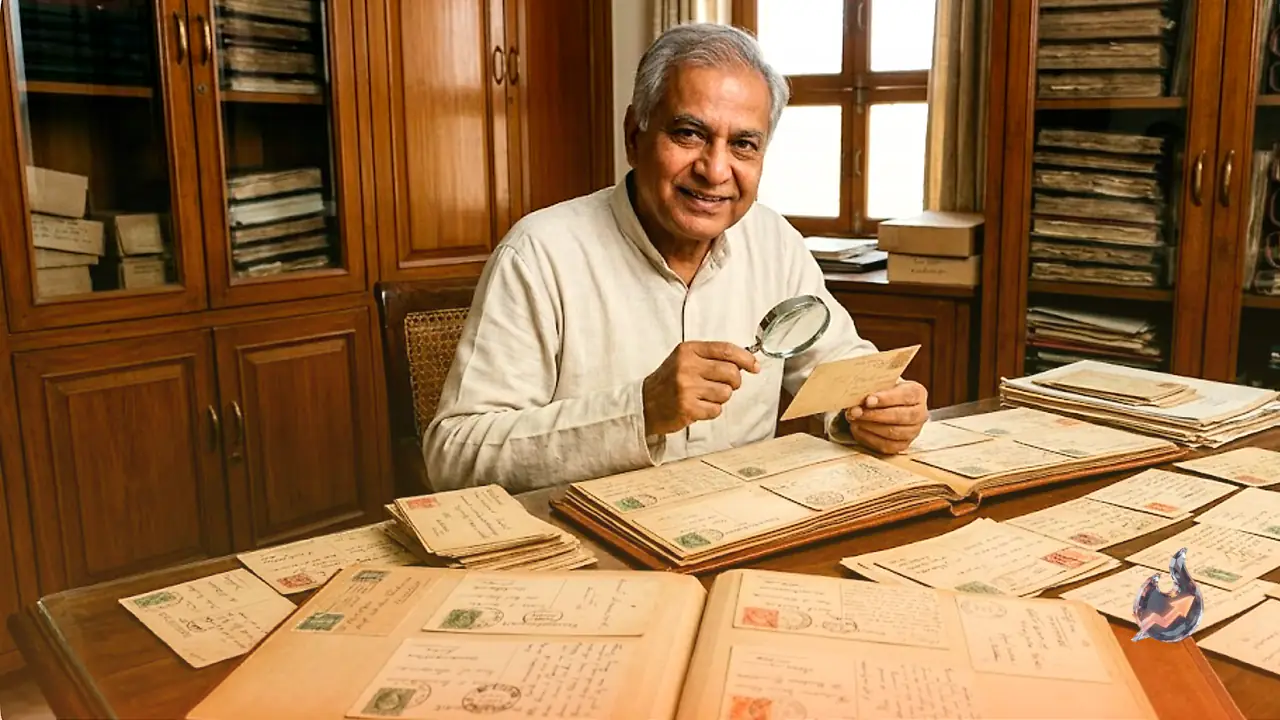

Step into Bharat Bhushan Gupta's home in Bikaner and you walk straight into more than a century of India's postal history. In an era when smartphones and instant messaging have all but killed the habit of writing letters, Gupta has spent enormous effort preserving hundreds of postcards dating from 1879 right up to the present day. His collection offers a clear window into India's postal system, its changing modes of communication and the many historical eras the country has passed through. It has become an inspiring example of how postal history, heritage and personal memory can be kept alive.
A Collection That Stretches Back To British Rule
Gupta says postcards first came into circulation in India in 1879, a period when East India Company rule had already given way to direct British rule and Queen Victoria held sway over the country. Postcards from that very era still survive intact in his collection. Alongside them sit postcards issued during the reigns of King Edward, King George V and King George VI. Gupta has also carefully preserved postcards of various denominations that were released after India's independence, gathering them with years of patient effort.
More Than 50 Varieties, From Three Paise To Fifty Paise
According to Gupta, his collection includes more than 50 varieties of postcards priced at three paise, five paise, six paise, ten paise, fifteen paise, twenty paise, twenty five paise and fifty paise. The price and design of these postcards changed with time, but he says their historical importance has stayed exactly the same, and every single postcard tells the story of the period it belongs to. Some pieces in his collection are considered especially rare, including a competition postcard that was priced at two rupees and is now hard to find anywhere. His collection also includes a special commemorative postcard that the postal department issued to mark 100 years of postcard service in India, along with postcards that were once sent by air mail, which were an important part of the postal system of that time.
Letters In His Father's Own Handwriting
Gupta, who is from Ajmer, recalls a time when the postcard was the cheapest and most popular way for ordinary people to stay in touch with each other. People used postcards to share good news and bad, family updates, greetings and urgent messages, and every village and town waited eagerly for the postman to arrive. Gupta still has several postcards written in his own father's hand, pieces that are not just collector's items for him but priceless family memories. His collection also gives special place to Meghdoot postcards, which used to carry advertisements for government schemes and private organisations.
Passing The Legacy On To The Next Generation
These postcards were sold cheap and also served as an effective tool for spreading public awareness. Over the years, Gupta has also gathered postcards linked to various themes, occasions and special campaigns. He says that while modern technology may have changed the way people communicate, postcards remain an important part of India's social and cultural history. His aim, he says, is to pass this legacy on to future generations, so that people know that a simple looking postcard was once the biggest medium for connecting people's hearts.