























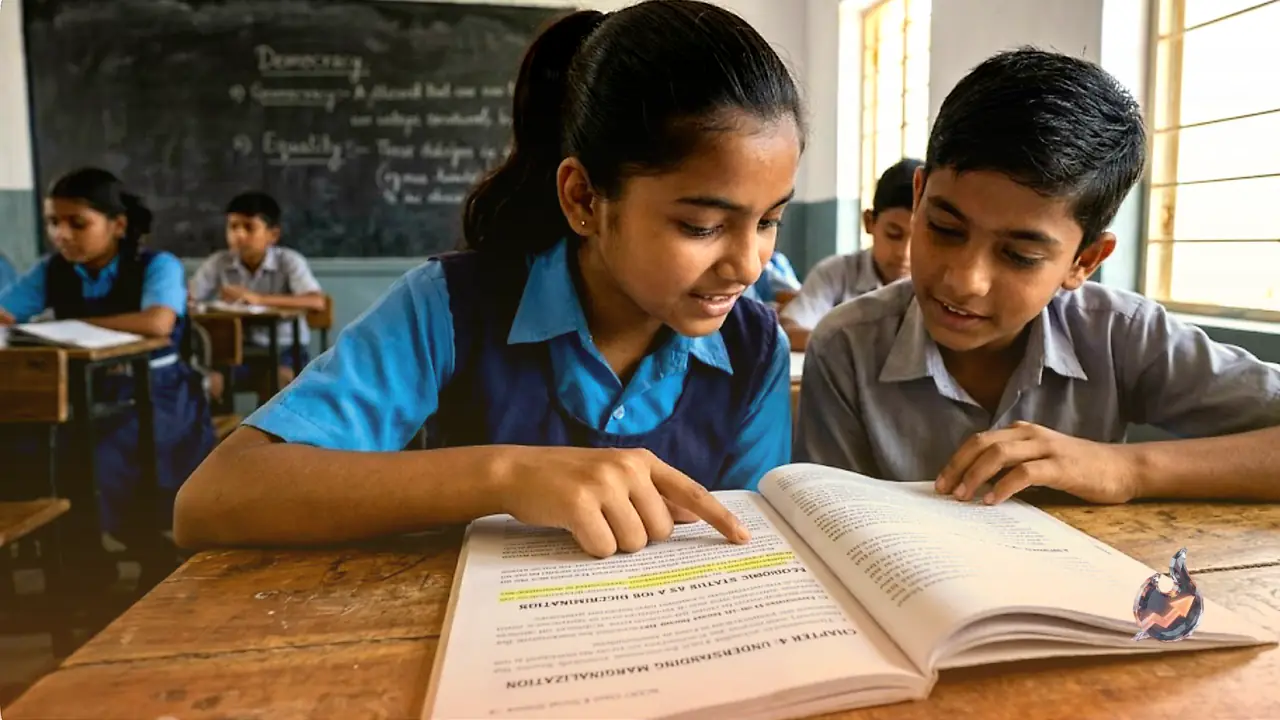

In a significant pedagogical shift, the NCERT has introduced a major update to its school curriculum following directives from the Supreme Court. The newly released Class 8 social science textbook, titled 'Exploring Society: India and Beyond', now offers students a more nuanced understanding of discriminatory practices. Within the chapter titled 'Citizenship: Rights and Duties', economic status has been formally included as a primary criterion for discrimination.
Expanding the Scope of Discrimination
The updated textbook explicitly states that mistreating any individual or group based on their economic standing is considered a form of discrimination, placing it alongside other recognized grounds such as caste, religion, race, ethnicity, disability, physical appearance, gender, and sexual identity. The NCERT emphasizes that such behavior is not only morally reprehensible but also a violation of the law. The text explains that children from economically disadvantaged backgrounds frequently experience prejudice, which is why economic background is now treated as a critical dimension of discriminatory behavior that must be addressed in an academic setting.
Contextualizing the Policy Change
This revision is being regarded as a landmark decision, especially when compared to broader regulatory frameworks. The recently issued UGC (Promotion of Equity in Higher Education Institutions) Regulations, 2026, outlined discrimination based on religion, race, caste, sex, place of birth, and disability, but did not explicitly categorize economic status as a separate, defining factor. This omission had previously sparked debate, with critics arguing that systemic discrimination against the Economically Weaker Section (EWS) needed formal recognition. By integrating this into the school syllabus, the NCERT is taking a proactive step to instill awareness regarding socio-economic equity in students from a young age.