





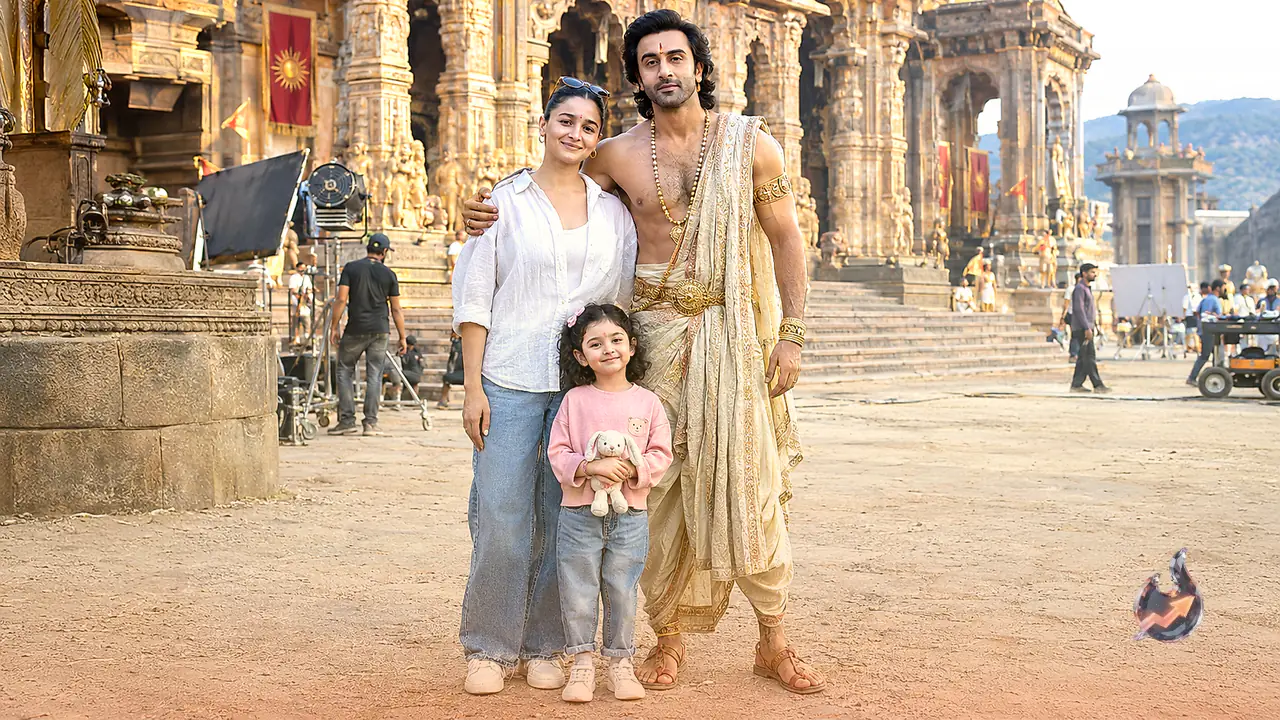

















Director Nitesh Tiwari's cinematic spectacle Ramayana has officially arrived in cinemas, surrounded by massive anticipation and widespread discussion across social platforms. From cricketing icon Sachin Tendulkar to filmmaker Karan Johar, prominent personalities have voiced their appreciation for the grand production. Backed by producer Namit Malhotra with an estimated budget of roughly 4,000 crore rupees, the high-stakes project carries immense expectations. Adding to the momentum, West Bengal Chief Minister Suvendu Adhikari has declared the film tax-free within the state, putting the spotlight back on the financial mechanisms of entertainment taxes and who genuinely benefits when movie tickets become cheaper.
What Does Declaring a Film Tax-Free Actually Mean?
When a state government decides to make a movie tax-free, it specifically waives the entertainment tax levied on cinema tickets sold within that jurisdiction. Under the Indian constitutional framework, entertainment falls under the purview of individual states. Consequently, granting concessions or exemptions remains an exclusive power of state administrations. This constitutional distribution means that when a film receives a tax break in one state, the financial relief applies strictly within the geographic borders of that particular state rather than applying nationwide.
Historically, entertainment tax dates back to the British era in India, when it was assessed and collected as an entirely separate local surcharge. A significant structural change occurred on 1 July 2017 with the nationwide rollout of the Goods and Services Tax, which subsumed major portions of service tax and entertainment levies under the unified GST regime. Nonetheless, state jurisdictions retain their authority over local entertainment taxation policies. State governments traditionally grant tax exemptions to feature films that evoke strong patriotic sentiments, convey an impactful message to society, or address social issues deemed essential for broad public awareness.
State-Wise Entertainment Tax Variations and Consumer Impact
Entertainment tax is levied by state authorities across diverse public entertainment categories, including film admissions, athletic fixtures, live concerts, and public exhibitions. The actual financial weight of this levy falls squarely upon the paying customer, forming an integral part of the overall ticket price. Taxation rates vary considerably from one state to another across the country. In states like West Bengal, Haryana, Karnataka, and Kerala, the entertainment tax rate stands at 30 percent. In contrast, Maharashtra levies 45 percent, Bihar imposes 50 percent, and Uttar Pradesh sets it at 60 percent. When a state waives this tax, the ticket prices drop proportionally, removing the cost barrier so that larger audiences can access the theatrical screening.
Who Benefits Most: The Cinema Audience or the Film Producers?
Evaluating the mechanics of tax exemptions reveals a dual financial advantage that assists both the public and the film's financial backers. The most immediate beneficiary is the ordinary moviegoer, who pays reduced out-of-pocket rates at the box office window, making family visits significantly more economical. Concurrently, the film's producers reap substantial indirect gains. Lower entry costs naturally encourage higher footfalls, motivating occasional viewers and cost-sensitive demographics to attend screenings. This sharp surge in overall attendance leads to elevated ticket volumes, ultimately driving strong box office gross earnings that benefit production revenues.
The Critical Stakes Surrounding Director Nitesh Tiwari
The cultural resonance of the Ramayana narrative brings immense scrutiny, particularly in light of recent cinematic history. Audiences still recall the fate of Adipurush starring Prabhas, Kriti Sanon, and Saif Ali Khan, which struggled significantly at the box office and encountered far more public criticism than praise. This backdrop places extraordinary pressure on director Nitesh Tiwari. Having delivered widely celebrated blockbusters like Dangal and Chhichhore, Tiwari brings proven storytelling credentials to this venture. Because of his acclaimed track record, discerning critics who previously panned Adipurush as well as general audiences are keenly watching to see how he handles this historic material on screen.