




















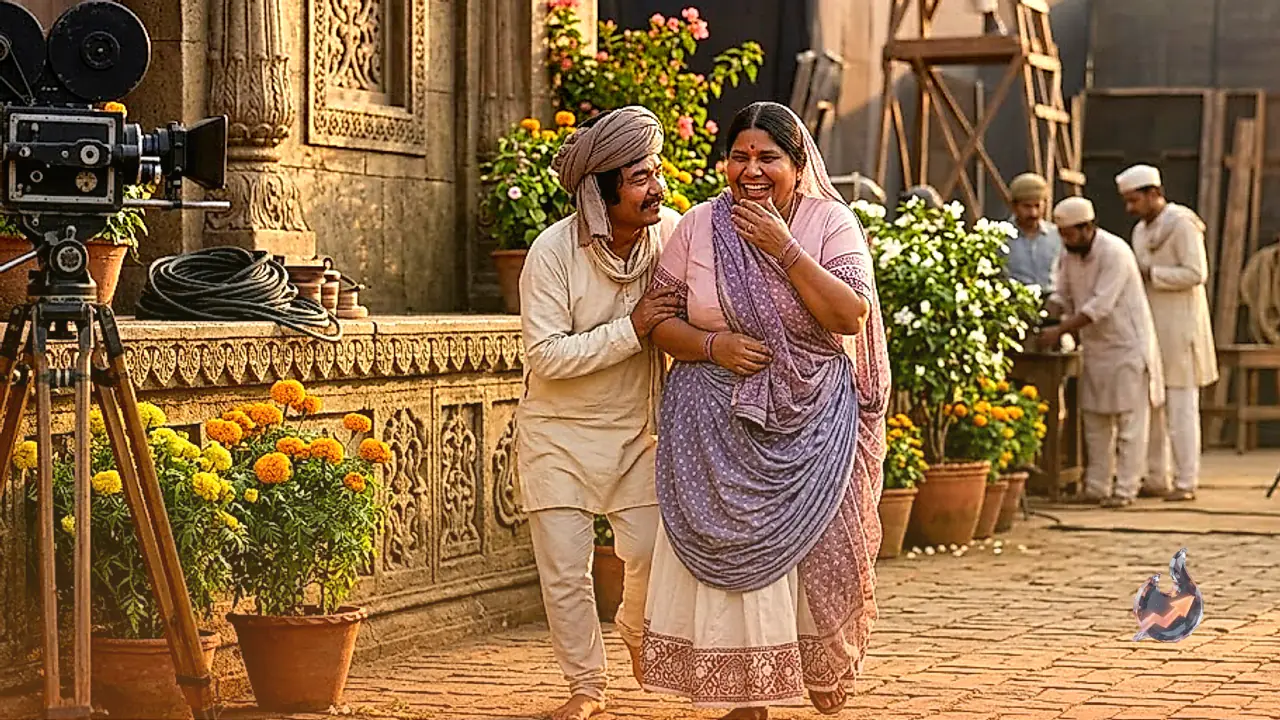

In the vast history of Indian cinema, whenever there is a mention of the first female comedian, the name Uma Devi Khatri, famously known as Tun Tun, surfaces instantly. Her mere appearance on screen was enough to bring a smile to the audience. Born on July 11, 1923, in Amroha, Uttar Pradesh, Tun Tun experienced a childhood marred by immense tragedy. Her parents and brother were killed in a land dispute, leaving her orphaned. While growing up with relatives who often subjected her to taunts, she found solace in listening to songs on the radio. Her deepest aspiration was to become a renowned playback singer, a dream that eventually led her to Mumbai.
From Singing to Acting Stardom
Upon reaching the city, the legendary music composer Naushad recognized her innate talent. In 1947, her song 'Afsana Likh Rahi Hoon' from the film 'Dard' became a massive hit, catapulting her voice into households across the country. As the industry began to evolve, Naushad suggested that she try her hand at acting. She agreed to this transition but set a unique condition: she would only pursue acting if her debut film featured the veteran superstar Dilip Kumar. Given the deep friendship between Naushad and Dilip Kumar, the condition was accepted without hesitation. In the 1950 film 'Babul', she got the chance to work alongside Dilip Kumar and Nargis. It was during the filming of 'Babul' that her name was changed from Uma Devi to the iconic Tun Tun.
Defining Comic Brilliance
Following her debut in 'Babul', Tun Tun never looked back. Her heavy-set frame, combined with delightful facial expressions and impeccable comedic timing, made her the first choice for every major director of that era. She delivered memorable performances in Guru Dutt's classic films, including 'Aar-Paar', 'Mr. & Mrs. '55', and 'Pyaasa', roles that remain etched in public memory. Furthermore, her comedic brilliance shone in movies like 'Namak Halaal' and 'Kohinoor'. She was such a significant figure that screenwriters of that time often wrote comedy scenes specifically with Tun Tun in mind, a distinction that was incredibly rare for a female artist at the time.
A Legacy Spanning Over 200 Films
Throughout her career, which spanned five decades, Tun Tun worked in more than 200 films. However, her personal life was marked by sorrow, particularly after the death of her husband, Akhtar Abbas Kazi. Shattered by this loss, she gradually withdrew from the glamorous world of cinema. The 1990 film 'Kasam Dhande Ki' became the final project of her long-standing career. After suffering through a prolonged illness, she passed away on November 23, 2003, at the age of 80.