























Monsoon rain brings welcome relief from the heat, but it also creates trouble inside the kitchen. Rising moisture in the air during the rainy months causes lentils, spices and grains to spoil much faster than usual. If dals are not stored the right way, they can develop fungus or get infested with insects, and eating such lentils can be harmful to health. A handful of simple, tried and tested tricks can help keep your stock of dal fresh and safe for months even during the wettest part of the year.
Moisture is the biggest enemy of stored lentils
During the monsoon, the amount of water vapour in the air goes up sharply, and this moisture easily seeps into kitchen containers. Even a small amount of dampness inside a container is enough to trigger fungus growth in dal, which is why storage habits need to change during this season.
Switch to a good quality airtight container
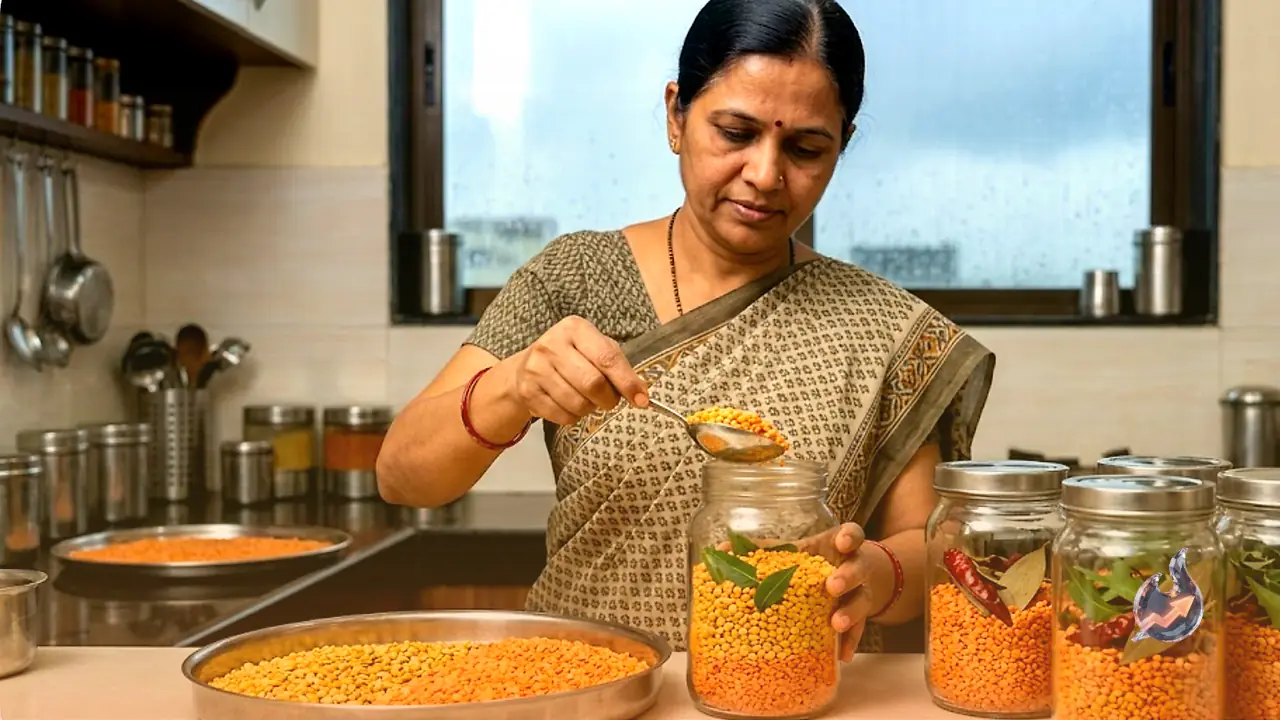
Always store dal in a sturdy, good quality airtight container so that outside moisture cannot get in. This keeps the lentils fresh for a longer period. Glass or steel containers are considered more reliable than plastic ones because they block moisture more effectively.
Sun-dry the dal whenever the weather allows
Whenever the sun comes out during the rainy season, use the opportunity to spread the dal out in mild sunlight for 2 to 3 hours. This helps release any extra moisture trapped in the lentils and significantly lowers the risk of fungus and insect infestation.
The traditional trick of bay leaves or neem leaves
Adding 2 to 3 dry bay leaves or dried neem leaves to the dal container is an old and simple home remedy that many households have relied on for years. It reduces the chances of insects settling into the stored lentils.
Always use dry hands and a dry spoon
While taking dal out of the container during the monsoon, always use a dry spoon and dry hands. Even a single drop of water entering the container can be enough to set off fungus growth inside.
Avoid stocking up on large quantities
During the monsoon, it is best to avoid buying and storing large quantities of dal for a long stretch of time. Instead, buy smaller amounts and refill the stock periodically. This lowers the risk of spoilage and ensures the dal in the kitchen stays fresh at all times.
If you spot fungus or a bad smell, throw it away
If the dal shows any sign of fungus, a foul smell or an unusual colour, do not attempt to cook or eat it. Consuming such lentils can lead to stomach problems and food poisoning. From a safety standpoint, throwing away spoiled dal immediately is always the better choice.