























Ask any woman in a mustard growing village what happens before the seeds go to the oil press, and she will tell you the same thing every time. Clean the seeds first, then worry about the oil. Mustard that comes straight from the field always carries soil, dust, dry leaves, stalks and small pebbles mixed in with the grain, and if that debris goes into the crushing machine along with the seeds, the quality of the oil is ruined completely. That is exactly why, in villages even today, cleaning the mustard properly right before it is sent for pressing is treated as the single most important step in the whole process.
When Clean Seeds Mean Purer, More Fragrant Oil
Oil pressed from thoroughly cleaned mustard comes out clear, almost transparent, and carries a much stronger natural aroma. Because there is no leftover dirt mixed in, the colour of the oil also stays far more appealing, and it never picks up any odd or unpleasant smell during pressing. This is precisely why villagers put so much effort into cleaning mustard before it is pressed, since this small amount of extra work makes a noticeable difference to both the taste of the oil and how healthy it is to consume.
Winnowing With a Soop Remains the Oldest, Most Trusted Method
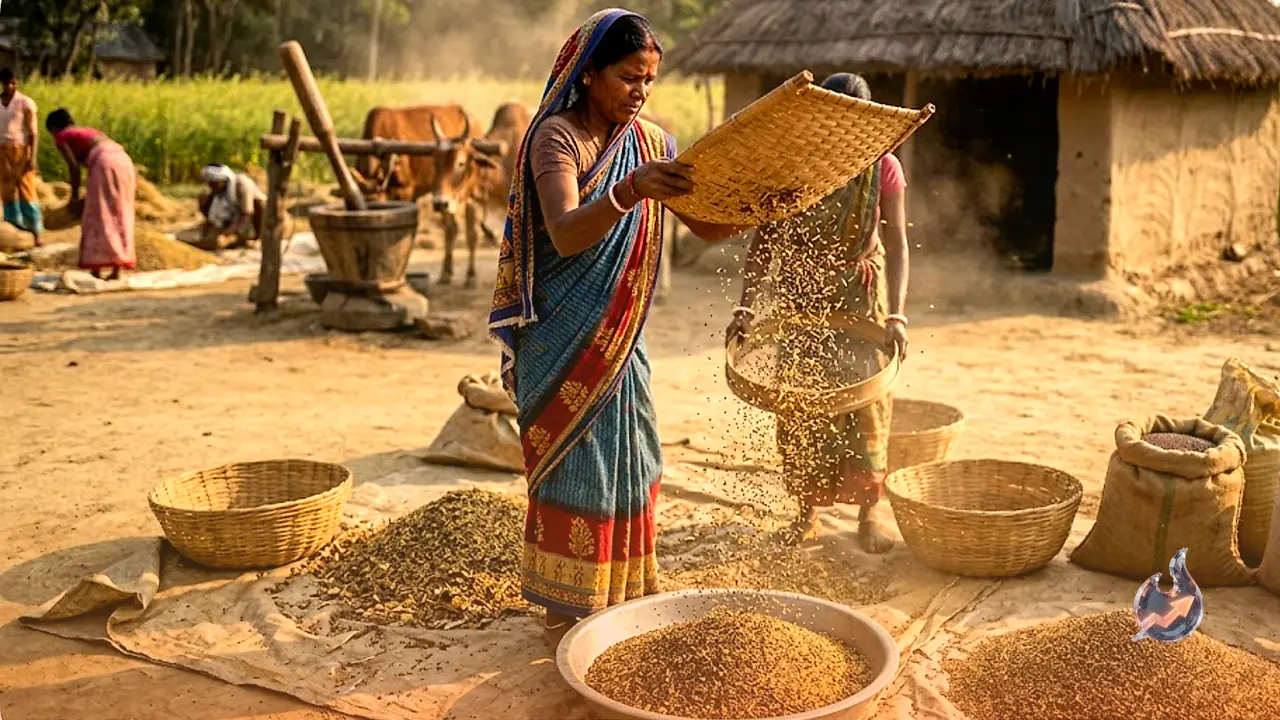
In the villages of Sultanpur, the tool used most often to clean mustard is the soop, the traditional flat winnowing basket used for grain. Women take small quantities of mustard into the soop at a time and gently toss it up and down with light movements of the hand. This motion lets the lighter debris, husk and dry leaves fly off into the air and settle away, while the heavier, cleaner grains stay behind in the basket. The technique has been passed down across generations, and even without any machinery, it is still considered the most effective way to clean mustard.
Winnowing with the soop does not just remove dust and soil. It also separates out small twigs, dried pods, bits of dried grass and fine pebbles that would otherwise stay mixed in with the grain. If all these impurities are allowed to travel into the crushing machine along with the mustard, they place unnecessary strain on the press. On top of that, the true taste of the oil can turn bitter, and its colour can darken as a result.
Why a Short Spell in the Sun Matters After Winnowing
Once the soop has done its work, rural families in Sultanpur spread the cleaned mustard out on a cloth and leave it in mild sunlight for a few hours. This step draws out any lingering moisture or dampness trapped inside the grains. Seeds that have been properly dried release oil far more easily during pressing, and in a larger quantity too. There is one caution worth noting, though. Mustard should never be left out in harsh, intense sunlight for too long, since only a brief spell of gentle sun gives the best result.
Stones and Pebbles Put the Machine Itself at Risk
Cleaning mustard is not only about protecting the quality of the oil, it matters just as much for protecting the machine that presses it. If stones, pebbles, bits of wood or any other hard material remain mixed in with the mustard, the parts of the crushing machine, whether the blades or other components of the press, can break or wear down. That damages the machine and causes a direct loss for whoever runs the oil mill. This is exactly why both farmers and mill operators consistently advise that mustard should be cleaned thoroughly at home before it is ever brought in for pressing.
Perfecting the Process Without Any Machine at All
This traditional knowledge of cleaning mustard has been carefully preserved by village women even now. They need no modern machine and no expensive equipment, just a single soop, to clean sacks full of mustard within minutes. Their experience is so refined that while winnowing, they end up keeping back only those grains that are perfectly suited for pressing, letting the lighter waste separate away on its own.
A Little Extra Effort, Purer Oil and a Safer Machine
Taken together, cleaning mustard with a soop before pressing is not simply an old custom, it is a genuinely practical way of preserving purity. Clean grains yield more oil, the machine stays protected for far longer, and there is no risk of contamination or illness creeping into the oil. If every family adopts this simple, traditional method before getting their mustard pressed, they can obtain the purest, best quality oil for home cooking without spending any extra money at all.