





















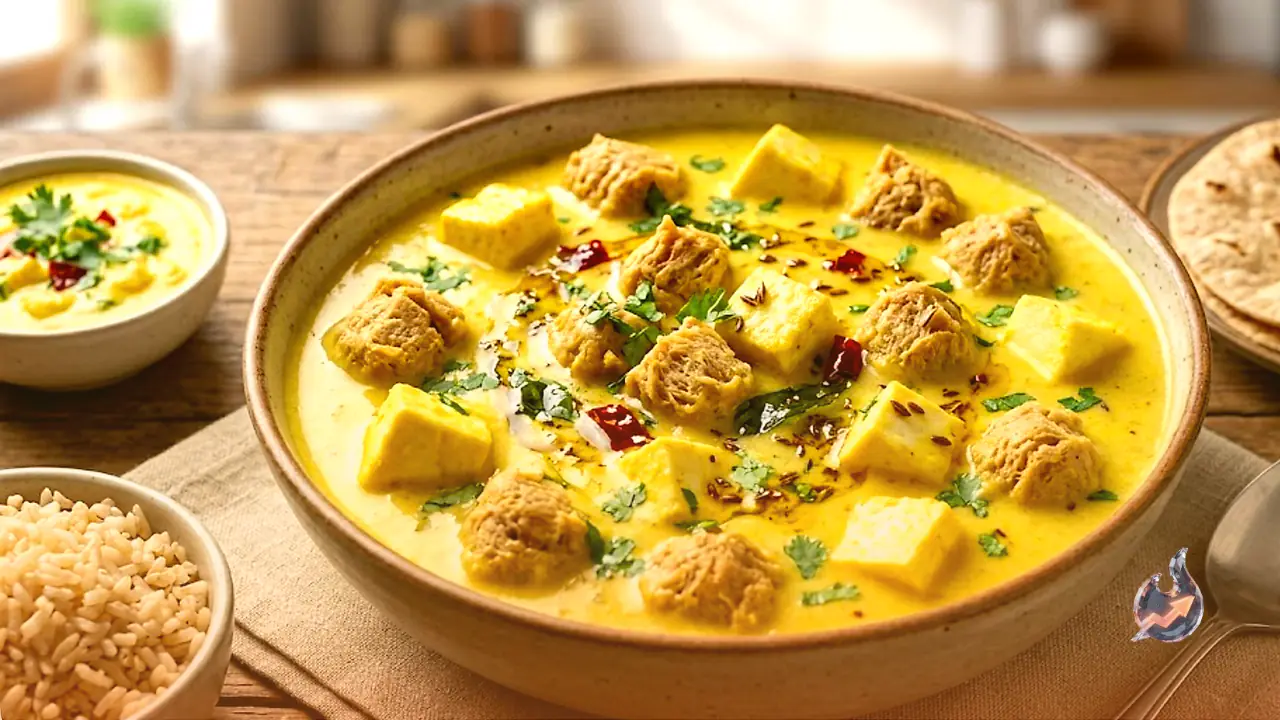

Ask anyone about Indian comfort food and kadhi rice is bound to come up, but many people end up eating it less often because of the deep fried besan pakoras and the extra oil that go into a traditional bowl, which can make it feel heavy. If you love kadhi but want to keep an eye on your weight and overall health, this paneer and soybean chunk version could turn into your new favourite. The biggest win is that it skips the deep frying altogether, yet still delivers on both taste and protein.
A creamy base built from curd and paneer
The real trick behind this recipe lies in its base, and that is what sets it apart from a regular kadhi. Start by putting fresh curd into a mixer jar along with small pieces of paneer. Add a little water and blend until the mixture turns completely smooth. Once ready, pour this blended mixture into a large bowl. Most kadhi recipes rely only on curd and gram flour, but adding paneer here makes the gravy noticeably creamier while also pushing up the protein content, turning an everyday dish into something far more nourishing.
Getting the gram flour batter right
Add gram flour to this curd and paneer mixture, followed by turmeric, red chilli powder and salt to taste. Keep whisking continuously with a whisk or a hand blender so that no lumps of gram flour remain. If the batter feels too thick, a little extra water can be added to bring it to the right consistency. A well whisked batter is what keeps the final kadhi smooth, because any unbeaten lumps tend to show up once the mixture starts cooking.
The tempering that brings out the real flavour
Heat a little ghee or oil in a pan. Add fenugreek seeds, mustard seeds, whole cumin and curry leaves. Once these spices start to splutter, add a pinch of asafoetida along with a whole dried red chilli. This tempering is what gives the kadhi its deep aroma and authentic taste, and anyone who likes it spicier can also toss in one or two green chillies at this stage.
Preparing the onions and soybean chunks
In the same tempering, add finely chopped onion and sauté it until it turns lightly golden. Next, add pre boiled soybean chunks, known as soya badi, to the pan. Season with a little salt and let it cook with the spices for about five minutes. This step allows the flavour of the spices to seep right into the soybean chunks, making every bite that much more flavourful. Including soybean chunks alongside paneer is exactly what turns this into a high protein dish.
Cook on a low flame for the perfect texture
Once the soybean chunks are well cooked, slowly pour the prepared curd, paneer and gram flour batter into the pan. Keep stirring continuously through this step so the curd does not split. Bring it to a boil, then lower the flame and let the kadhi simmer for about 15 to 20 minutes. Cooking on a low flame allows the gram flour to cook through completely and lets the overall flavour of the kadhi come together properly. Once it thickens to the right consistency, turn off the flame. Finish with freshly chopped coriander leaves stirred in lightly. An additional light tempering of ghee and red chilli can also be added on top just before serving for extra aroma and flavour. Serve it hot with rice, jeera rice, roti or bajra roti.
Why this high protein kadhi deserves a spot on your table
If eating the same kadhi over and over has gotten a little boring, this version is worth trying for a change. The addition of paneer and soybean chunks means it carries far more protein than a regular kadhi. It replaces deep fried gram flour pakoras with a lighter alternative, making it especially useful for anyone watching their weight and health. Because it is made with comparatively less oil, it can easily become part of an everyday meal without much hesitation. This mix of taste, health and a fresh twist on a familiar dish is what makes it stand out, and it can appeal to family members of every age, from children to elders.