






















Everyone loves a good Indian sweet, but you don't always need to run to the market for one. If you have some rice and milk at home, you can turn out peda that tastes just as soft and rich as anything from a professional halwai's shop. The best part is that this recipe skips both dry fruits and khoya entirely, yet the flavour is strong enough to make even cashew katli and badam barfi seem ordinary by comparison. Whether it's a festival, a puja, or unexpected guests at the door, this sweet comes together quickly and never disappoints.
What You Need For Rice Peda
This dessert doesn't call for a long shopping list. All it takes is one and a half bowls of rice, half a cup of desi ghee, three to four cardamom pods worth of powder, one and a half cups of milk, one and a half cups of desiccated coconut, one and a half cups of milk powder and one and a half cups of sugar. A pinch of saffron can be added for extra colour and aroma, while finely chopped pistachios work well as a garnish on top.
The Quick Method Using Cooked Rice
For the fastest version, start by cooking one and a half bowls of rice until it's fully done. Once cooked, mix in half a cup of desi ghee, the cardamom powder and one and a half cups of milk. Next, stir in one and a half cups of desiccated coconut, one and a half cups of milk powder and one and a half cups of sugar until everything comes together into a single mixture. A little saffron can be added at this stage for both taste and colour, and finely chopped pistachios can go on top for garnish. From here, small pedas can be shaped by hand straight away and served. This version turns out just as soft and flavourful as the more elaborate method, just with fewer steps.
Making Peda From Roasted Rice Powder
Those who prefer the more traditional route can make this sweet using roasted rice powder instead. Start by letting roasted rice cool down completely. Once cooled, grind it finely in a mixer along with cardamom. Sieve the ground powder through a strainer so no coarse bits remain and the final mixture turns out completely smooth. Next, heat milk in a pan on the stove. As soon as it warms up, add milk powder, sugar and desiccated coconut, stirring continuously so no lumps form. This forms the base of the sweet that the rice powder is later added into.
Cooking The Mixture And Shaping The Peda
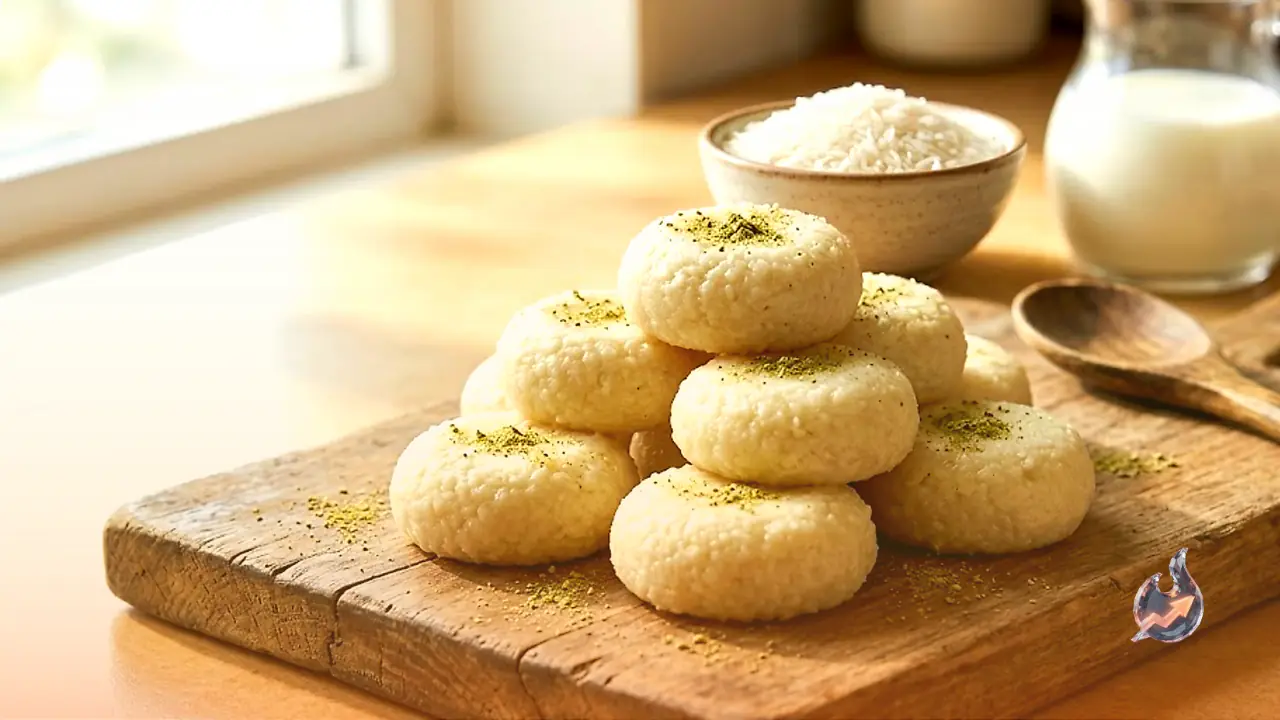
Once the milk mixture is ready, the sieved rice powder is added into it. Everything needs to be cooked while stirring constantly, until the mixture thickens into a single mass and starts pulling away from the sides of the pan. It's then transferred onto a greased plate or tray and left to cool slightly. While the mixture is still warm rather than hot or fully cold, it should be shaped into small round pedas by hand, since warm dough is far easier to mould than one that has either cooled completely or is still too hot to handle. Each peda is finished off with a few strands of saffron and finely chopped pistachios on top, and a light sprinkle of desiccated coconut can be added as well. At that point, the rice peda is ready to be served.
Tips For Soft, Fragrant Peda Every Time
A few small details make a big difference to how this sweet turns out. Rice should always be roasted only after it has dried completely, since that's what gives the ground powder a fine, even texture. While cooking the milk mixture, keep stirring continuously so nothing sticks to the bottom of the pan or burns. Always shape the pedas while the mixture is still lightly warm, as that makes it much easier to get the shape right. A few drops of rose water or kewra essence can also be mixed in to boost the flavour and aroma further, and a topping of chopped pistachio or desiccated coconut adds extra visual appeal.