






















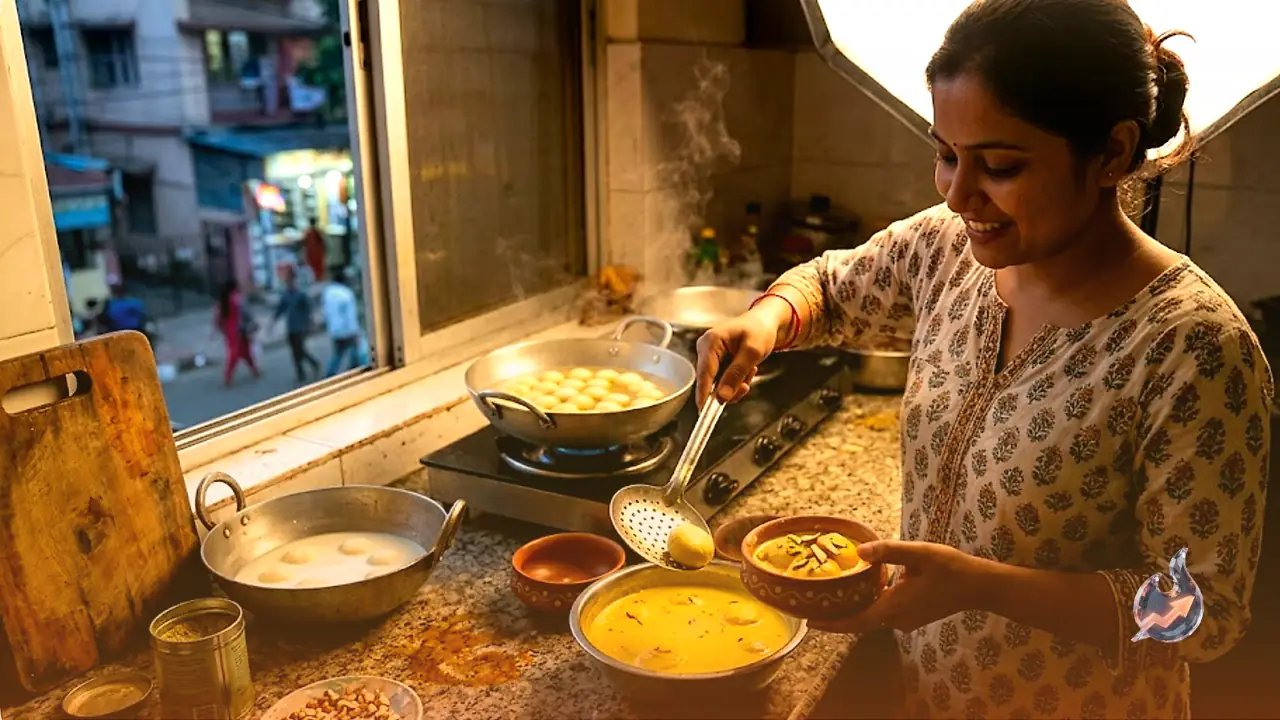

Nothing quite matches the taste of proper Bengali sweets, and angoori rasmalai is one dessert most people assume only a famous sweet shop can get right. But with the right ingredients and a careful, step-by-step process, this same sweet can be recreated at home with just as much flavor. Follow the method closely and guests are likely to ask whether it was homemade or bought from a well-known sweet shop.
Get all the ingredients ready first
For the chena, you will need 1 litre of full cream milk, 2 to 3 tablespoons of vinegar, half a cup of water, 1 teaspoon of cornflour and a pinch of baking soda. For the rabri, keep a separate 1 litre of full cream milk, sugar to taste, a little saffron and half a teaspoon of cardamom powder ready. Any dry fruits can be added according to preference. For the sugar syrup, you will need one and a half cups of sugar and 4 cups of water. Keep some ice ready in advance too, since it will be needed later in the process.
Getting the chena right
Start by pouring 1 litre of milk into a large vessel and bringing it to a boil. Once it boils, turn off the gas and let the milk cool slightly. Then mix 3 tablespoons of vinegar into half a cup of water and add it slowly into the milk while stirring continuously. Once the milk curdles completely, strain it through a cotton cloth. Wash the chena thoroughly with clean water so that the taste and smell of vinegar is fully removed. After that, hang the cloth for about an hour so that the excess water drains out completely.
The trick to soft, smooth chena
The most important point in this recipe is not to curdle the milk immediately after it boils. Let it cool slightly for 5 to 7 minutes first, and only then add the curdling agent. This is what keeps the chena soft and smooth. If vinegar is added directly to boiling milk, the chena tends to turn hard, and the rasmalai does not end up as spongy and soft as it should be.
How to make the rich rabri
While the water is draining out of the chena, the rabri can be prepared. For this, pour 1 litre of milk into a large vessel and cook it until it reduces to half its original quantity. Then add crushed pistachios, almonds, crushed cardamom, saffron and any dry fruits of choice, and mix well. Add sugar next and cook for about 10 minutes. Turn off the gas and set the rabri aside to cool. This thick, flavourful rabri is what really defines the taste of the finished angoori rasmalai.
Shaping the chena balls and cooking them in syrup
Take out the prepared chena and knead it well with your hands for about 8 minutes. Be careful not to knead it so much that the ghee starts separating out, just knead until it turns completely soft. After that, mix in the cornflour and baking soda and knead for another two minutes. Cover it with a cloth and let it rest for a while. Once done, remove the cloth and shape the chena into small, grape-sized balls.
In a wide vessel, boil one and a half cups of sugar with 4 cups of water. Once the syrup comes to a good boil, drop in the chena balls. Cover the vessel and let them cook for about 15 minutes. As soon as they are cooked, transfer the balls immediately into ice-cold water and leave them there for about 5 minutes. Then take the balls out of the cold water, gently squeeze them with your hands, and place them one by one in a separate vessel.
Add the rabri, chill it and then serve
Now pour the prepared rabri over the balls. Top it with pistachios, almonds, cardamom powder, saffron or any dry fruits of your choice, and refrigerate the vessel for at least 5 to 6 hours or overnight. As soon as it comes out of the fridge, the angoori rasmalai will show its true colour and texture. Before serving, it can be garnished with almonds, pistachios, saffron and dried rose petals. This is how a chilled, delicious angoori rasmalai comes together, one that tastes so good that family members might end up asking whether it was made at home or brought from a famous sweet shop.