





















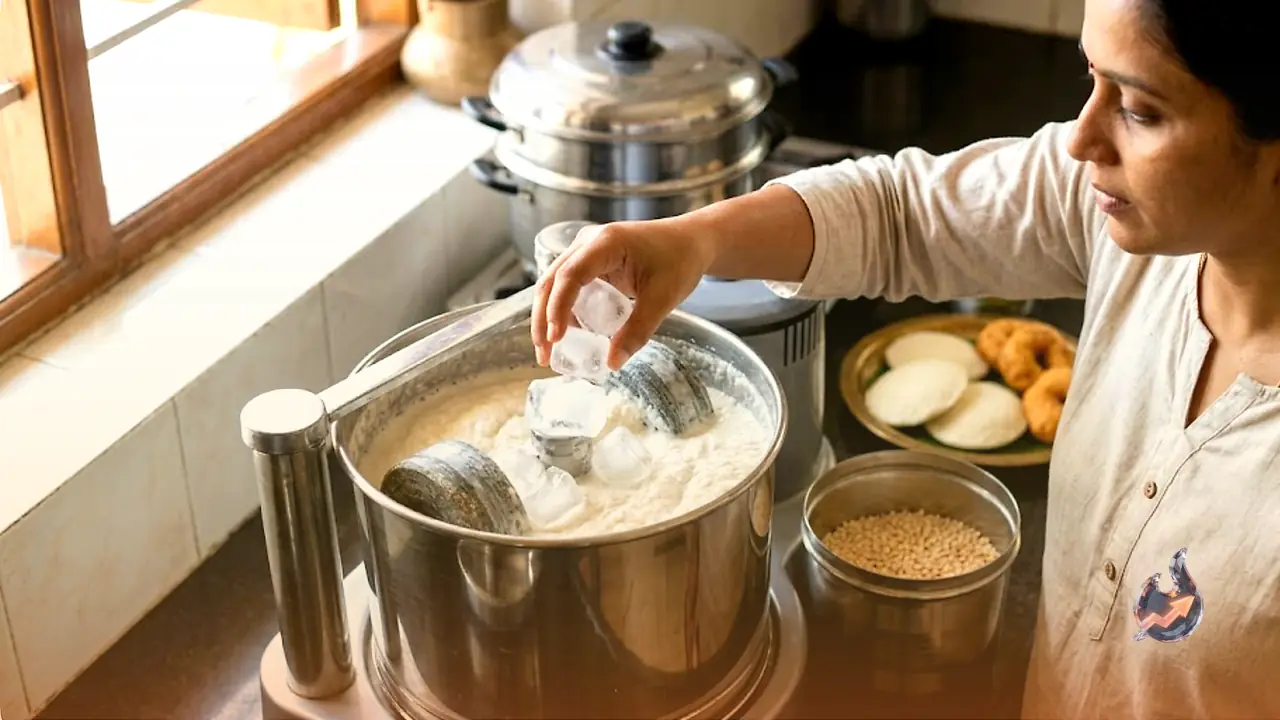

Homemade idli or medu vada often fail to match the taste and texture of what you get at a restaurant, and the problem usually lies not in the recipe but in how the batter is prepared. Most people simply pour in plain water while grinding urad dal without paying any attention to how hot the batter is getting inside the jar as the mixer runs. That one small oversight has a direct effect on how soft the idli turns out and how crisp the vada becomes. A South Indian woman recently shared a simple trick on social media, explaining that swapping plain water for ice or ice cold water while grinding urad dal completely transforms the texture of the batter. This results in softer idli, crispier vada and a noticeably lighter batter overall. Here is a closer look at the reasoning behind this trick and the benefits it brings to the kitchen.
Mixer heat disturbs the natural texture of the dal
The blades of a mixer spin at very high speed, and running continuously causes the jar to gradually heat up. That heat travels straight into the batter, disturbing the natural texture of the urad dal. When small amounts of ice are added while grinding, the temperature inside the jar stays under control. This keeps the batter cool throughout the process and preserves its fluffy consistency. In other words, the real problem is not the dal itself but the extra heat generated while grinding it, and ice is what keeps that heat in check.
Ice helps the batter ferment better without turning too sour
Many people assume that a warmer batter will be ready faster, but excess heat is not considered good for the batter. If the batter heats up too much while being ground, its balance can get thrown off, and it may end up tasting overly sour later on. A batter prepared at a cooler temperature, on the other hand, ferments at a steady, comfortable pace, which improves the taste of both idli and vada. The biggest secret behind soft idli is a light, airy batter, and when urad dal is ground in a cool environment, it is able to trap more air. That is why the finished batter looks puffed up, and idli made from it turns out spongy and soft, feeling much lighter to eat.
Vada turns out crisp on the outside, soft on the inside
A thick, fluffy batter is considered essential for making medu vada. If the batter gets warm and turns runny while being ground, the vadas soak up more oil during frying, making them oily and affecting their texture. A batter made using ice, however, holds on to its proper thickness throughout the process. The direct result is that the vadas come out crisp on the outside and soft on the inside, much like the ones served at a good restaurant.
The batter also stays cleaner and whiter in colour
Sometimes after grinding, the dal takes on a pale yellow or dull tinge, and one of the reasons behind this can be the heat generated during grinding. Adding ice keeps the batter cool throughout, which helps it stay noticeably cleaner and whiter in colour. That, in turn, makes the idli made from it look more appealing as well. Urad dal ground with cold water or ice is able to trap more air within it, which makes the batter far lighter and puffier than before. Many experienced cooks test the batter by dropping a bit of it into water, and if the drop floats to the top, it is taken as a sign that the batter has been prepared well.
Keep these points in mind while trying this trick
If you want to try this method at home, avoid adding too much ice all at once. Use it little by little, as needed, so that the batter retains the right thickness without becoming too thin or too stiff. It is equally important to soak the dal thoroughly before grinding it, since only well soaked dal grinds properly. After grinding, the batter should also be covered and left to rest for the right amount of time so it can ferment well. Keeping these small but important points in mind can help anyone make restaurant style soft idli and delicious medu vada right at home.